 Live Chat
 Contact
 Shopping Cart
 Rashid Malla
For many startup founders or entrepreneurs with new product launches in the works, one question keeps coming up over and over again: “What’s the actual MVP development cost?” It’s a valid question because prior to spending any money, you need to have clear expectations about what you’re getting yourself into.
Ely Space has worked with many founders throughout Kashmir and beyond, turning raw ideas into working products while helping to ensure they don’t blow their entire budget. In this guide, we will provide a breakdown of everything that contributes to MVP development costs so that you can plan better, avoid unforeseen costs, and build a working product.
This is not just another generic checklist ripped off from somewhere. This information is based on real conversations we’ve had with clients, real decisions around pricing, and real launches of products that we’ve been involved in.
What Is an MVP and Why Does It Matter?
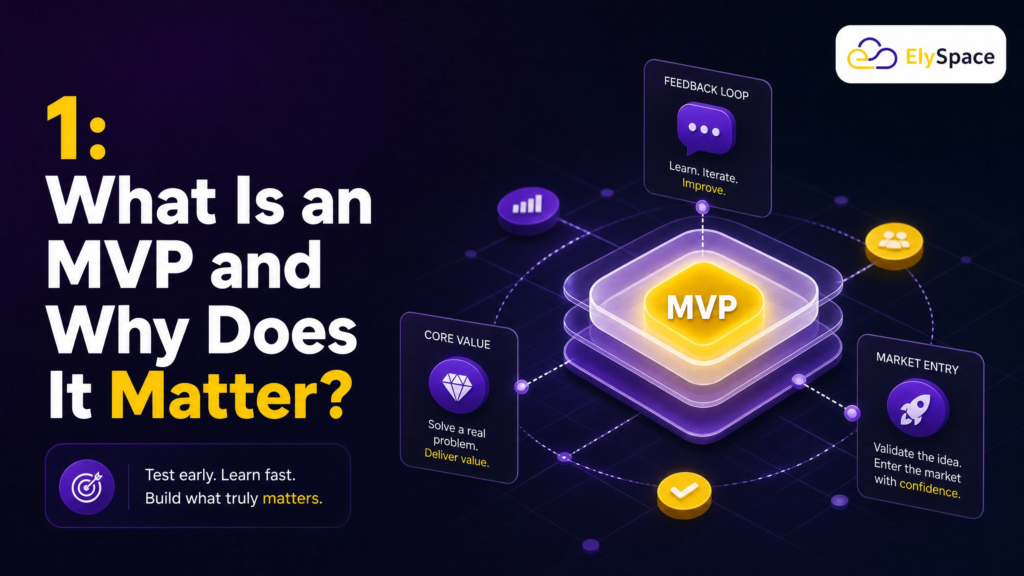
“MVP” is an acronym representing minimum viable product. The idea is to create the lowest functional form of your app or website that can still satisfy your users’ primary need. You should think about creating a working prototype of an actual device that actual people will be able to interact with. Once the product is complete, you will then begin to collect data to assist in further development before being forced to make a costly investment into areas of development where there may be no demand for your complete product offering.
Creating your MVP with only enough features to determine if there are potential customers who would like to purchase your product is the ultimate goal of using an MVP to create market demand for your product. This is one of the more significant reasons you need to understand the cost of MVP development before you begin, so you can set a reasonable budget accordingly and not run out of money before your project is finished.
Average MVP Development Cost in 2026
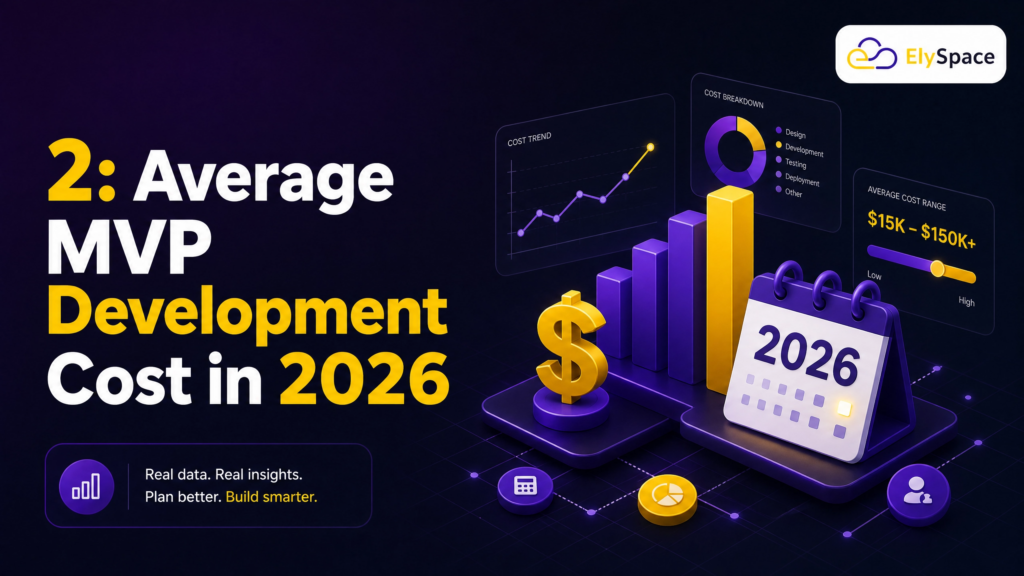
Let’s start with some numbers: the cost of developing a minimum viable product (MVP) can vary significantly, from just $5,000 up to $50,000, and we’ll discuss the factors that affect that range below.
If you’re looking to create a basic MVP for one platform, the price would likely be at the low end of this range. For example, if you’re building an MVP for only Android or for only web users, it would generally cost less than if you developed an MVP that has both (or if you have a unique product that requires multiple roles or includes payment processing, for example).
If you are a business that is working with local or remote development teams in Kashmir or throughout India to create your MVP, you will likely find that you will spend less than if you hired an agency in the U.S. or Europe while still receiving a high-quality product. Ely Space aims to provide cost-effective MVPs that provide the functionality expected of a full-featured product without sacrificing quality.
Factors Affecting MVP Development Cost
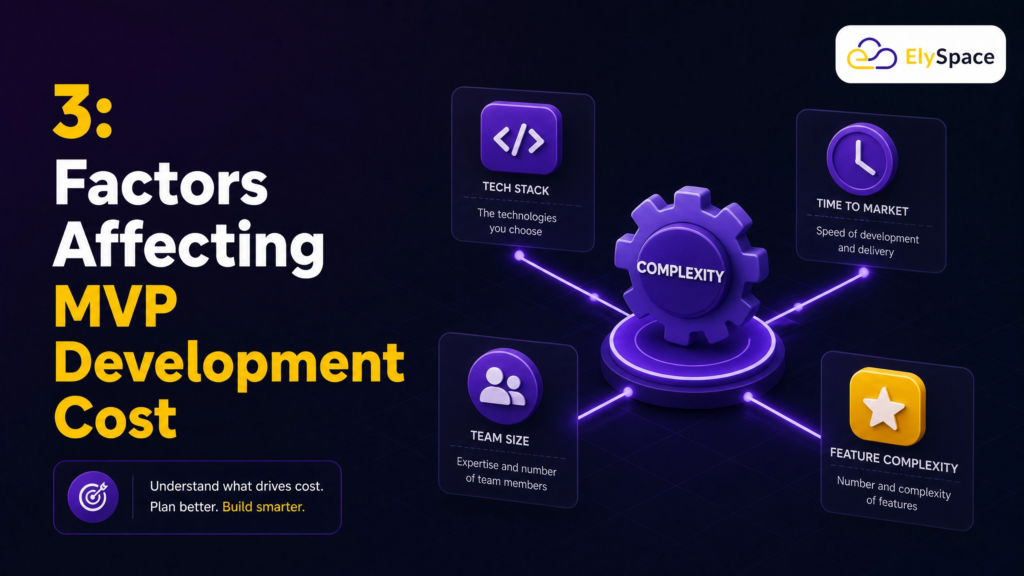
The core issue in MVP’s development cost is how much you want to include in the development; let’s address each piece of the MVP individually, starting with feature count and size:
1: The primary determinant for MVP’s development cost will be feature count.
Additional features translate into additional hours of work to build. (E.g., login ((type of)) system, user type, searching, payment, chat, admin tools, etc.) may all require additional hours to build.) When designing mvp’s, the goal is to keep feature counts down to the minimum number of features required to validate the initial idea. Adding the “nice” features after you have collected initial user data (feedback) is always more cost-effective than adding at the same time as the other elements.
2: Building for a single platform (example: native-iPhone or Android)
They will always cost less than building for all three platforms (iPhone, Android, and Desktop). Building native for both iPhone and Android separately would cost roughly 2 times as much as just building for one of the two platforms (iPhone/Android). Many start-ups (eventually to become larger companies) now use cross-platform tools, such as ReactNative / Flutter, to produce applications on the iOS/Android platforms, thus giving them a larger audience than they would have had if only developed natively. Most new cross-device applications use the same set of code (programming), which means fewer coding problems, and helps with the release schedule for both platforms at the same time.
3: Complexity of UI / UX Design
A well-designed, easy-to-use interface with an uncomplicated design is likely to take a lot less time and cost a lot less than a specialized look with lots of custom animations. While good design is an important consideration when looking at the overall user experience, when developing an MVP, you don’t need to have a design that has won any awards at launch. The main thing to focus on when designing your MVP is to make sure that the design is logical, easy to use, and intuitive, as well as that the user flow through your app is logical.
Once you’ve proven your concept with an initial group of users, you can begin to develop a professional-grade design and develop custom animations.
4. Backend Architecture and Database
Every app will require a backend structure to store the app data, manage users within the app and fulfil the logic of the app. The amount of complexity required for your app’s backend structure, such as how your backend will be structured, how many servers your backend will require, and whether your backend will need to support real-time updates, will ultimately have an effect on the development cost of your MVP.
A very simple app with basic functionality will require a minimal amount of budget for backend development.
5. Frequency of Integrating Third-party Services
Integrating third-party services into your app may involve additional development time and expenses. Examples of third-party services include payment gateways, maps, SMS verification, social logins, and the use of analytics tools. Each third-party integration requires additional development time to integrate the service, additional testing time to verify that the integration works, and, in many cases, additional licensing fees.
Make a note during your initial assessment of the various third-party services that you are considering to integrate into your application and determine how many of these integrations will be necessary for your MVP and how many can be implemented later in development.
6: The Make-up of Your Team and the Location They Work
The people who are developing your MVP will have a huge impact on how the final product turns out. The core team for a complete product will typically consist of a project manager, UI / UX designer, frontend developer, backend developer, and QA tester. Hiring all of them independently would cost you a pretty penny.
By working with an agency, such as Ely Space, you benefit from having an experienced team that has learned how to work together effectively. When considering that it could cost you less to develop your MVP through one of these agencies, because you will not have to pay all of those individual developers’ salaries (their total combined cost), than if you were to hire them all separately.
7: The Development Timeline
Rushing your MVP will cost you more money. If you want it completed in four weeks instead of ten weeks, be prepared to spend more on additional resources or pay overtime.
Having an appropriate amount of time to develop your MVP will keep the costs down and also provide sufficient time for the developers to test everything thoroughly and to resolve any issues they may find before going live with your product.
8: Quality Control and Testing
Some people consider that it’s easier to eliminate QA as a cost-saving measure; however, they find out it is actually more costly to eliminate QA than to perform QA because there is a much higher expense associated with fixing bugs after they are found, once the product is launched and/or when the customer no longer trusts them.
The costs for functional, usability, and security testing done before a product is launched will add to the initial MVP cost, but these tests will help save more money and reputation damage than the costs associated with performing these tests before the product is launched.
9: Post-Launch Support/Maintenance
Most start-up companies do not take into account the cost of maintaining their application after it’s launched. Bug fixing, server maintenance, upgrades, and managing customer feedback will necessitate ongoing support after the product is launched and will require ongoing enclosure of investment dollars.
Your MVP development partner will work with you to provide post-launch support as part of their total development package, which will eliminate surprises for you once the product is launched.
10. Scalability Requirements
If you’re planning to scale quickly after validation, your MVP’s architecture needs to support that growth from day one. Building scalable infrastructure costs more initially but prevents expensive rebuilds later.
This is a balancing act; you don’t want to overbuild for a scale you may never need, but you also don’t want a foundation that collapses the moment you get traction.
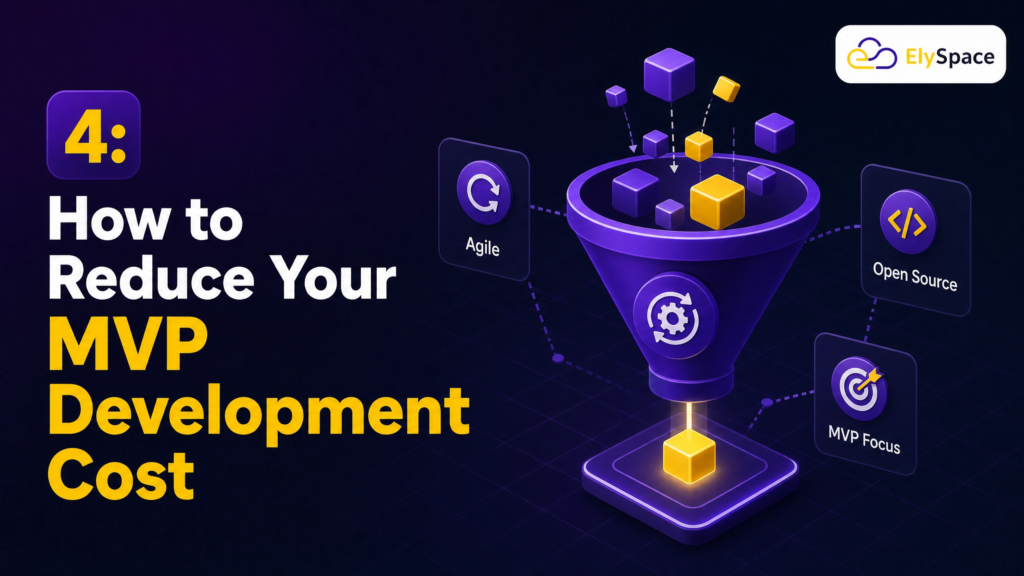
How to Reduce Your MVP Development Cost
Here are a few practical ways founders can manage their budget without compromising quality:
Focus on one core feature that solves your users’ biggest problem, and build everything else around supporting that single feature well.
Choose cross-platform development frameworks instead of building separate native apps for iOS and Android from the start.
Work with an experienced development partner who can guide you on what’s essential versus what can wait, rather than building everything you initially imagined.
Use existing tools and APIs for common functions like payments, maps, and notifications instead of building these from scratch.
Plan your MVP scope clearly before development begins, since scope changes mid-project are one of the biggest reasons costs spiral out of control.
Final Thoughts
It’s important to have a solid understanding of where your funds for MVP development will go, and how they should be best spent so that you don’t overspend or underutilize them. Everything from the level of complexity of the features to the location of the team developing the product will affect the final budget.
The best way to approach MVP development is to go with a lean startup approach and start small, validate the product with real customers and then scale based on actual demand instead of using your assumptions. When you have the right partner guiding you through the MVP development process, it allows you to look at it as a strategic investment rather than a financial gamble.
Let Elyspace help you with your MVP development and the costs associated with it. Schedule an appointment for a free consultation with us today!