 Live Chat
 Contact
 Shopping Cart
 Rashid Malla
If you run a business, manage a website, or lead a team, you have probably heard the phrase “AI agents” more times this year than you can count. It is not just hype. AI agents are quietly moving into real workflows, handling real tasks, and in many companies, they are already treated like digital employees rather than simple software tools.
At ElySpace, we work with businesses every day that rely on cloud hosting, automation, and IT infrastructure to stay competitive. We have watched this technology evolve from basic chatbots into systems that can plan, execute, and even make decisions with very little human input. This shift matters for anyone managing a website, an online store, or a growing team, because it changes how work actually gets done.
In this guide, we will walk through what these systems really are, why so many companies now see them as digital employees, and how you can start using them in your own business without getting lost in technical jargon.
What Are AI Agents?
AI agents are software systems that can understand a goal, plan the steps needed to reach it, and carry out those steps largely on their own. Unlike a basic chatbot that only answers when you ask a question, an AI agent can take initiative. It can read data, make decisions within set boundaries, use other tools or systems, and complete multi-step tasks without someone guiding it through every click.
Think of the difference between a calculator and an accountant. A calculator waits for you to type in numbers. An accountant looks at your books, spots a problem, and fixes it before you even notice. This technology is moving toward that second model, acting less like a tool and more like a coworker who takes ownership of a task from start to finish.
This is a meaningful shift from the assistant-style AI most people used a few years ago. Today’s agents combine large language models with memory, reasoning, and access to real business systems, which is exactly why so many teams now describe them as digital employees rather than digital tools.
Why Companies Are Treating AI Agents as Digital Employees
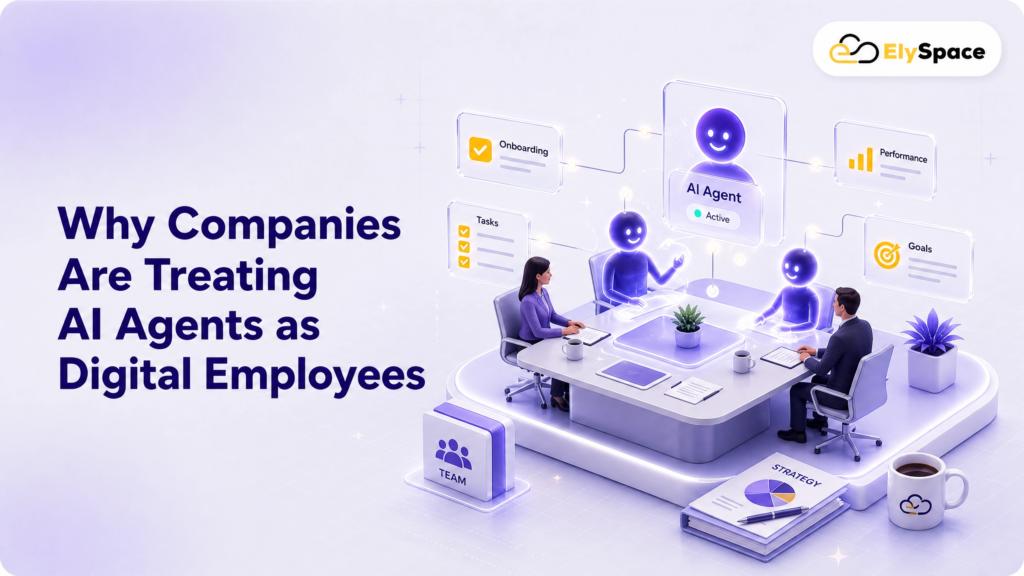
The idea of AI agents as digital employees is not a marketing gimmick. It reflects a real change in how organizations plan their workforce. A digital employee independently executes complex tasks or full processes, acting as a virtual member of a team to automate skills and improve performance. That definition sounds a lot like a job description, and that is the point.
Large organizations are already proving this out at scale. McKinsey has built out a virtual workforce of thousands of these digital agents working alongside its human staff, and industry researchers expect the majority of enterprise software to embed similar systems as digital coworkers within the next year or two. Smaller businesses are following the same pattern on a smaller scale, using this technology to cover work that used to require hiring additional staff.
What makes this trend stick is that these systems are not simply replacing headcount. Research shows they are shifting how employees spend their time, giving people more room for strategic work, relationship building, and skill development instead of routine execution. That is the real promise behind treating digital agents as employees: the boring, repetitive work gets handled automatically, while people focus on judgment calls only humans can make.
How AI Agents Work as Digital Employees: Real Use Cases
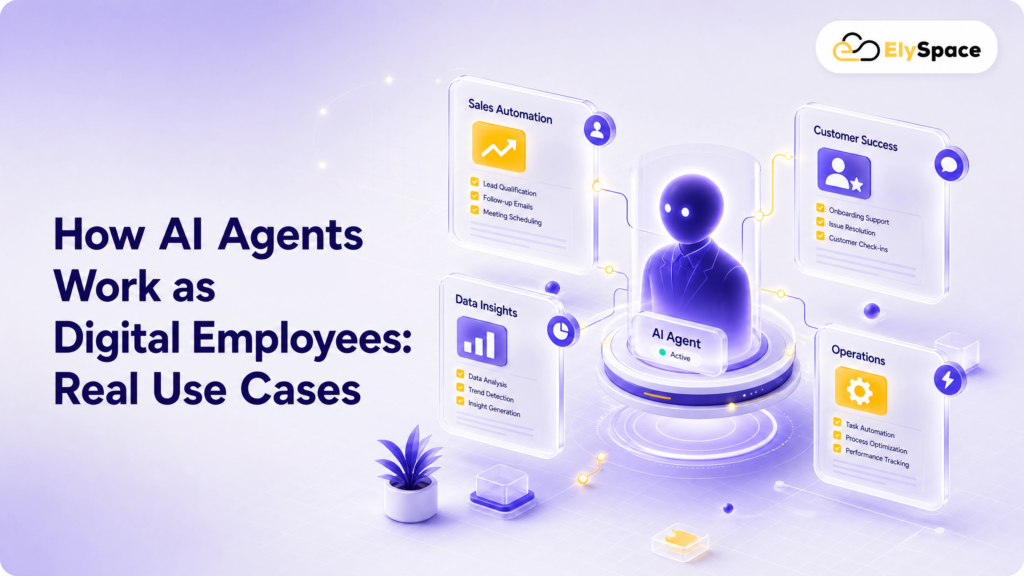
It helps to see this technology in action rather than in theory. Here is how businesses are actually deploying digital agents today.
Customer Support and Helpdesks
These systems can answer common questions, troubleshoot basic issues, and escalate complex tickets to a human only when necessary. For hosting and IT services in particular, this means faster first-response times on server issues, domain questions, or billing queries, without making customers wait in a queue all day.
Data Analysis and Reporting
Instead of someone manually pulling numbers into a spreadsheet every week, a digital agent can gather the data, build the report, and flag anything unusual. Data analysis and report generation are already one of the highest-impact use cases businesses report outside of software development itself.
IT Operations and Monitoring
These agents can watch server performance, flag downtime risks, and even trigger basic fixes before a human ever sees an alert. This is especially valuable for businesses that depend on uptime, since it catches problems earlier than a person checking dashboards manually ever could.
Sales, Marketing, and Content Workflows
Marketing teams use this technology to research topics, draft content, schedule campaigns, and track performance. A small team can now manage work that used to require a much larger department, simply because the agent handles the repetitive parts of the workflow.
Benefits of Using AI Agents as Digital Employees
The appeal of digital employees comes down to a few clear advantages that matter to any business owner.
- Round-the-clock availability: Digital agents do not take breaks, sick days, or vacations, which matters for support and monitoring tasks that never really stop.
- Consistent output: An agent follows the same process every time, which reduces the human error that creeps in during repetitive tasks.
- Faster scaling: Adding capacity does not always mean hiring. A well-configured digital agent can take on more volume without a long onboarding process.
- Lower operational cost: Businesses can redirect budget from repetitive manual work toward strategy, product development, or customer experience.
- Better use of human talent: People spend less time on busywork and more time on the judgment-based work that actually grows the business.
None of this means the technology is perfect. It means digital employees are useful enough that ignoring them puts a business at a real disadvantage against competitors who are already using them.
Challenges to Consider Before You Adopt AI Agents
No honest discussion about digital employees would be complete without covering the friction points, because there are several worth planning for.
Integration is usually the first hurdle. Nearly half of organizations point to integration with existing systems as a primary obstacle, with data quality issues and implementation costs close behind. A digital agent is only as useful as the systems and data it can actually access, so businesses running on outdated or disconnected software often need to modernize first.
Trust and governance come next. Giving software the authority to take action on your behalf requires clear rules about what it can and cannot do, along with monitoring to catch mistakes early. This is why serious deployments include audit trails, permission limits, and a human who can step in when something looks off.
Finally, there is the human side of adoption. Employees sometimes worry that digital agents are there to replace them rather than support them. Smaller and mid-sized businesses in particular report struggling more with employee resistance and training needs than larger enterprises do. Clear communication about how roles are changing, not disappearing, makes a real difference here.
How to Start Using AI Agents in Your Business
You do not need a large IT department to begin experimenting with digital employees. A practical, low-risk approach works best for most small and mid-sized businesses.
- Pick one repetitive process. Choose something specific and measurable, like ticket triage, weekly reporting, or basic customer FAQs.
- Set clear boundaries. Decide exactly what the agent can do on its own and what still needs human approval.
- Connect it to reliable infrastructure. This technology depends on stable hosting, fast servers, and secure data access to perform well, which is where dependable cloud hosting becomes essential.
- Measure results before expanding. Track time saved, error rates, and customer satisfaction before rolling the agent out to a bigger part of the business.
- Train your team alongside the rollout. Show employees how the agent changes their day-to-day work rather than just announcing that it exists.
This step-by-step approach keeps risk low while still letting you capture the real productivity gains that digital employees offer.
The Future: AI Agents and Human Teams Working Together
The direction is fairly clear at this point. AI is no longer just assisting people quietly in the background; it is increasingly acting as a digital colleague that can reason, coordinate, and make decisions. Multi-agent systems, where several digital workers collaborate on different parts of a workflow, are becoming more common as businesses look for ways to handle bigger, cross-functional processes.
That said, human oversight is not going away anytime soon. Even with fast progress, most experts agree we remain years away from systems that can independently run an entire business unit without human involvement and adaptability. The realistic picture for the next few years is a hybrid workforce, where digital employees handle execution, and humans handle judgment, strategy, and relationships.
For businesses that host websites, run online stores, or manage digital services, this means infrastructure choices matter more than ever. Reliable hosting, secure servers, and well-managed cloud environments are what allow this technology to actually perform, since a digital agent is only as fast and reliable as the systems it runs on.
Final Thoughts
AI agents are not a passing trend. They represent a genuine shift in how work gets divided between people and software, and businesses that treat digital agents as employees, rather than just another tool, are already pulling ahead. The technology still has real limits, and it still needs human oversight, clear boundaries, and solid infrastructure behind it. But for any business willing to start small, measure results, and scale carefully, this shift offers one of the clearest productivity opportunities available right now.
If you are exploring how to support AI-driven workflows with dependable cloud hosting and infrastructure, our team at ElySpace can help you build a foundation that keeps pace with where your business is headed. Check out our IT services or talk to our support team about migrating your workloads onto infrastructure built for always-on automation.