 Live Chat
 Contact
 Shopping Cart
 Irfan Bhat
Can AI Replace Human Jobs? 7 Essential Truths That Might Shock You
Here’s the thing, I get it. You’re probably lying awake at night scrolling through Reddit threads about AI, wondering if your job’s got an expiration date. Maybe you’re seeing your company experiment with ChatGPT. Maybe your boss mentioned “AI automation” in a meeting, and suddenly your stomach dropped, and “can AI replace human jobs” started running on a loop in your head.
The question’s everywhere now: can AI replace human jobs?
And honestly? The answer’s complicated in a way that’s both more reassuring and more unsettling than the headlines suggest. If you came here for a clean yes-or-no on can AI replace human jobs, I’ll save you time: it doesn’t exist.
I spent months digging into actual research on this, not the sensationalised stuff, but the real data from McKinsey, the IMF, the World Economic Forum. And here’s what I found: can AI replace human jobs? Yes, some. Will it replace all jobs? Not even close. So if you’ve been Googling “can AI replace human jobs” at 2 am, take a breath. But the transition? That’s gonna be messy for some people, smooth for others.
This isn’t doom and gloom. And it’s not “everything’s fine, don’t worry” either. It’s somewhere in the middle, and that middle ground is where we actually need to focus if you’re asking yourself can AI replace human jobs.
What’s Actually Happening Right Now (The Real Picture)

Let me start with something that surprised me. When ATMs came out in the 1970s, everyone thought bank tellers were finished. Kaput. Done.
You know what actually happened? Banks opened more branches because ATMs made it cheaper to run them. And the number of bank tellers? It actually went up for decades. The job just changed from counting cash to more customer relationships and sales.
That’s actually the pattern with technology. It doesn’t usually work the way dystopian movies show us.
Right now, we’re seeing something similar but faster and weirder, and it’s exactly why “can AI replace human jobs” feels different this time. AI can generate emails, write code, analyse spreadsheets, and handle customer service chats. That’s real. But it’s also clumsy at things that seem simple to humans. It can’t really understand context the way we do. It can’t read a room. It can’t tell when something doesn’t add up.
According to the World Economic Forum’s Future of Jobs Report, yeah, maybe 69 million jobs could get disrupted by AI automation through 2027. If you’re only looking at that number, “Can AI replace human jobs?” sounds terrifying. But here’s the part everyone glosses over: 159 million new roles might emerge in that same period. That’s almost two and a half times as many new jobs as jobs lost.
Does that mean everyone who loses their job gets a new one? No. That’s the honest part, and it’s the part that makes “can AI replace human jobs” so hard to answer with a simple yes or no. The new jobs might be in different places, different industries, and different skill levels. Some people will adapt easily. Others will struggle. That’s the real challenge behind the “can AI replace human jobs” question.
Where Does This Data Actually Come From?
I’m not just making this up. The research comes from serious institutions:
McKinsey Global Institute: They literally survey thousands of companies about automation. They’re not selling AI solutions; they’re analysing trends, which is why their take on “can AI replace human jobs” carries real weight.
International Monetary Fund (IMF): In 2023, they released a massive study on AI’s global impact. Government-level research, not marketing hype.
World Economic Forum: Every year, they survey business leaders about the future of work. It’s their whole thing.
Bureau of Labour Statistics (BLS): U.S. government data tracking job growth by category. Super boring, super reliable.
These aren’t think tanks pushing an agenda. They’re the people governments actually listen to for economic policy, which is exactly why their numbers matter more than a hot take when you’re trying to figure out if AI will take your job.
Here’s what they’re actually saying: up to 30% of hours worked in the U.S. economy could potentially shift to AI by 2030. But, and this is crucial, that doesn’t mean 30% of jobs disappear. It means a job change. A lot.
Think about that accountant who spends 8 hours a day entering data and checking spreadsheets. In a couple of years, AI will do the data entry and checking. What happens to the accountant? They either upskill to do strategy and client relationships (the higher-value stuff), or they get displaced — a small, real-world answer to “can AI replace human jobs.”
Which Jobs Are Actually at Risk From AI? (Let’s Be Honest)
Okay, so which jobs should you actually worry about if you’re wondering, “Can AI replace human jobs” in your specific field?
The vulnerable ones share something in common: they’re repetitive, they’re rules-based, and you can measure success pretty clearly. If a task is the same thing over and over, and AI can learn it, you’re in a tricky spot, and yes, AI could genuinely take your job in that scenario.
The Highest Risk Jobs (Real Talk)
Data Entry and Administrative Work
This is ground zero. Let’s not sugarcoat it. If your job is entering data into spreadsheets, scanning documents, filing things, organising information, AI is coming for this. It’s already here, honestly.
Robotic Process Automation (RPA) tools can do this stuff faster than humans and don’t get tired. Companies are already deploying this at scale. Some data entry jobs will just vanish, which is the clearest possible “yes” that AI will replace human jobs in this category. The Bureau of Labour Statistics Occupational Outlook Handbook predicts a 3-4% decline in administrative roles through 2032, and honestly, I think that number’s probably conservative.
But here’s the thing, and this matters: companies still need people to handle the weird edge cases. The invoices that don’t match. The slightly wrong documents. That human judgment still has value. It’s just that there’ll be fewer of those positions, and they’ll pay better9 so even here, AI won’t take every job, just most of the repetitive ones.
Customer Service (the Routine Kind)
Customer service is splitting in half, and it’s happening right now. You call about a package tracking issue? A bot handles that. You’ve got a weird problem that doesn’t fit the normal script? You want a human.
AI chatbots have gotten shockingly good. Gartner says they’ll probably handle 40-60% of routine customer interactions by 2027. That’s nothing. But companies realise that when something goes wrong with a customer, especially a high-value one, you need an actual human who can think on their feet and genuinely care.
Some customer service jobs will disappear. Others will transform into “customer success specialists” who do less scripted work and more actual problem-solving. So can AI replace human jobs in a call centre? Depends entirely on how scripted your day already is.
Basic Coding and Software Development
This one blows people’s minds because it’s happening right in front of us. GitHub Copilot and similar AI tools can generate code. They’re getting better every month.
So will all programmers get automated away? No. But the junior dev who just knows how to write boilerplate code? That person’s gonna struggle. They’re competing with AI now, and yeah, for that specific role, AI could really replace human jobs unless you level up fast.
Senior developers? They’re actually getting more valuable because they can use these tools to write way more code faster, and they understand the big picture that AI can’t grasp. It’s kind of a natural selection thing happening in the industry right now — proof that “can AI replace human jobs” has a very different answer depending on your seniority.
Routine Writing and Reporting
Financial reports, earnings summaries, and basic news briefs AI can do this. Some news organisations are already using it for automated earnings reports and sports summaries. It’s boring but functional, and it’s one more example of whether AI can replace human jobs in the narrow, repetitive corners of a field.
But investigative journalism? Feature writing? Long-form analysis? That needs a human. The creative stuff, the weird stuff, the stuff that requires actual insight that’s still firmly in human territory, and it’s a good example of where AI won’t take your job anytime soon.
Medium-Risk Jobs (These Are Transforming, Not Dying)
Here’s where it gets less scary for anyone still asking whether AI can replace human jobs:
Accounting and Finance: The boring grunt work gets automated. The strategy part gets more valuable.
Legal Research: AI can search through thousands of documents. But lawyers still need to argue cases and understand nuance a clear middle case for can AI replace human jobs.
Manufacturing: Robots do the repetitive assembly. Humans do the problem-solving and innovation.
Retail Management: Inventory automation exists, but customers still want to talk to people. The retail experience is the product now.
These jobs aren’t disappearing. They’re just changing what they actually involve. If you work in one of these fields and you’re asking, “Can AI replace human jobs?” the honest answer is: not entirely, but expect your day-to-day to look different in a few years.
The Jobs Where AI Can’t Replace Human Workers (And Why That Matters)
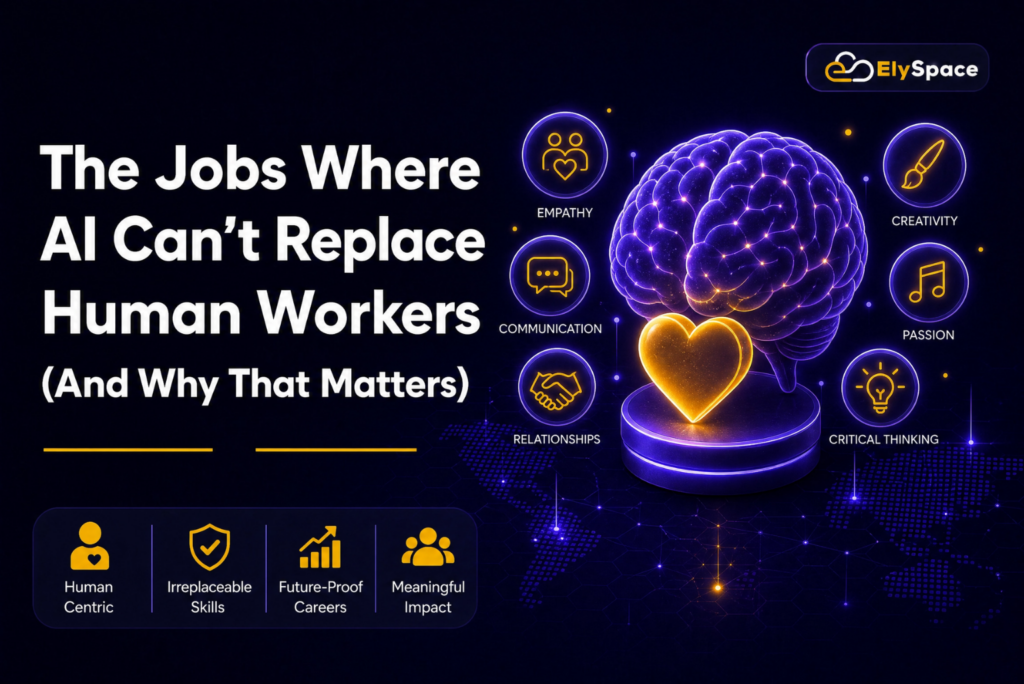
Okay, here’s the genuinely good news for anyone convinced that AI will replace human jobs no matter what they do. There are entire categories of work that AI is terrible at.
And it’s not just the jobs we think of as “creative.” It’s also about human complexity, unpredictability, and accountability.
Healthcare: This Is Basically Immune
Doctors, nurses, therapists, and surgeons, these jobs are safe in a way that might surprise you. If you’re in one of these roles, “can AI replace human jobs” is almost the wrong question to be asking.
Yeah, AI can diagnose things. It can look at an MRI and spot things human eyes might miss. That’s actually valuable. But the oncologist who sits down with someone who just got a cancer diagnosis? That’s not a tech problem to solve. That’s a human job, and it’s a hard “no” to whether AI can replace human jobs in that specific moment.
You can’t automate the part where you’re delivering bad news. You can’t automate empathy. You can’t automate the judgment call of whether a patient can handle aggressive treatment or needs a gentler approach.
Healthcare professionals actually make more decisions based on incomplete information than most jobs. That requires human intuition, experience, and, honestly, ethical judgment. AI’s not doing that anytime soon.
And a fun fact, the WHO says there’s gonna be an 18-million-person shortage of healthcare workers by 2030. They’re not worried about automation putting them out of work. They’re worried about not having enough people. So if you’re in healthcare and wondering, “Can AI replace human jobs?” you can relax more than most.
Creative and Strategic Work
Here’s the thing about creativity: AI can generate stuff, but it usually sounds like AI generated it. A logo that ChatGPT makes? Feels generic. Marketing copy that’s 100% AI? You can tell — another sign that the answer to whether AI can replace human jobs in creative fields is “not the good ones.”
What people actually pay for is human judgment. Your unique perspective. The weird connection you make that nobody else would think of. That’s what clients want.
These roles are changing (designers using AI tools, copywriters working with AI assistants), but they’re not disappearing. If anything, they’re becoming more valuable because the barrier to entry gets lower, which means the people with real talent become more important, not less. Creative professionals asking “can AI replace human jobs?” usually find the honest answer is: it’ll change your workflow, not your career.
Skilled Trades (Plumbers, Electricians, Carpenters)
You can’t automate someone coming to your house to fix your HVAC system. Every house is different. Every problem is unique. The electrician has to see the actual wiring, understand the space, adapt on the fly — trades are basically the textbook counterexample to whether AI can replace human jobs.
Yeah, manufacturing is automated. But residential and commercial maintenance work? That requires physical presence, judgment, and adaptation. These jobs are actually facing worker shortages, not automation threats. There are supposedly 650,000+ unfilled trade positions in the U.S. right now. Ask a plumber, “Can AI replace human jobs?” and you’ll probably get a laugh.
Leadership and Decision-Making
The CEO can’t be a bot. Making decisions with incomplete information, managing people, and taking responsibility for outcomes, these are fundamentally human. We don’t trust AI to make those calls, and we probably shouldn’t — leadership is where AI can replace human jobs gets a flat no.
Leadership requires reading between the lines, understanding what’s not being said, and making judgment calls that have real consequences. That’s not happening without humans, which is why executives rarely lose sleep over AI replacing human jobs.
Teaching and Human Services
There’s something about a teacher who believes in you. A counsellor who actually listens. A social worker who fights for a family. You can’t replace that with an algorithm.
AI can provide information. A really good chatbot could probably help someone work through basic anxiety. But the transformative human connection that’s something else entirely, and it’s exactly why teachers and counsellors aren’t worried about AI replacing human jobs.
Here’s What These Jobs Actually Have in Common
If you want a quick gut-check for whether AI can replace human jobs, look for these traits. They’re not robot-proof because:
They need emotional intelligence: Humans can feel genuine empathy. AI can simulate it, but there’s a difference.
They involve novel problems: Every patient, every customer, every client is different. You can’t just run the same algorithm.
They require real judgment calls: Someone’s life or career depends on the decision. We need humans responsible, not algorithms.
They need physical presence: Some work just has to be done in person, in unique environments.
They depend on trust: People want to work with people they trust. That’s a human thing.
The Jobs That Will Actually Exist in 5 Years (The Good News)
Here’s what everyone misses when they’re panicking about can AI replace human jobs: AI isn’t just destroying jobs. It’s creating new categories of work that literally didn’t exist before.
Totally New Jobs Emerging Right Now
If you’re stuck on “can AI replace human jobs,” it helps to remember that AI is also handing out brand-new job titles that didn’t exist a few years ago.
AI Trainers and Prompt Engineers
Someone has to teach AI systems to do stuff right. This is a new job category that barely existed two years ago. There are entire bootcamps dedicated to it now.
LinkedIn’s data shows “AI specialist” is one of the fastest-growing job categories. These are real, well-paying jobs. And they’re multiplying.
AI Ethics and Governance
Companies can’t just deploy AI and hope for the best anymore. They need people thinking about bias, fairness, regulatory compliance, and ethical implications. This is exploding as a field.
AI + Human Collaboration Specialists
Workers who are brilliant at combining human creativity with AI capabilities. A designer who uses AI tools but has the taste to know what’s good. A researcher who uses AI to accelerate their work but has the insight to know what matters.
These people are more valuable, not less.
Data Privacy and Security
More AI means more data. More data means more people need to protect it. Cybersecurity jobs are growing like crazy, and they’re not slowing down.
Research and Development
Every major company on earth is investing heavily in AI R&D. That means researchers, engineers, strategists, and scientists are all working on pushing AI forward. That’s a ton of high-paying, interesting jobs being created.
Creative AI Roles
Music producers using AI, architects leveraging AI visualisation, and novelists using AI to accelerate their writing. These roles didn’t exist five years ago. They’re multiplying now.
How Job Transitions Actually Work (History Can Help Here)
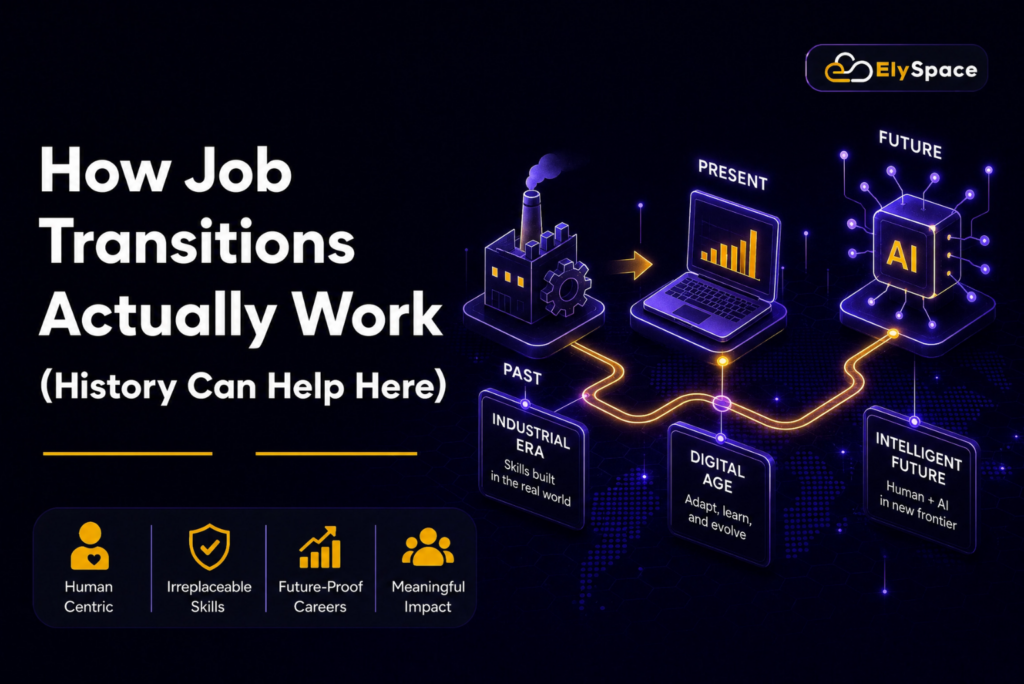
I know this sounds weird, but understanding how jobs changed in the past actually makes the future less scary.
The internet era is a good example. Everyone thought the internet would put a ton of people out of work. In some ways, it did travel agents, for instance. Their entire business model got disrupted.
But you know what happened? A million new digital jobs emerged. Web developers, digital marketers, social media managers, and UX designers none of these jobs existed before. They’re not the same as being a travel agent, and some travel agents couldn’t adapt. But the economy didn’t shrink. It expanded.
The printing press? Killed scribes. Created publishers, printmakers, and eventually the entire publishing industry. Massive disruption, but also massive opportunity — proof that “can AI replace human jobs” has had earlier versions ask about every major technology, and the answer was always “some jobs, not all of them.”
Why the Transition Will Be Messy (But Not Catastrophic)
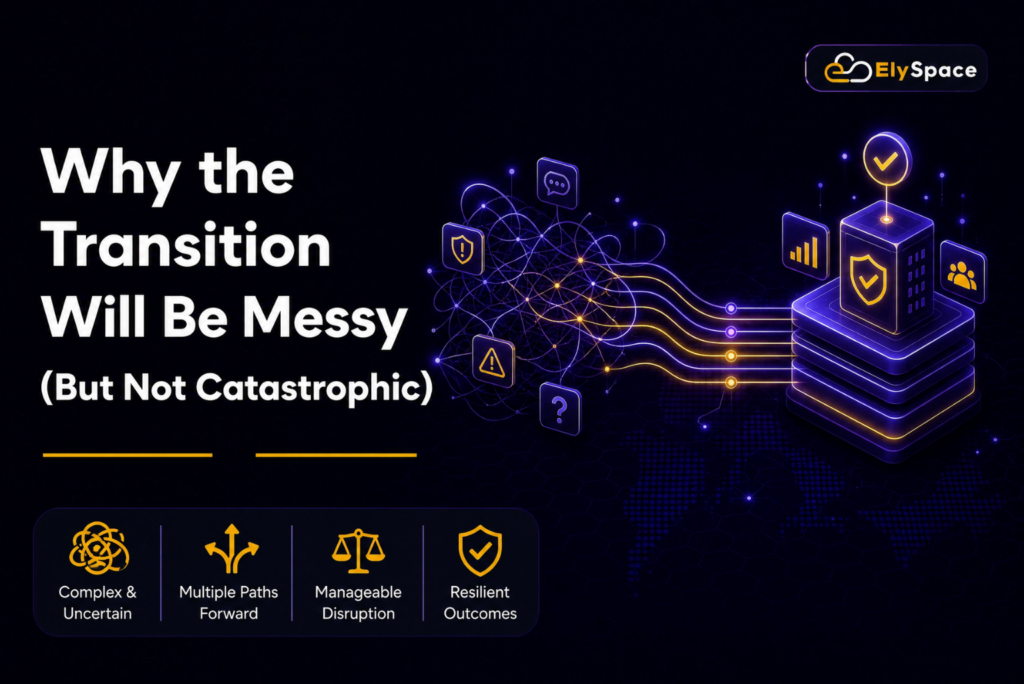
Some Sectors Will Change Faster Than Others
Finance and tech? Fast. Healthcare and skilled trades? Slower. The good news is you can see it coming and adjust accordingly, so “can AI replace human jobs” becomes a timeline question rather than a surprise.
It Won’t Be Evenly Distributed
A 55-year-old data entry worker in a small town faces a different challenge than a 25-year-old junior developer in Silicon Valley. The younger person has time to adapt. The older person might need actual support (retraining programs, income support, etc.).
This is where policy and company responsibility matter. Some companies will invest in reskilling employees. Others won’t. That’s the unfair part of the “can AI replace human jobs” conversation nobody wants to have.
By Geography It’s Different
Developed economies with strong education systems will probably navigate this better than countries without access to retraining. That sucks, but it’s true.
Skills Matter More Than Ever
A generalist data entry person? Vulnerable. A data entry person who’s learned Excel, understands databases, and can think strategically about workflow optimization? Valuable. The gap between replaceable and irreplaceable is growing, and it’s the biggest factor in whether AI can replace human jobs at an individual level or just change what they do.
How to Protect Your Career (What You Can Actually Do)
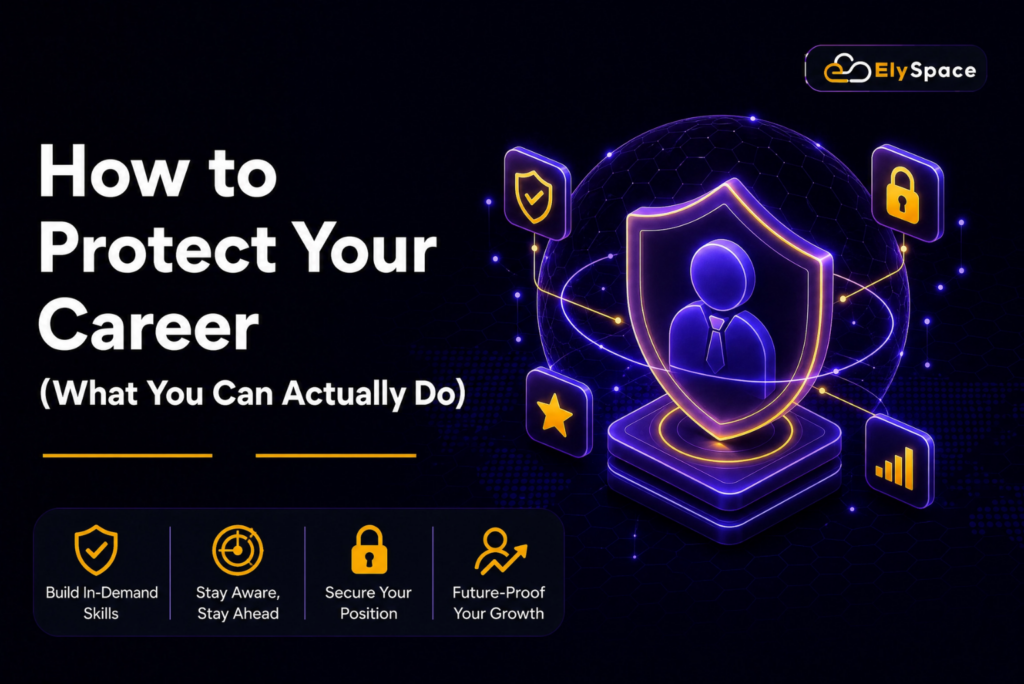
Okay, so you’re probably thinking: “Great, this is terrifying. What do I actually do?”
The goal isn’t to guess whether AI can replace human jobs. It’s to make sure that if it does change your role, you’re already ahead of it. Here’s what actually works if you want to make sure AI doesn’t take your job:
Honestly Assess Your Current Role
Do this right now. Write down everything you do in a week. Then separate it into two columns:
Routine stuff: Data entry, regular reports, standard processes, things you could explain to someone in an hour
Judgment stuff: Strategic decisions, problem-solving, client relationships, things that require experience and intuition
The higher your percentage in column two, the safer your job.
If you’re 80% routine stuff, you need a plan. If you’re 20% routine stuff, you’re probably fine and just need to stay current. This one exercise answers “can AI replace human jobs” more honestly than any headline will.
Identify What Makes You Valuable
What can you do that AI can’t? Not yet, anyway. Answering this for yourself is the real work behind ” Can AI replace human jobs — not the headlines, your own honest inventory.
Maybe you’re brilliant with people. Maybe you have deep domain knowledge. Maybe you’re a creative problem-solver. Maybe you understand your industry’s quirks in a way nobody else does.
Write that down. Build your career around it. That’s your moat.
Learn Your Industry’s Tools (Before You Have To)
You don’t need to become a data scientist. But if your field is adopting AI tools, spend 30 minutes a week learning them.
Finance professionals learning AI-assisted analysis tools. Designers learning AI design tools. Developers learning GitHub Copilot. Do not replace yourself to make yourself more productive.
The people who learn tools proactively are more valuable than people who are forced to learn them after disruption.
Build Skills AI Can’t Easily Replicate
Communication: The ability to explain complex things simply
Leadership: Managing people, driving teams, making hard calls
Creativity: Seeing novel solutions, making unexpected connections
Emotional Intelligence: Reading people, building relationships, navigating conflict
These are becoming more valuable, not less.
Stay Informed (Without Freaking Out)
Follow industry leaders talking about AI adoption in your sector. Don’t doom-scroll Reddit. Read actual research from McKinsey and your industry associations.
Knowledge is an advantage. Panic is paralysis. The more informed you are, the less “can AI replace human jobs” feels like an unanswerable question, and the more it feels like something you can actually plan around.
Build Your Network
Your professional network is your insurance policy. Strong relationships create opportunities. When change happens, people want to work with people they like and trust — networks matter just as much as skills when it comes to whether AI replaces human jobs or you land the next one.
Stop waiting for opportunities. Start building relationships now.
Real Talk About the Timeline
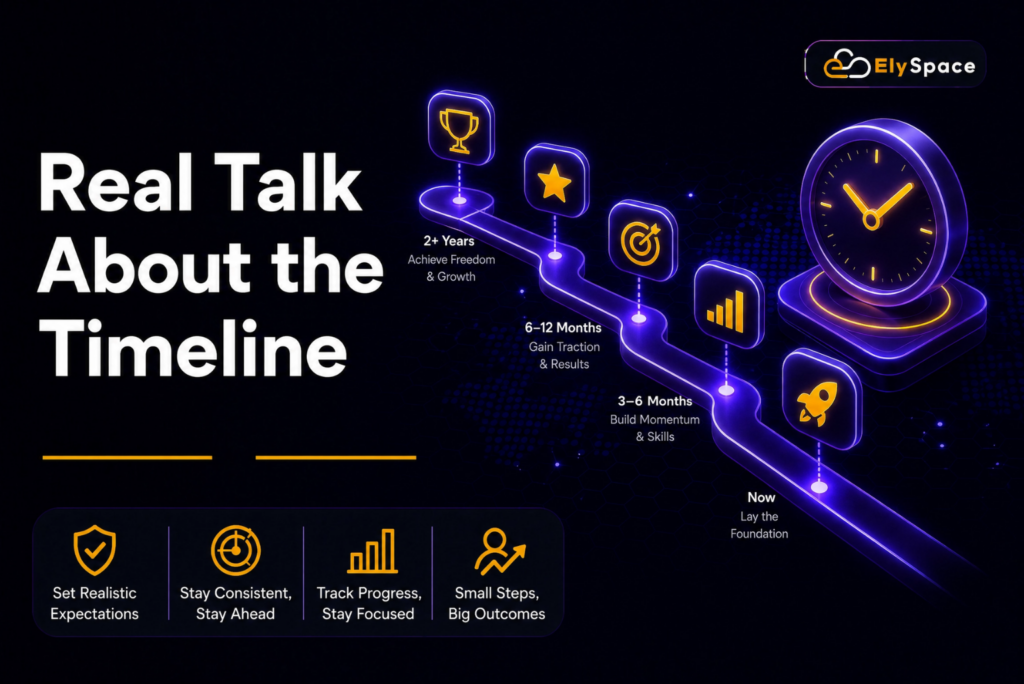
How fast is this actually happening? Here’s a rough timeline for can AI replace human jobs across different fields:
Customer service automation: Probably 40-60% of routine interactions will be handled by AI by 2027. Some agents will need to upskill. Some companies won’t hire as many.
Healthcare: Probably 10-15 years before major disruption because of regulation, liability, and the importance of human connection. You’ve got time if you’re in healthcare.
Creative fields: Already happening, but evolution, not replacement. Designers, writers, and marketers are adapting now.
Skilled trades: Probably 20+ years of stable demand. Shortages, actually.
Leadership and strategy roles: Not really at risk. These are expanding, actually.
The point is you’re probably not facing change tomorrow. But you’re probably facing it sometime in your career. Start preparing now, not when panic sets in. Whatever your industry, the “can AI replace human jobs” timeline is usually longer than the headlines suggest.
FAQ: The Questions People Actually Ask About Whether AI Can Replace Human Jobs
Q: Can AI Replace Human Jobs?
A: Maybe. Probably not completely. More likely, your job changes significantly. If your job is mostly routine and repetitive, higher risk. If it involves judgment, creativity, or human connection, lower risk. Honest answer? Look at your job description. How much of it could be automated? If it’s under 30%, you’re probably fine. Over 70% time to think about upskilling.
Q: What If I Get Displaced? What Then?
A: Retraining programs are expanding. Companies are investing in reskilling. You’ve got options, but they require initiative. If you start learning now, before displacement hits, you’re in a way better position than waiting until you’re forced to — waiting is really the only scenario where AI replaces human jobs and leaves you unprepared.
Q: Should I Change Careers Preemptively?
A: Only if you’re miserable or working in a sector facing rapid disruption. Career changes are harder and take longer than upskilling in your current field. If you love what you do, invest in learning complementary skills. If you hate it and it’s also at risk, then yeah, time to make a move — don’t wait around wondering “can AI replace human jobs” when you already know the answer.
Q: Which Industries Will Actually Grow?
A: Healthcare (massive demand). Renewable energy (exploding). Education and online learning (growing fast). AI development itself (obviously). Skilled trades (massive shortage). Creative industries using AI tools (expanding). Basically anything involving human judgment, creativity, or hands-on work — the exact opposite of where AI will take your job first.
Q: What Skills Should I Actually Learn Right Now?
A: Your industry’s specific tools and how they’re changing. Basic data literacy (understanding how data works). Communication skills (more valuable as time goes on). Whatever skill is adjacent to your job but a level higher (strategically thinking, not just executing). Honestly, just stay curious. Learn something every month, and “can AI replace human jobs” will stop feeling like a threat and start feeling like a planning question.
The Real Truth About Whether AI Can Replace Human Jobs
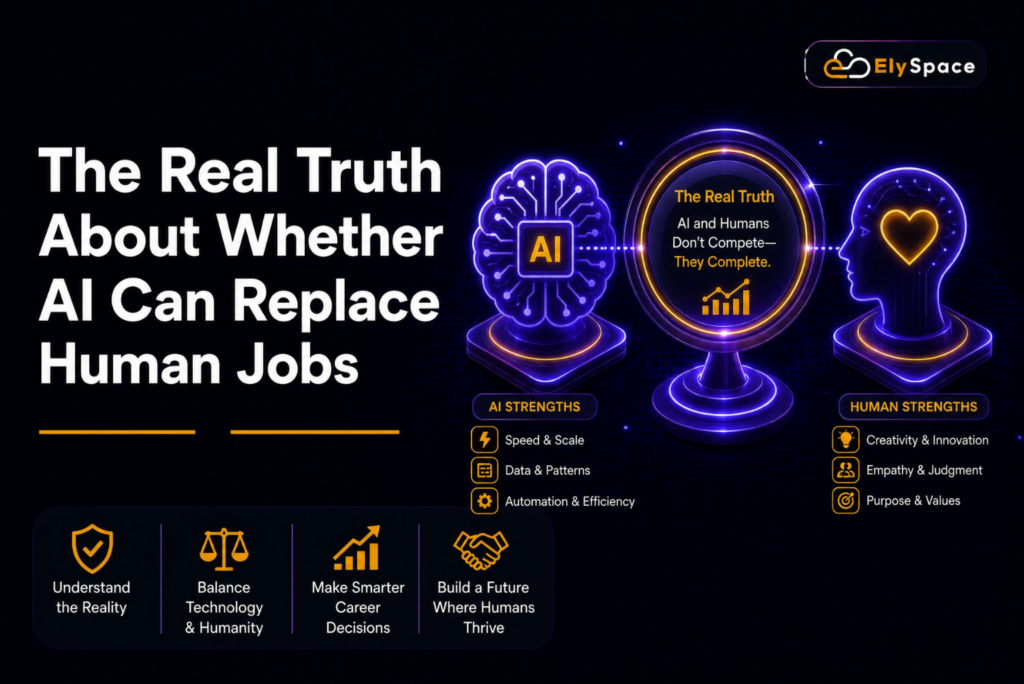
Here’s what I actually believe after months of researching this:
AI will disrupt some jobs. Not all. Some jobs will get way better because AI handles the tedious stuff and humans focus on the interesting parts. Some jobs will shrink, and new ones will emerge.
The economy won’t collapse. New work will exist. But the transition will be uneven. Some people will struggle. Some will thrive. The real answer to “can AI replace human jobs” depends far more on you than on AI.
Your job isn’t to fight AI. It’s to stay curious, keep learning, and figure out how to use AI as a tool rather than compete with it.
The professionals who will succeed aren’t the ones who deny that AI is happening. They’re the ones who understand it, experiment with it, and figure out how to leverage it for their own growth.
And honestly? The fear you’re feeling right now? That’s actually good. It means you’re paying attention. Just channel it into action, not panic, that’s really the only reliable defence against AI replacing human jobs.
Learn something. Build a skill. Stay connected to your network. Stay curious. You’re gonna be fine. AI replacing human jobs isn’t the inevitability the headlines make it sound like, and “can AI replace human jobs” is a question you can actually answer for yourself once you know where you stand.
Call to Action
So here’s what I want you to do, not someday, but this week, if “can AI replace human jobs” has been sitting heavy on your mind:
Spend 30 minutes on your job audit: Write down what you do. What’s routine? What requires judgment? Be honest.
Identify one skill: One thing adjacent to your job that you could learn. Something that makes you more strategic or valuable.
Learn it: Spend 30 minutes learning it. Take an online course. Read an article. Just start.
Tell someone: Share what you’re learning with a colleague or friend. Build accountability.
Stay curious: Follow one industry leader or publication talking about AI in your field. Stay informed without freaking out.
That’s it. Small actions, consistent over time, will position you miles ahead of people who just wait and see what happens.
AI is coming. But opportunity is too. Make sure you’re ready for it, whatever the answer to “can AI replace human jobs” turns out to be for you — because at the end of the day, the people who prepare are the ones AI never really takes a job from.
Want to learn more about AI, technology, web development, and digital trends? Visit ElySpace for more practical guides and expert insights.