 Live Chat
 Contact
 Shopping Cart
 Mehran Majeed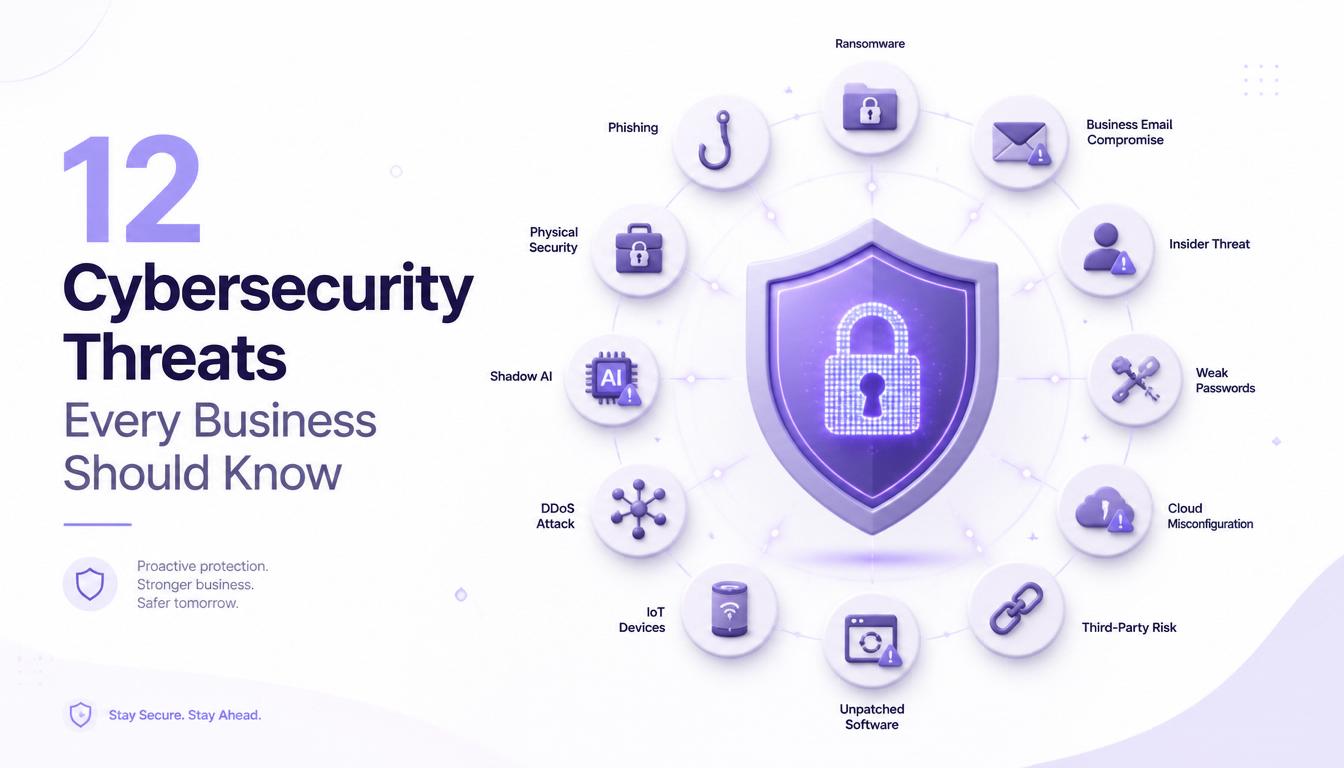
If you run a business, you’ve probably had that moment. An email lands in your inbox that looks just legitimate enough to make you pause before clicking. Or a customer calls asking why they got a “payment confirmation” for an order they never placed. Small things, but they stick with you, because deep down you know one wrong click could turn into a very expensive problem.
That instinct isn’t paranoia. It’s accurate. Cybersecurity threats for businesses aren’t some distant, abstract risk anymore, they’re a daily operating reality, whether you run a five-person shop or a company with a few hundred employees, and staying ahead of these cybersecurity threats for businesses starts with knowing what to actually watch for. And the uncomfortable truth is that cyber threats to small business are often more damaging than attacks on large enterprises, simply because smaller companies rarely have the budget, staff, or recovery cushion that bigger organizations do.
This guide walks through the 12 cybersecurity threats for businesses that show up most often in real incidents, explains why they matter in plain language, and gives you steps you can actually take this month, not vague “best practices” that sound good on paper but go nowhere in a busy workday.
Why Cybersecurity Threats for Businesses Keep Getting Worse
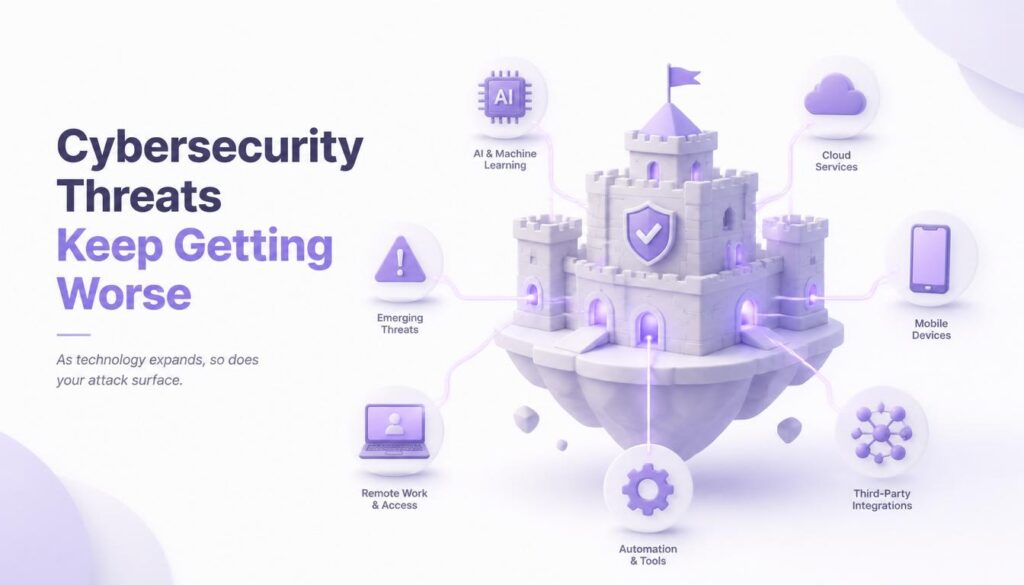
A few years ago, most attacks were opportunistic. Someone sent out a mass phishing email and waited to see who bit. Today, attackers use automation and, increasingly, AI tools to personalize scams, scan for vulnerable systems at scale, and move faster once they’re inside a network.
At the same time, businesses have more exposed surface area than ever. Remote work, cloud apps, personal devices connecting to company systems, and third-party vendors all create new doors an attacker can try. You don’t need to be a target of interest to a nation-state hacking group to get hit. Most attacks are indiscriminate. They’re looking for whoever left a window unlocked, not necessarily you specifically.
That’s actually good news in one sense: it means most of the threats below can be meaningfully reduced with a handful of consistent habits, not a massive security budget.
The 12 Cybersecurity Threats for Businesses to Watch
1. Phishing and Social Engineering
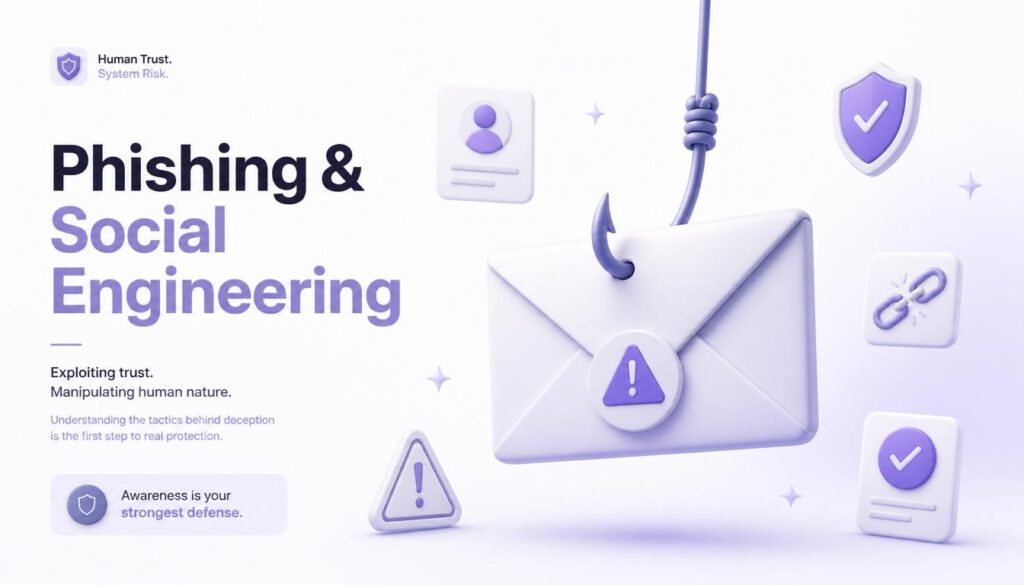
Phishing is still the number one way attackers get a foot in the door. It’s an email, text, or even a phone call designed to trick someone into handing over credentials, clicking a malicious link, or wiring money. The scams have gotten more convincing, some now mimic a real vendor’s invoice format down to the logo and tone of voice. Year after year, phishing sits at the top of every list of cybersecurity threats for businesses, simply because it’s cheap for attackers to run and hard for even careful employees to catch every time.
What helps: Regular, short training sessions (not a once-a-year compliance video nobody watches) and a simple internal rule: any payment or credential request gets verified by phone before it’s actioned.
2. Ransomware
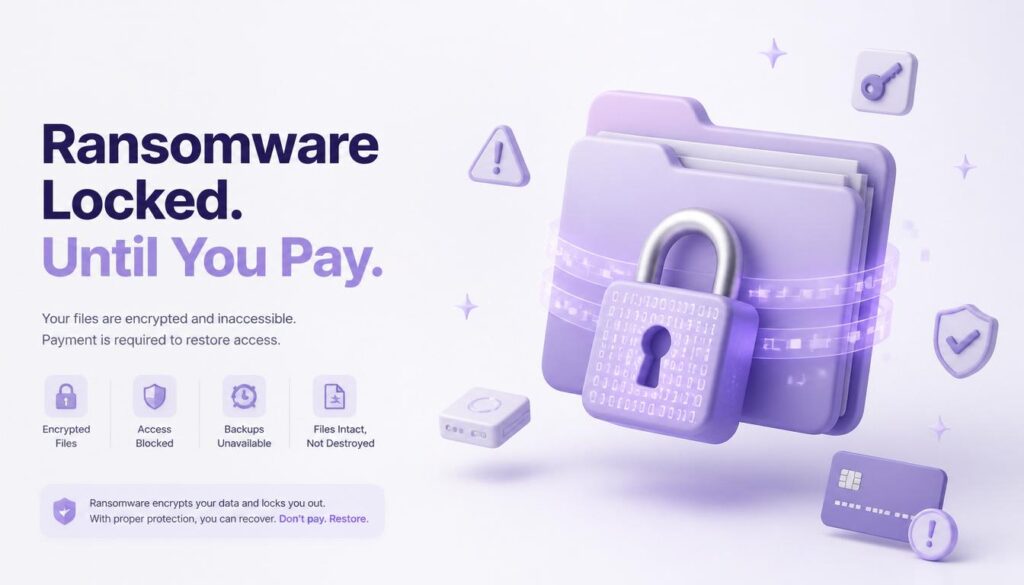
Ransomware locks up your files or systems until you pay a ransom, and even then, there’s no guarantee you’ll get everything back. It usually gets in through a phishing email, a compromised remote access tool, or an unpatched piece of software. Of all the cyber threats to small business owners face, ransomware tends to do the most damage in the shortest amount of time, because it stops operations cold the moment it activates. It’s consistently ranked among the most costly cybersecurity threats for businesses to recover from once it takes hold.
What helps: Offline, tested backups. Not backups you assume work, backups you’ve actually restored from at least once. If ransomware hits and you can rebuild from a clean backup within hours, the attacker’s leverage disappears.
3. Business Email Compromise (BEC)
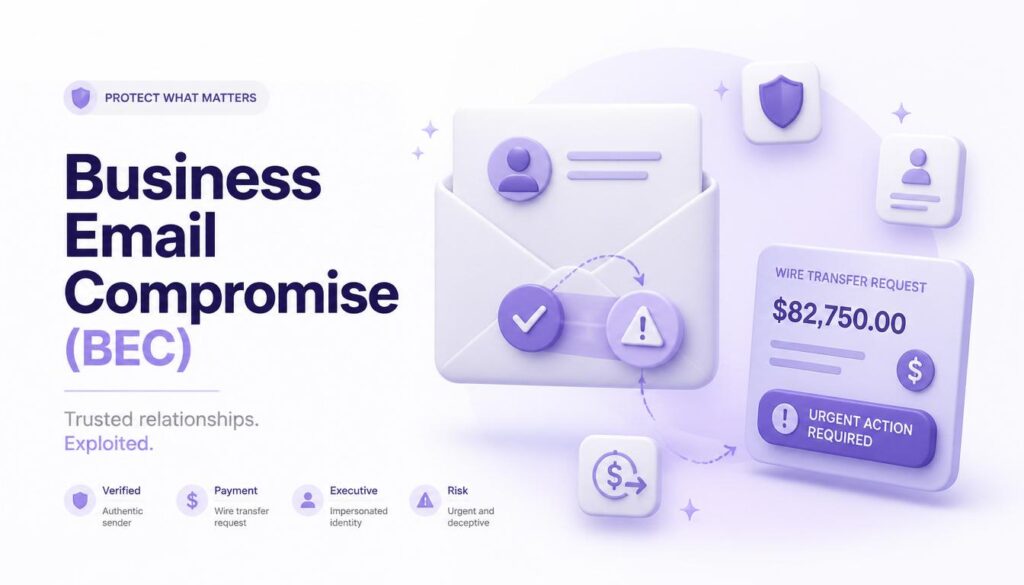
This is a more targeted cousin of phishing. An attacker either spoofs or actually breaks into an executive’s email account, then requests a wire transfer or sensitive data from someone in finance or HR. These scams rely entirely on urgency and authority, “I’m in a meeting, please send this now.” It’s one of the more expensive cybersecurity threats for businesses to recover from, since the money is often gone within minutes of the transfer.
What helps: A strict, no-exceptions policy that financial requests over a certain amount require a second confirmation through a separate channel, even if the email looks like it came from the CEO.
4. Insider Threats
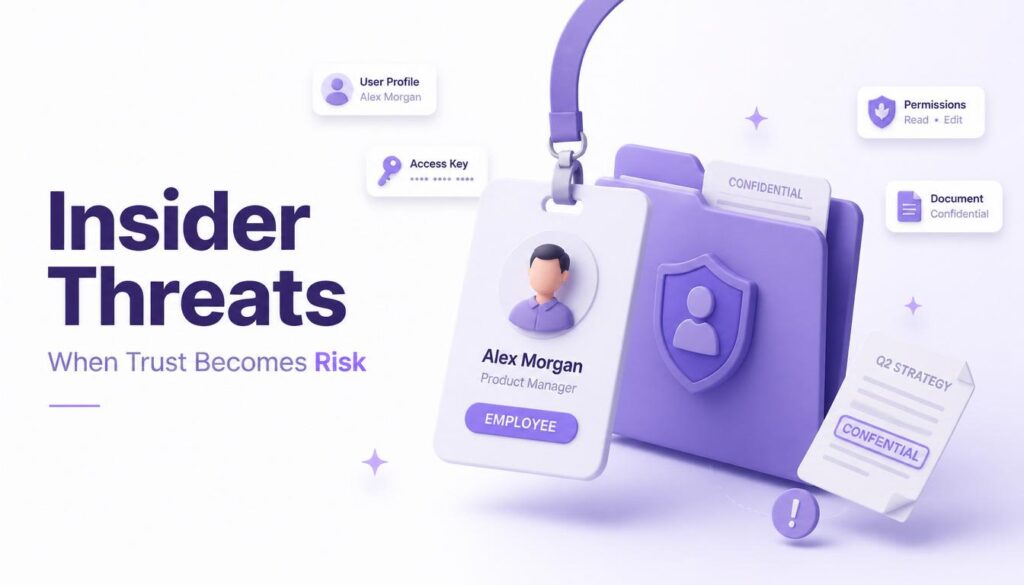
Not every threat comes from outside. Sometimes it’s a disgruntled employee, a careless contractor, or simply someone who didn’t realize forwarding a client list to a personal email was a problem. Insider incidents are harder to spot because the access itself is legitimate. It’s one of the quieter cybersecurity threats for businesses to plan for, since there’s no obvious break-in to detect.
What helps: Limit access to sensitive data based on actual job need, and remove access promptly when someone leaves the company. This single step closes more gaps than most businesses realize.
5. Weak or Reused Passwords
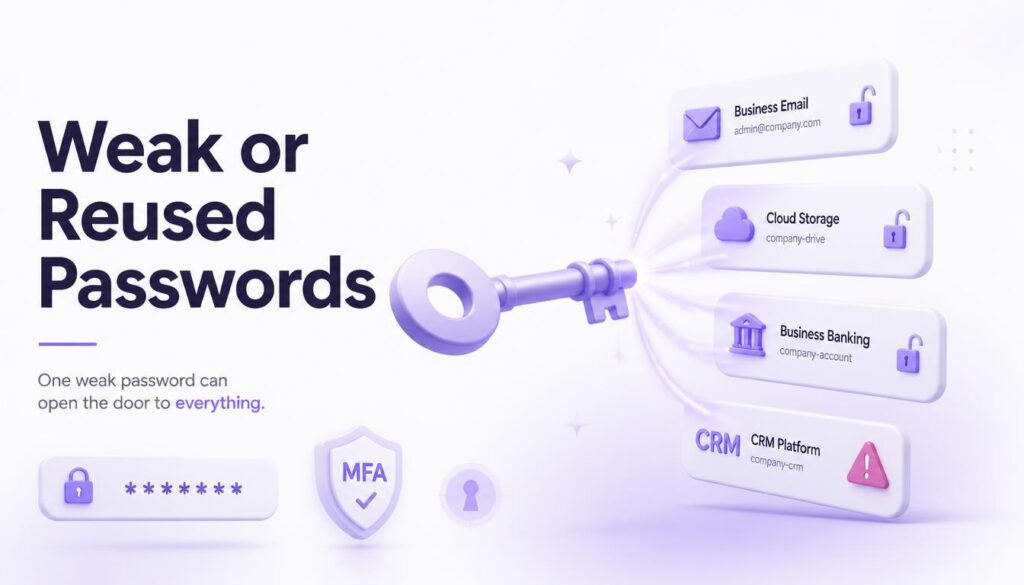
Credential stuffing attacks work because so many people reuse the same password across multiple accounts. If one site gets breached, attackers try that same password everywhere else, including your business systems. This is one of the cheapest cyber threats to small business systems to close off, and one of the most commonly ignored cybersecurity threats for businesses overall.
What helps: A password manager and multi-factor authentication (MFA) on every account that supports it, especially email, banking, and cloud storage. MFA alone blocks the vast majority of automated login attempts.
6. Cloud Misconfigurations
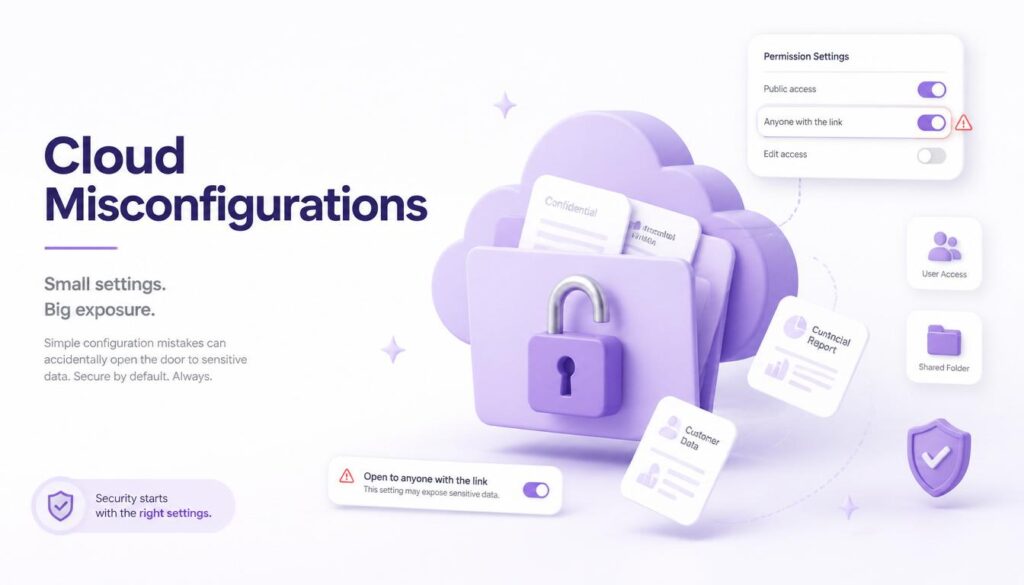
As more businesses move data to cloud platforms, simple setup mistakes, like a storage bucket left open to the public or overly broad sharing permissions, have become one of the most common causes of data exposure. This isn’t usually a sophisticated hack; it’s a setting someone forgot to lock down. As more operations shift online, this has quietly become one of the fastest-growing cybersecurity threats for businesses of every size.
What helps: A periodic review of who has access to what in your cloud environment, and disabling public sharing by default unless there’s a clear reason to allow it.
7. Third-Party and Supply Chain Attacks
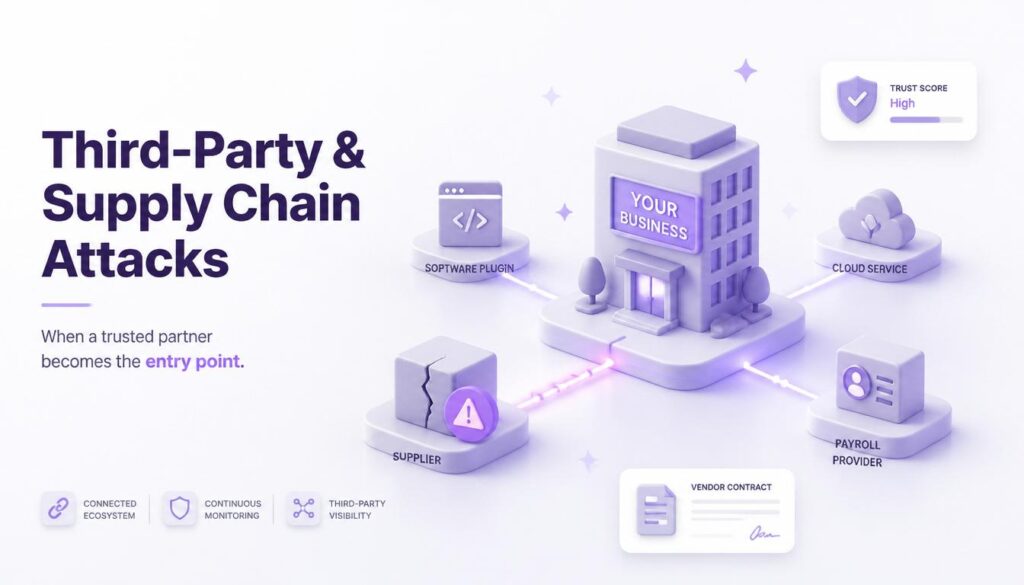
Your business might have solid security, but what about the vendor who handles your payroll, or the software plugin your website relies on? Attackers increasingly target smaller suppliers as a way to reach bigger, better-defended targets downstream. It’s an easy category of cybersecurity threats for businesses to overlook, simply because the weak link sits outside your own walls.
What helps: Ask vendors basic questions about how they protect your data before signing a contract, and avoid giving any third-party tool more system access than it actually needs.
8. Unpatched Software Vulnerabilities
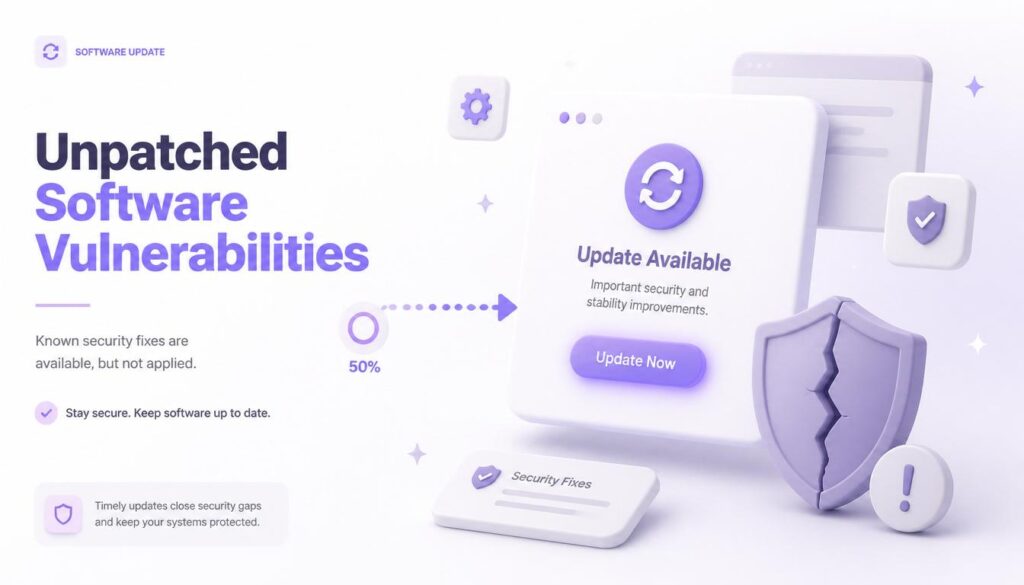
Software updates aren’t just new features, they often patch security holes that attackers actively scan the internet for. Businesses running outdated operating systems, plugins, or firmware are an easy, low-effort target.
What helps: Turn on automatic updates wherever possible, and keep a simple inventory of what software and devices you actually have, so nothing gets forgotten.
9. IoT and Connected Device Risks
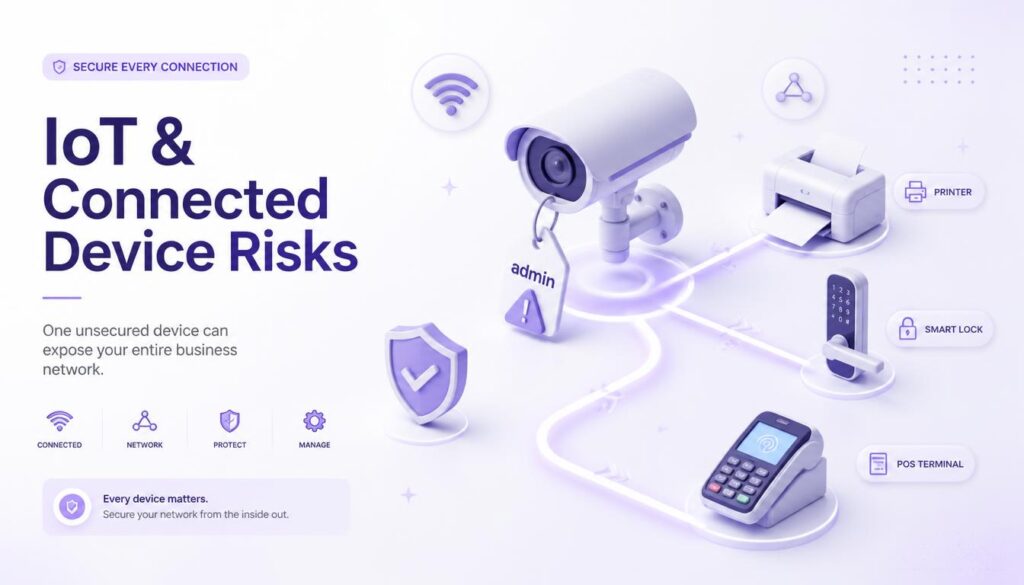
Smart printers, security cameras, point-of-sale systems, and other connected devices often ship with weak default passwords and rarely get updated. Once one of these devices is compromised, it can become a quiet entry point into the rest of your network. It’s an easy one to miss on any list of cyber threats to small business owners rarely think to check, and it’s becoming one of the more overlooked cybersecurity threats for businesses with connected equipment on-site.
What helps: Change default credentials on every connected device immediately after setup, and keep them on a separate network segment from your core business systems if possible.
10. Distributed Denial-of-Service (DDoS) Attacks
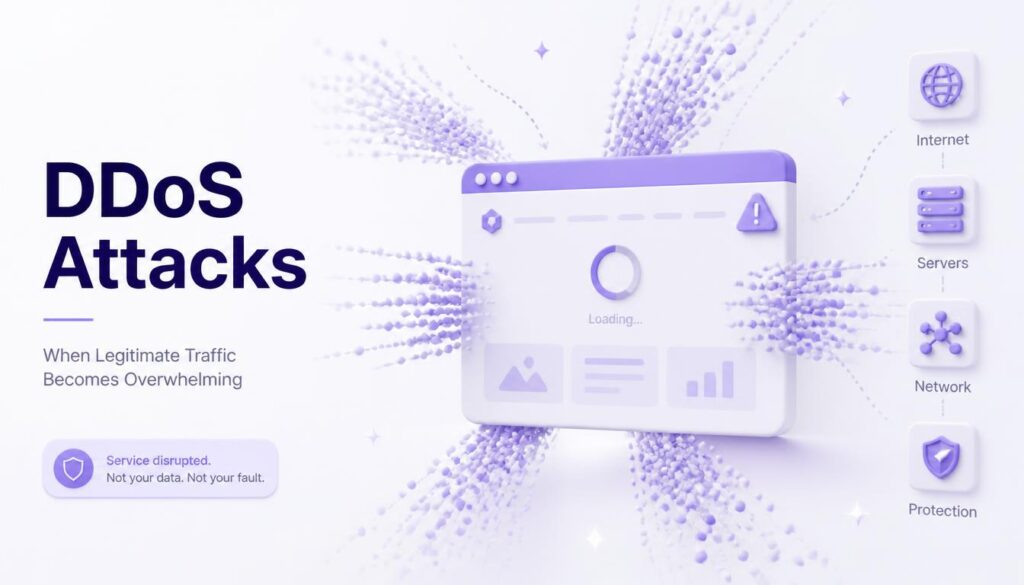
A DDoS attack floods your website or online systems with junk traffic until they slow down or crash entirely. For a business that depends on its website for sales or bookings, even a few hours of downtime can mean real lost revenue. It’s less common than phishing, but it remains one of the more disruptive cybersecurity threats for businesses that rely heavily on their online presence.
What helps: Many hosting providers and content delivery networks now offer basic DDoS protection as a standard feature, it’s worth confirming yours is actually turned on.
11. Shadow AI and Unapproved Tools
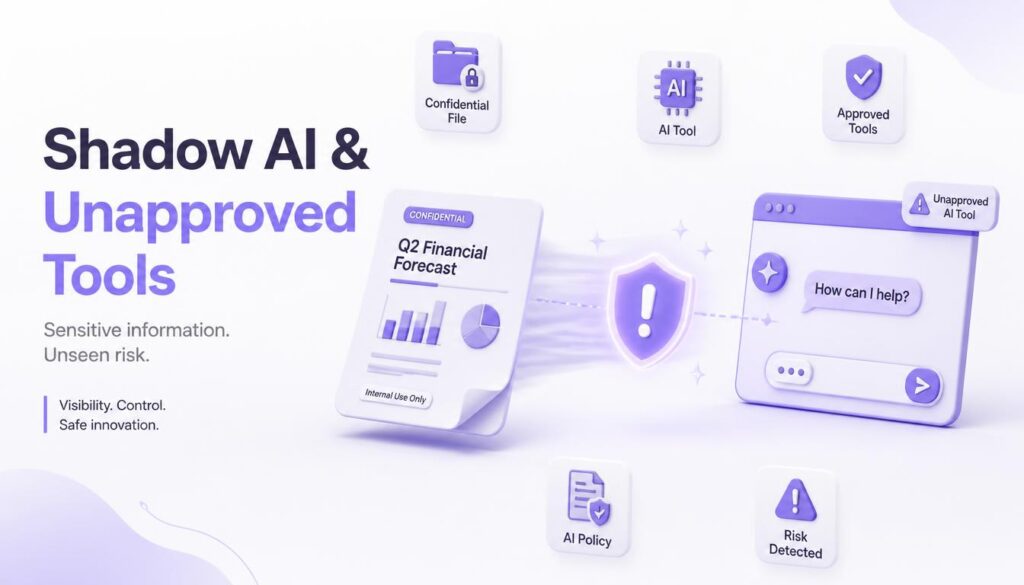
This is a newer entry, but it’s growing fast. Employees pasting sensitive client data into a free AI chatbot to save time, without any oversight from IT, has become a genuine data exposure risk. Recent industry research has found that a significant share of AI-related security incidents stem from a lack of basic governance around how these tools get used inside a company. It’s quickly becoming one of the newest cybersecurity threats for businesses to keep an eye on.
What helps: A short, clear internal policy on which AI tools are approved for work use, and a reminder that anything typed into an unapproved tool should be treated as potentially public.
12. Physical Security Gaps
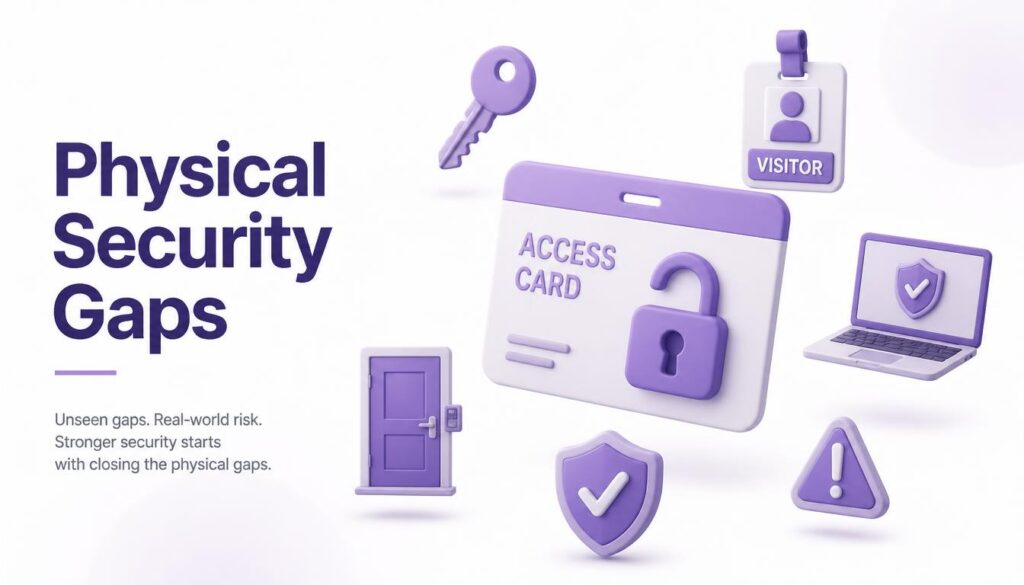
It’s easy to focus entirely on digital threats and forget the basics: an unlocked server room, a laptop left unattended in a coffee shop, or a visitor walking into an office unchallenged. Physical access to a device or network often bypasses digital defenses entirely. It’s an old-fashioned entry on this list, but it still ranks among the most avoidable cybersecurity threats for businesses today.
What helps: Simple habits, locking screens when stepping away, securing devices, and having a clear process for visitors, go a long way.
Why Cyber Threats to Small Business Hit Harder Than Expected
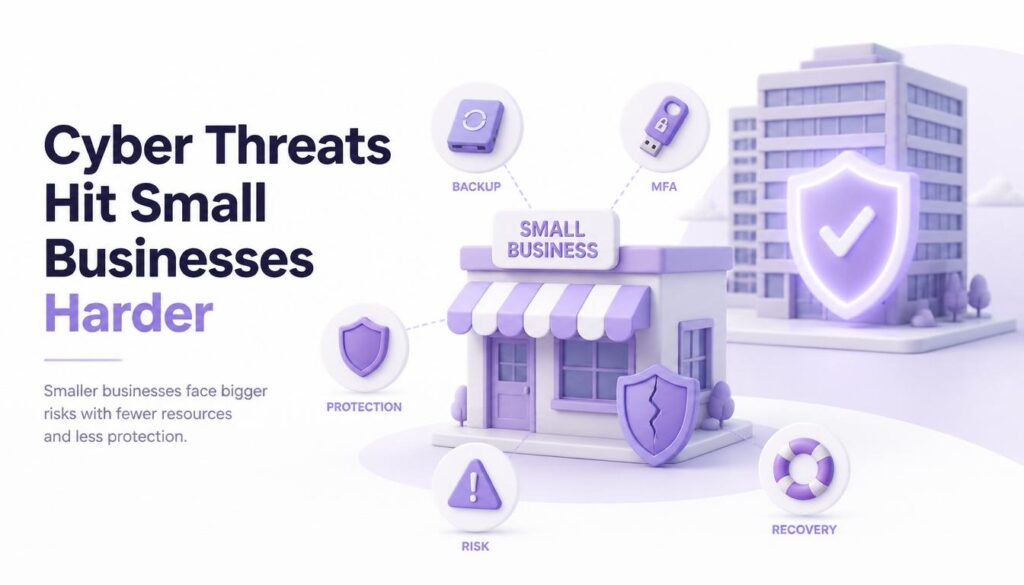
There’s a common misconception that hackers only go after big companies with deep pockets. In reality, cyber threats to small business are widespread precisely because smaller companies are seen as easier targets, and the same cybersecurity threats for businesses of any size tend to hit them the hardest. Fewer dedicated IT staff, tighter budgets for security tools, and less formal training all add up to a softer target.
The impact also lands differently, and it’s a big reason cyber threats to small business owners face tend to get less coverage but do more relative harm. A large enterprise might absorb a breach as a rough quarter. For a small business, a single serious incident, especially one involving ransomware or a wire fraud scam, can threaten the company’s survival outright. That’s why prevention, even modest, consistent prevention, tends to deliver an outsized return for smaller organizations.
What a Breach Actually Costs
It’s easy to treat cybersecurity as a “someday” project until you look at the real numbers behind today’s cybersecurity threats for businesses. According to IBM’s 2025 Cost of a Data Breach Report, the global average cost of a data breach was $4.44 million, while U.S. organizations faced a record average of $10.22 million per incident, driven largely by regulatory fines and longer recovery timelines. The report also found that breaches taking longer to detect and contain consistently cost more, which is a strong argument for catching problems early rather than hoping they don’t happen.
Those figures come from breaches across companies of every size, but the underlying lesson holds regardless of scale: faster detection, tested backups, and basic access controls aren’t just good practice, they measurably reduce financial damage when something does go wrong.
Practical Steps to Protect Your Business This Month
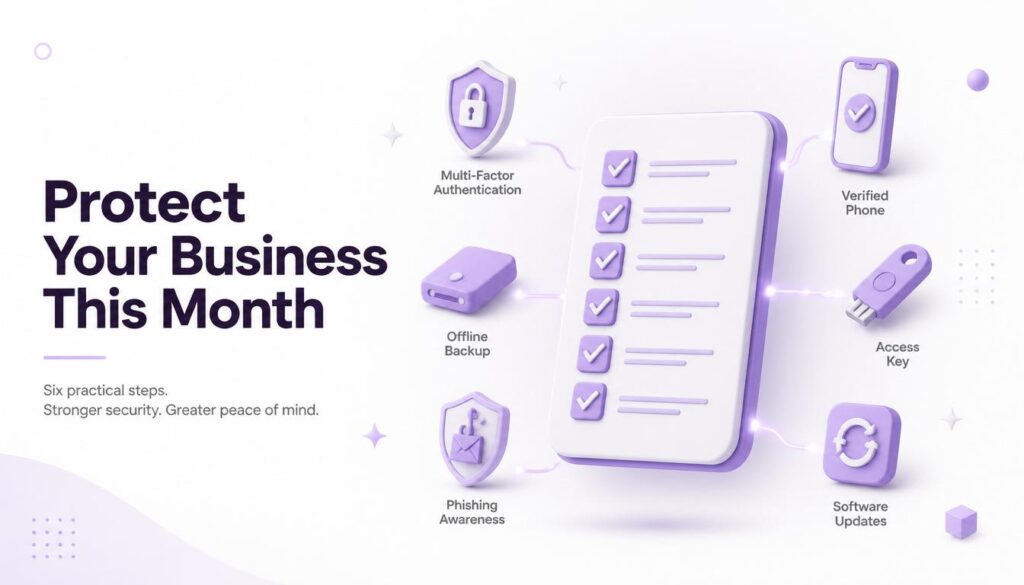
You don’t need to fix everything at once. Since most cybersecurity threats for businesses exploit the same handful of gaps, a short list of fixes goes a long way. If you’re starting from scratch, this order tends to produce the fastest reduction in risk:
- Turn on multi-factor authentication for email, banking, and cloud accounts
- Set up and test an offline backup of critical business data
- Write a one-page policy on verifying payment and data requests by phone
- Remove system access for any former employees or contractors
- Update software and firmware, and enable automatic updates where possible
- Run a short, practical phishing awareness session with your team
None of these require a large security team or budget. What they require is consistency, revisiting them every quarter rather than setting them up once and forgetting about them.
(Related reading opportunity: link to a comparison guide on managed security service providers here.)
Frequently Asked Questions
What is the biggest cybersecurity threat to small businesses? Among all cybersecurity threats for businesses, phishing remains the most common entry point, since it targets people rather than technology and doesn’t require any technical vulnerability to succeed. Ransomware, often delivered through a successful phishing attempt, tends to cause the most financial damage once it takes hold.
How often should a business review its cybersecurity measures? A quarterly review is a reasonable baseline for most small and mid-sized businesses given how fast cybersecurity threats for businesses continue to evolve, covering access permissions, software updates, and backup testing. Businesses handling sensitive customer data or operating in regulated industries may need more frequent checks.
Can a small business really afford proper cybersecurity? Yes. Many of the most effective defenses against common cybersecurity threats for businesses, MFA, backups, access reviews, and basic staff training, cost little to nothing beyond time. The bigger risk is usually the cost of doing nothing and absorbing a breach later.
Do employees need special training to avoid cyber threats? Not extensive training, but regular, short, practical sessions matter far more than a single annual course. Employees who know what a suspicious request looks like are one of the strongest defenses a business has.
Is cyber insurance worth it for a small business? For many businesses, yes, particularly those handling customer payment data or operating in industries with strict compliance requirements. Cyber insurance won’t prevent an attack, but it can significantly soften the financial impact if one occurs, and insurers often require the same basic protections outlined above. Given how costly cyber threats to small business budgets can be, that trade-off is usually worth it.
Final Thoughts
Cybersecurity threats for businesses aren’t going away, and pretending otherwise doesn’t make the risk smaller. What actually helps is treating security as an ongoing habit rather than a one-time project against evolving cybersecurity threats for businesses: strong passwords and MFA, tested backups, careful vendor and access management, and a team that knows how to spot a scam before it becomes a costly mistake.
Most cyber threats to small business owners encounter are preventable with the same handful of habits covered above. If you’re not sure where your business currently stands, a good next step is a basic security assessment, either through your internal IT team or a trusted external provider, to identify the gaps that matter most before an attacker finds them first.