 Live Chat
 Contact
 Shopping Cart
 Rashid Malla
You saw the ad. “AI agent for $20 a month.” You signed up, connected a few tools, and felt like you’d just automated your entire workflow for the price of a streaming subscription.
Then the real bill showed up.
The hidden cost of AI agents is the gap between what a vendor quotes and what you actually pay once the agent starts working. That gap includes API overages, integration tools, monitoring, hosting, and hours of human time nobody put in the sales deck. For most businesses, this hidden layer costs 5 to 10 times more than the advertised price.
This guide breaks down exactly where that money goes, what the real 2026 numbers look like, and how to keep your AI agent budget from spiraling before it ever pays for itself.
What Is the Real Cost of AI Agents?
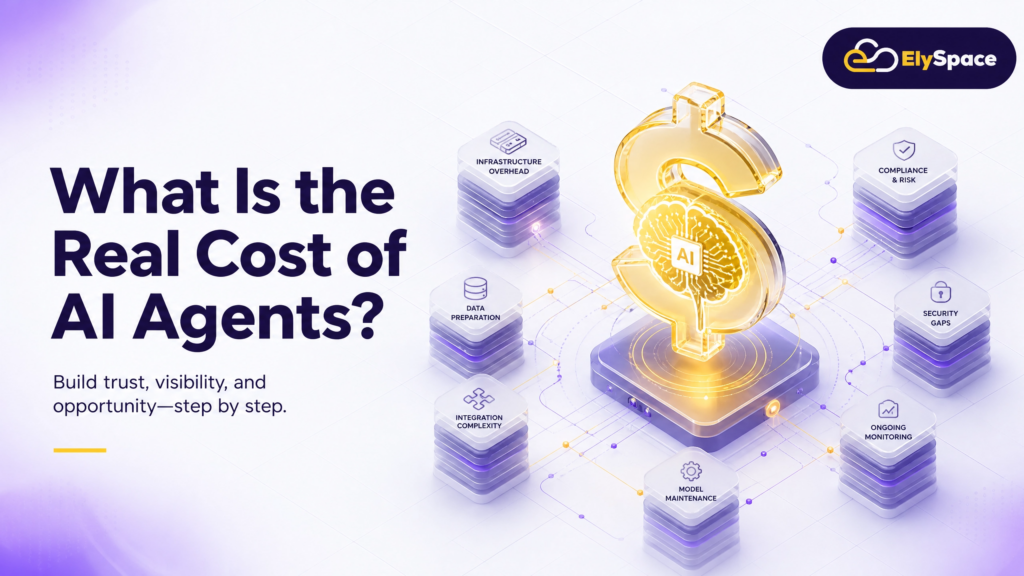
An AI agent is not a chatbot. A chatbot answers a question and stops. An agent plans, calls tools, checks its own work, and keeps going until a task is done. That extra thinking is exactly where the extra cost hides.
Every planning step, every tool call, and every retry consumes tokens. Tokens cost money on every single turn, not just the first one. A simple task might use a few hundred tokens. A multi-step agent solving the same task can burn tens of thousands, because it has to carry the entire conversation history forward on every turn.
That is the real cost of AI agents: not the license fee, but the compounding cost of the agent “thinking out loud” every time it acts.
Why the Advertised Price Is Misleading
Vendors advertise the entry price because it is the easiest number to sell. A $20/month plan looks approachable. It is also rarely the number you end up paying once the agent is doing real work.
Independent analysis of AI agent spending across dozens of businesses found the average hidden cost sits around $327 a month on top of the base subscription — more than sixteen times the advertised price. That markup comes from API overages, storage fees, and the middleware needed to connect the agent to your actual tools.
The pattern holds at the enterprise level too. Vendor quotes for full AI agent builds typically cover only 50 to 60 percent of what a project actually ends up costing, with the rest surfacing mid-project as integration, governance, and delay costs nobody priced in upfront.
In short, the visible price is a floor, not a forecast.
7 Hidden Costs of AI Agents You Need to Budget For
1. API and Token Overages
This is the single biggest hidden cost of AI agents. Multi-step agents don’t make one API call — they make dozens per task, and every call bills separately. A coding agent has been documented growing from 2,000 tokens on a simple fix to 120,000 tokens once self-correction loops kicked in on the same task.
Run that pattern across a thousand daily tickets, and a modest bill becomes an enterprise-sized one overnight.
2. Reliability and Retry Costs
Agents fail. When they do, most systems are built to retry automatically until the task succeeds. Pushing an agent’s reliability from 80% to 99.9% can roughly triple the total token spend for the same workload, because the extra attempts, checks, and self-corrections all cost tokens too.
3. Integration and Middleware
An agent that can’t talk to your CRM, inbox, or database is a demo, not a tool. Connecting it requires middleware like Zapier, Make.com, or custom API work. A modest e-commerce support setup can easily add $50 to $150 a month in connector tools alone, before the agent answers a single real customer query.
4. Hosting and Infrastructure
If you’re running a custom agent rather than a fully managed platform, you need servers, a vector database for memory, and enough uptime to avoid dropped sessions. This is where dependable cloud hosting genuinely pays for itself an agent that goes down mid-task doesn’t just fail once; it can retry, loop, and burn tokens trying to recover from an outage that was preventable.
5. Monitoring and Debugging
Autonomous agents fail silently. Without logging and alerting in place, you often find out about a broken agent when a customer complains, not before. Monitoring and debugging tooling typically runs $30 to $80 a month for a small deployment, and considerably more at scale.
6. Data Cleanup and Preparation
An agent is only as reliable as the data behind it. Duplicate CRM records, inconsistent formats, and unstructured notes all have to be cleaned before an agent can use them safely. For some projects, this single step costs as much as building the agent itself.
7. Vendor Lock-In
Building deeply around one provider’s tools and prompt formats feels efficient until you need to switch. Migrating prompt templates and tool schemas away from a single vendor’s API has reportedly cost some teams over $100,000 in rework after a planned switch to a different model provider.
What Businesses Actually Pay in 2026
Numbers vary by scale, but the pattern is consistent across every source: the sticker price is a small fraction of the real bill.
| Cost Layer | Typical Range (2026) |
| Simple FAQ agent (build) | $15,000 – $20,000 |
| Mid-complexity agent with CRM integration | $25,000 – $75,000 |
| Enterprise agent with multi-system integration | $60,000 – $150,000+ |
| Monthly operational cost (small deployment) | $320 – $900 |
| Monthly operational cost (mid-size business) | $2,000 – $8,000 |
| Annual maintenance (% of build cost) | 15% – 30% |
A three-year total cost of ownership analysis found that the upfront build typically represents only 25 to 35 percent of what a business spends on an agent over its full lifespan. Everything else is operations, maintenance, and the hidden costs above.
How to Calculate the True Cost of an AI Agent
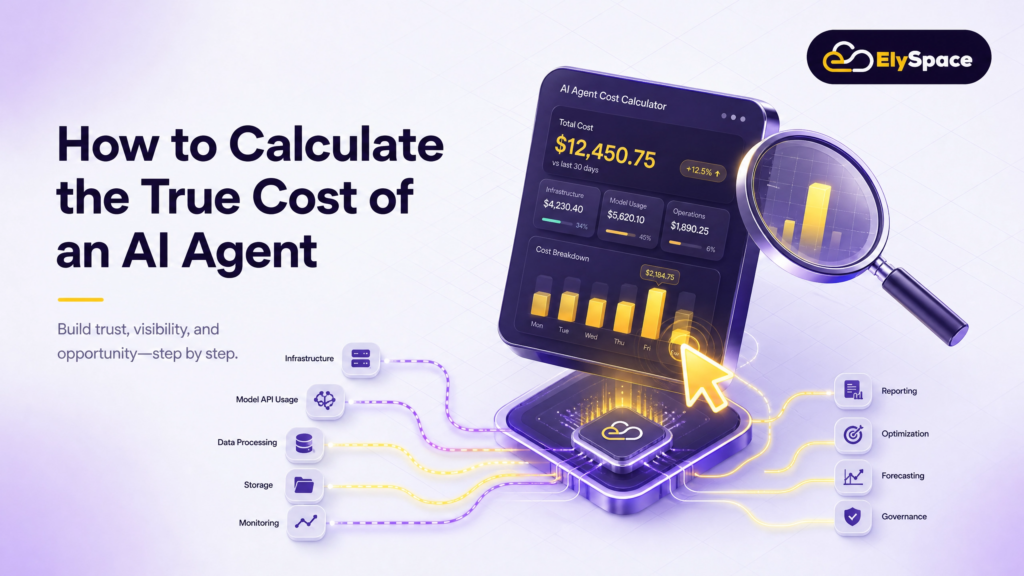
Before you sign a contract, run the number through this simple framework instead of trusting the vendor quote alone.
- Start with the vendor quote. This is your visible cost, not your real one.
- Add 40–60% for integration. This covers connecting the agent to your actual systems, not a demo environment.
- Add monthly operational cost. Include API usage, hosting, and monitoring, not just the license fee.
- Add a maintenance line. Budget 15–30% of the build cost every year for tuning and updates.
- Add a training and adoption line. An agent nobody trusts to use correctly generates zero return.
If a $100,000 quote is on the table, expect $140,000–$160,000 in actual year-one spend once every layer above is included.
How to Reduce the Hidden Cost of AI Agents
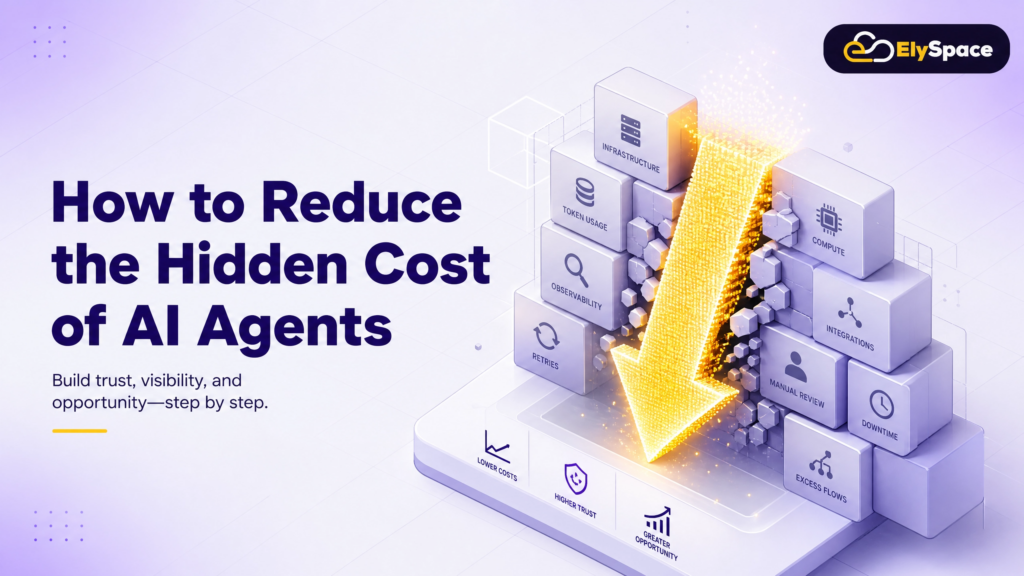
You cannot eliminate these costs, but you can control them with a few practical habits.
Cap the loops. Set a hard limit on how many times an agent can retry or self-correct before it escalates to a human. Unbounded loops are the single biggest driver of runaway token bills.
Route by complexity. Not every task needs a top-tier model. Send simple requests to a cheaper, faster model and reserve the expensive one for genuinely hard tasks.
Benchmark before you scale. Test token usage and failure rates on your own traffic before rolling an agent out company-wide. A framework that looks efficient in a generic benchmark can behave very differently on your specific workload.
Keep infrastructure reliable. A stable hosting environment reduces the retries, timeouts, and dropped sessions that quietly inflate your token bill. This is one of the few hidden costs you can largely design away upfront by choosing dependable web hosting and cloud infrastructure from the start.
Decouple from a single vendor. Keep prompt templates and tool schemas in version control, separate from any one provider’s SDK, so switching later is a configuration change and not a rebuild.
Is an AI Agent Still Worth It?
Yes, for the right use case. Businesses that scope their agent projects carefully and budget for the hidden layers from day one report strong returns, with some analyses pointing to 250% ROI within 24 months on well-planned deployments.
The failures come from a specific pattern: teams that budget only for the advertised price, skip the integration and maintenance planning, and get blindsided six months in when the real bill arrives. Gartner has projected that a significant share of agentic AI projects will be shelved by 2027 for exactly this reason escalating costs and unclear business value.
The hidden cost of AI agents isn’t a reason to avoid them. It’s a reason to budget honestly before you start.