 Live Chat
 Contact
 Shopping Cart
 Irfan Bhat
Most Common Online Scams and How to Avoid Them is a complete guide to understanding today’s biggest cyber threats. Learn about phishing scams, fake websites, online shopping fraud, tech support scams, investment scams, and more. Discover expert tips to recognize warning signs, protect your personal information, and stay safe while using the internet.
What Are Online Scams?

Let me be honest with you: online scams don’t happen only to careless or uneducated people. They happen to doctors, engineers, teachers, and even cybersecurity professionals. I have seen people who consider themselves tech-savvy lose thousands of rupees in minutes because a scammer caught them at the wrong moment.
Online scams are fraudulent tricks carried out over the internet through messages, calls, emails, fake websites, or social media with one single goal: to steal your money, your data, or both. Every year, millions of people across India fall victim, and the numbers are not going down. If anything, the scams are getting smarter, more personal, and harder to spot.
The fact that you are reading this right now means you are already ahead of most people. Understanding how these scams actually work, not just vague warnings, but the real tactics, is the single most effective thing you can do to protect yourself.
Why Online Scams Are Increasing

Think about how differently we live compared to just five or six years ago. We shop on our phones, transfer money with a tap, apply for jobs on WhatsApp, and trust strangers on Instagram with our purchases. That convenience is real and genuinely valuable, but it has also handed scammers an enormous playground.
In India, cybercrime reports have been climbing steadily, with financial fraud at the very top. A few honest reasons why this is happening:
More of daily life has moved online, including banking, shopping, job hunting, and even government services, and many people are navigating this without much guidance.
Scammers now have access to AI tools that let them fake voices, clone faces in videos (deepfakes), and write messages so polished they genuinely look official.
A large number of first-time internet users in smaller towns and rural areas are coming online with little awareness of the risks that await them.
Scammers specifically target people at vulnerable moments: someone desperate for a job, someone drowning in debt and looking for a loan, someone lonely and looking for a connection, someone excited about a deal that seems too good to be true.
Knowing this does not mean you should live in fear online. It means you should stay sharp.
Most Common Online Scams You Should Know

1. Phishing Scams
Phishing has been around for decades, and it still works, which tells you something. A scammer sends you a message pretending to be someone you already trust: your bank (HDFC, SBI, Axis, take your pick), Amazon, or a government body like UIDAI or the Income Tax Department.
The message is designed to create panic. Your KYC has expired. Your account has been compromised. You have a pending refund. There is always some urgency. You click the link, land on a website that looks completely real, enter your login or OTP, and it’s gone, your credentials, your access, possibly your money.
How to spot it: Look closely at the sender’s email or the URL in the link. Real banks send you to addresses like hdfcbank.com, not hdfcbank-kyc-update.com or some random string of letters. Also, no legitimate bank will ever ask for your password or OTP through a message or email. Ever.
2. Fake Online Shopping Scams
You are scrolling through Instagram and an ad stops you. A product you have been wanting at 70% off. The page looks clean, the reviews look good, and the payment process feels normal. So you order.
Then nothing comes. Or something arrives that looks nothing like what was advertised. The store has disappeared, your DM goes unanswered, and the phone number on the website does not connect.
These fake stores are built to last just long enough to collect payments from hundreds of buyers. They steal product photos from legitimate brands, manufacture fake reviews, and vanish.
How to spot it: Before buying from any website or Instagram store you have never heard of, search the name followed by “reviews” or “scam” on Google. Avoid any store that only accepts direct bank transfer or UPI with no buyer protection. For unfamiliar brands, platforms like Amazon, Flipkart, and Meesho at least offer some recourse if something goes wrong.
3. Job Offer Scams
These scams prey on one of the most painful experiences a person can go through, looking for work and not finding it. You get a WhatsApp message from someone claiming to be an HR from a well-known company. The job is remote, the pay sounds excellent, and they are very enthusiastic about you.
Then comes the catch: a registration fee, a security deposit, or a training charge. Pay it, and the job disappears. Sometimes they push further, asking for your Aadhaar, PAN, and bank details for “salary processing,” setting you up for identity fraud on top of the money you already lost.
How to spot it: No real company asks you to pay money to get hired. Full stop. If a job offer arrived without you applying, treat it with real suspicion. Verify through the company’s official website or their LinkedIn page before engaging further.
4. Lottery and Prize Scams
“Congratulations! You have been selected to receive ₹50,000. Tap here to claim.” This one has been around so long it feels like a joke — but it still catches people, particularly those who are less familiar with how these tricks work.
The message insists you have won something — cash, a phone, a car — through some random draw. To receive it, you just need to pay a small processing fee or provide your bank details. There is no prize. There never was. The entire thing exists to collect that fee or your account information.
How to spot it: You cannot win a contest you never entered. And no legitimate prize distribution company asks winners to pay fees before getting their winnings. If it sounds too good to be true without any effort on your part, it is.
5. Romance Scams
These are the ones that hurt people the most, not just financially, but emotionally. A stranger reaches out on a dating app or Facebook. They are warm, attentive, and seem genuinely interested in you. Over weeks or months, a real emotional bond forms. Then one day, there is a crisis, a medical emergency, a stranded flight, a business deal that needs just a bit of money to go through.
The victim sends money, sometimes multiple times, because by this point, they genuinely care about this person. Except that the person does not exist. The photos are stolen from someone else’s account, the stories are scripted, and the relationship was a performance from the very beginning.
How to spot it: Be cautious when someone falls for you quickly but always has a reason not to video call or meet in person. Take their profile photo and do a reverse image search on Google if the same face shows up under a different name, you have your answer.
6. Tech Support Scams
A pop-up takes over your screen. It looks like alarming red text, warning sounds, a message saying your computer is infected, and you must call Microsoft or Apple support immediately. You call, a “technician” picks up, asks to remotely access your computer to fix the problem, and then charges you for repairs.
The problem, of course, never existed. And while they had remote access, they may have installed actual malware, collected your saved passwords, or set things up to return later.
How to spot it: Microsoft, Apple, and Google do not send pop-up alerts asking you to call a phone number. If this happens, close your browser tab (or force-quit if needed) and run a scan with a legitimate antivirus you already have installed.
7. Investment and Crypto Scams
“Invest ₹5,000 today and earn ₹2,000 daily.” These messages flood WhatsApp groups and Telegram channels, and they are designed to appeal to something real: the desire for financial security and the fear of missing out.
Crypto scams have become particularly sophisticated. Victims are shown professional-looking dashboards with growing “profits”, but when they try to withdraw, there is always another fee to pay first. The profits were never real. It was all a display designed to keep you investing more.
How to spot it: There is no investment in the world that guarantees fixed daily returns with zero risk. If someone is pushing you to invest urgently before an “offer closes,” they are manufacturing pressure. In India, only invest through platforms registered with SEBI.
Related: how to check if an advisor or app is SEBI-registered
8. OTP and Bank Fraud Scams
This one is worth reading carefully because it is causing real, serious financial harm to thousands of families across India, including right here in Kashmir.
A caller already knows things about you: your name, your bank, and sometimes even recent transactions. That familiarity is deliberate it lowers your guard. They say they are calling from your bank to verify your account or upgrade your service. They just need to confirm your OTP.
The moment you share it, the money leaves your account. The entire process takes less than two minutes.
How to spot it: Your OTP exists for one purpose: to verify an action you yourself are taking. No bank employee, no KYC officer, no government official will ever need to ask you for it. The second someone on a call asks for your OTP, hang up.
How to Avoid Online Scams: Practical Tips That Actually Work
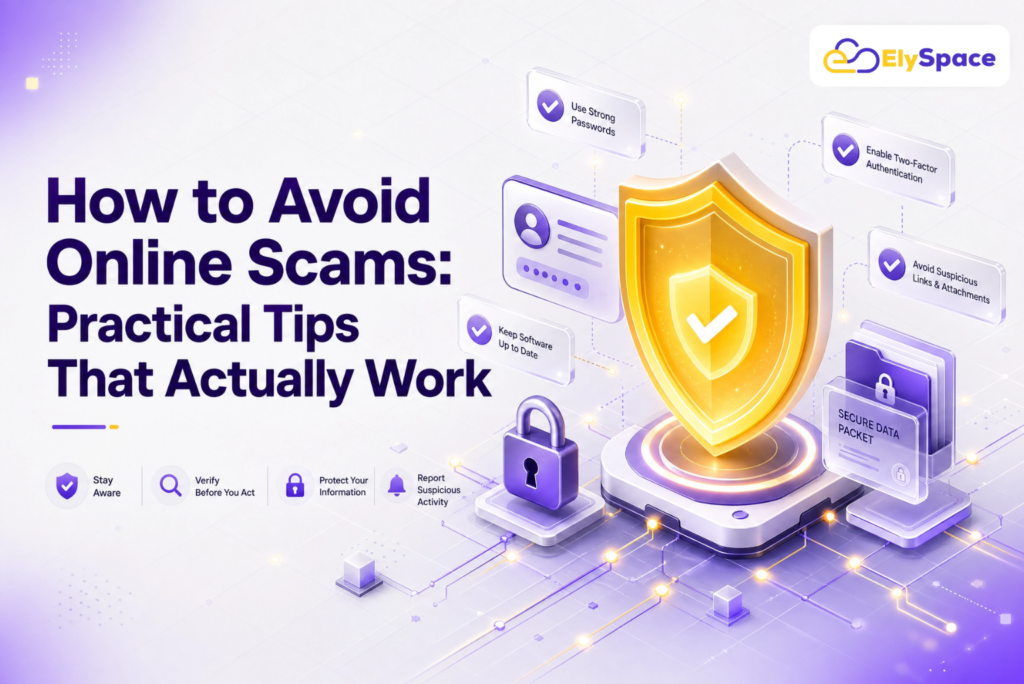
No one is immune to scams, but these habits genuinely reduce your risk:
Pause before you act. Urgency is a scammer’s most reliable tool. “Your account will be blocked in 24 hours.” “This offer expires tonight.” That pressure is manufactured to stop you from thinking clearly. Slow down on purpose.
Verify the source independently. Got a message from your bank? Do not click the link in the message. Open your browser, go to the bank’s official website directly, and check there. Call the number printed on your debit card, not any number given to you in a message.
Never share OTPs, passwords, or PINs. There is no legitimate scenario where anyone needs these from you over a call or message. Not your bank, not the government, not tech support. Nobody.
Use strong, unique passwords. Using the same password across multiple accounts means one breach exposes everything. A password manager makes this much easier to maintain.
Enable two-factor authentication (2FA). Even if someone gets hold of your password, 2FA means they still cannot get in without a second verification. Turn it on for your email, banking apps, and social media.
Research before you buy. Search the website name before purchasing. Check for HTTPS in the URL. Look for a real return policy and a physical address. If the store has no history and no reviews, that tells you something.
Be cautious on social media. Treat unexpected investment offers, job opportunities, and money transfer requests from people you have not met in person with serious skepticism, regardless of how friendly or professional they seem.
Keep your software updated. Outdated apps and operating systems have known security gaps that scammers actively exploit. Updates close those gaps.
Educate your family. Elderly relatives and young teenagers are two of the most targeted groups. A simple, honest conversation about these scams can genuinely prevent something devastating.
Report scams. In India, report cybercrime at cybercrime.gov.in or call the helpline at 1930. Reporting helps authorities track patterns and protect others.
What to Do If You Fall Victim to an Online Scam
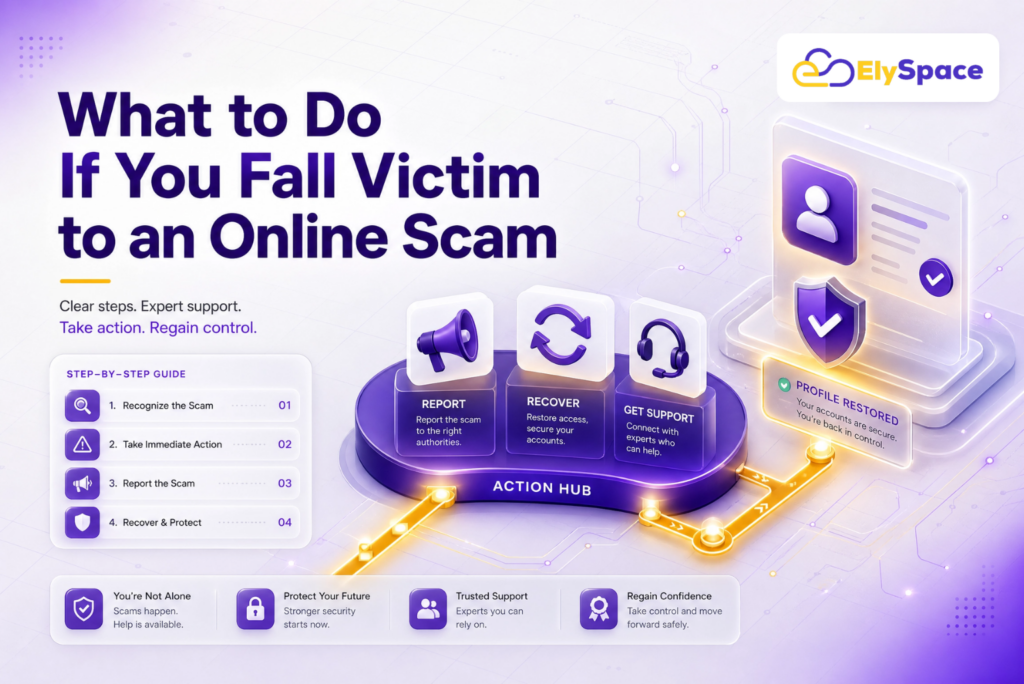
First, and this matters, do not blame yourself. Scammers are professionals. Their entire job is to exploit human psychology, and they are good at it. If you have been scammed, your priority now is damage control, not shame.
Step 1: Contact your bank immediately. If money was transferred, call the fraud helpline within minutes. The faster you report, the better the chance of stopping or reversing the transaction. The national cybercrime helpline is 1930.
Step 2: Change your passwords. If your login credentials were shared or compromised, change the passwords on all connected accounts, especially email, banking apps, and UPI.
Step 3: File an official complaint. Go to cybercrime.gov.in or visit your nearest police station to file an FIR. Save all screenshots, transaction IDs, and message records before you do.
Step 4: Warn others. Tell your family and friends what happened. Share the details on social media if you are comfortable. Your experience is worth something it could stop someone else from going through the same thing.
Step 5: Do not be ashamed. Repeat: scammers are manipulators who work full-time at this. Being deceived does not make you foolish. Acting quickly after it happens is what actually matters.
Online Scams in India and Kashmir: What You Need to Know
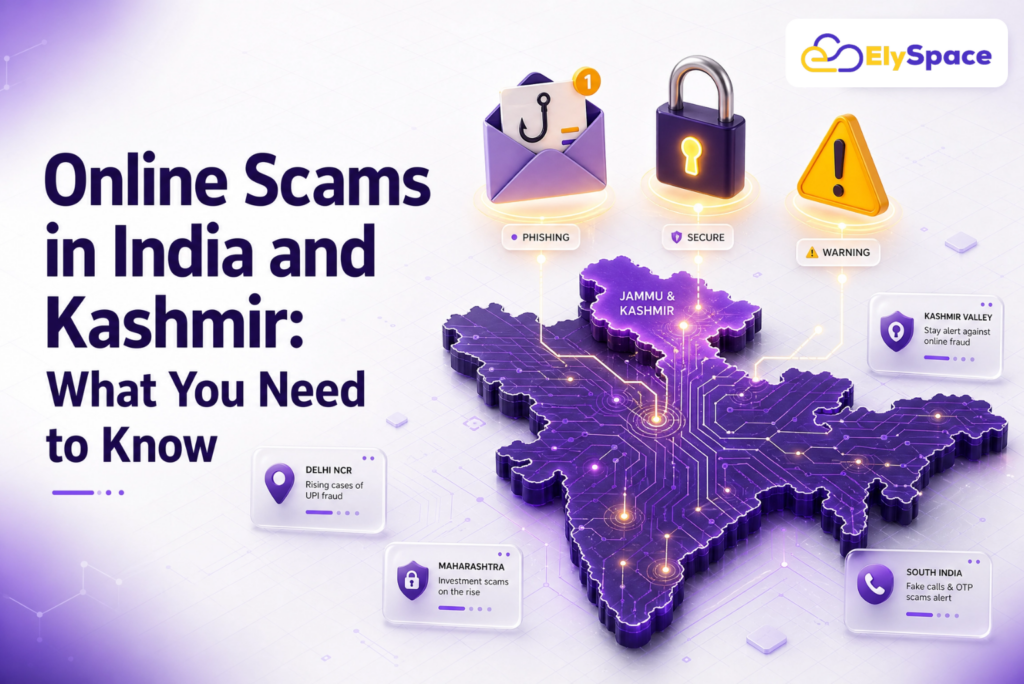
Kashmir has seen a sharp rise in cybercrime cases over the past few years, and it tracks closely with the region’s growing internet access and digital payment adoption. That growth is a good thing, but it comes with risks that not everyone has been prepared for.
Locally reported scams include fake job offers targeting young graduates who are genuinely struggling to find work, fraudulent investment schemes spreading through local WhatsApp groups, OTP fraud disproportionately affecting elderly residents, and fake government scheme scams impersonating programmes like PM Awas Yojana or scholarship portals.
The Jammu & Kashmir Police Cyber Cell is actively working on these cases. If you or someone you know has been scammed in Kashmir, report it to the J&K Cyber Cell directly or through the national portal at cybercrime.gov.in.
The more people in this region know about these tactics, the harder it becomes for scammers to keep operating. Share this with your family, your neighbours, your WhatsApp groups. Awareness is genuinely protective.
Frequently Asked Questions (FAQs)

Q: What is the most common online scam in India right now?
OTP fraud and bank impersonation are currently among the most reported. A caller pretends to be a bank employee, builds enough trust to get you to share your OTP, and empties your account in seconds.
Q: How can I check if a website is a scam?
Look for HTTPS in the URL. Search the website name plus the words “scam” or “reviews” on Google. Checking when the domain was registered using WHOIS sites created very recently, with no reviews, is a warning sign.
Q: Can I get my money back after an online scam?
Sometimes, especially if you report quickly. Call your bank immediately and file a complaint on the cybercrime portal the same day. Banks have a better chance of reversing a transaction when it is reported quickly.
Q: Are WhatsApp job offers real?
The vast majority of unsolicited job offers on WhatsApp are scams. Real employers advertise through official channels, LinkedIn, or established job portals like Naukri.com. If a job comes to you without you applying and involves paying anything, it is almost certainly not real.
Q: What should I do if I accidentally gave my OTP to a scammer?
Call your bank immediately and ask them to block your account or card. Change your internet banking password and UPI PIN right away. Then file a complaint at cybercrime.gov.in or call 1930.
Final Thoughts
Online scams are not going to disappear if anything, they are going to get more convincing as the tools available to scammers improve. But so is your ability to recognise them.
You now know how the most common scams actually work, what the warning signs look like, and exactly what to do if something goes wrong. That knowledge is genuinely protective for you and for the people around you.
Stay cautious. Verify before you trust. And share this with someone who needs it. One informed person really can protect an entire household.