 Live Chat
 Contact
 Shopping Cart
 Irfan Bhat
Choosing the right essential website features can make the difference between a visitor who bounces in five seconds and one who becomes a lifelong customer. Whether you run a medical practice, a coaching business, a retail shop, or an early-stage startup, your website is often the first real interaction someone has with your brand and first impressions online move fast.
Most business owners don’t lack ambition when it comes to their website; they lack a clear checklist of what actually matters. It’s easy to get distracted by trendy animations or a clever tagline while missing the functional details that quietly drive or kill conversions.
This guide breaks down the features that matter most across four common business types, so you can prioritise what actually drives results instead of guessing. By the end, you’ll have a practical, prioritised list you can hand directly to a designer or developer.
Why Website Features Matter More Than Ever
People decide whether to trust a business within seconds of landing on its homepage. A cluttered layout, a slow-loading page, or a missing contact form can quietly cost you leads every single day.
According to Google’s Core Web Vitals research, page experience directly influences both user behaviour and search rankings. That means the features you choose aren’t just cosmetic; they’re functional business decisions.
This matters even more for smaller, service-based businesses. A national retail chain can absorb a clunky website because customers already know the brand. A solo doctor’s office, boutique shop, or two-person startup usually doesn’t have that luxury the website has to do the trust-building work that a recognisable name would otherwise do.
The Essential Website Features Every Business Needs
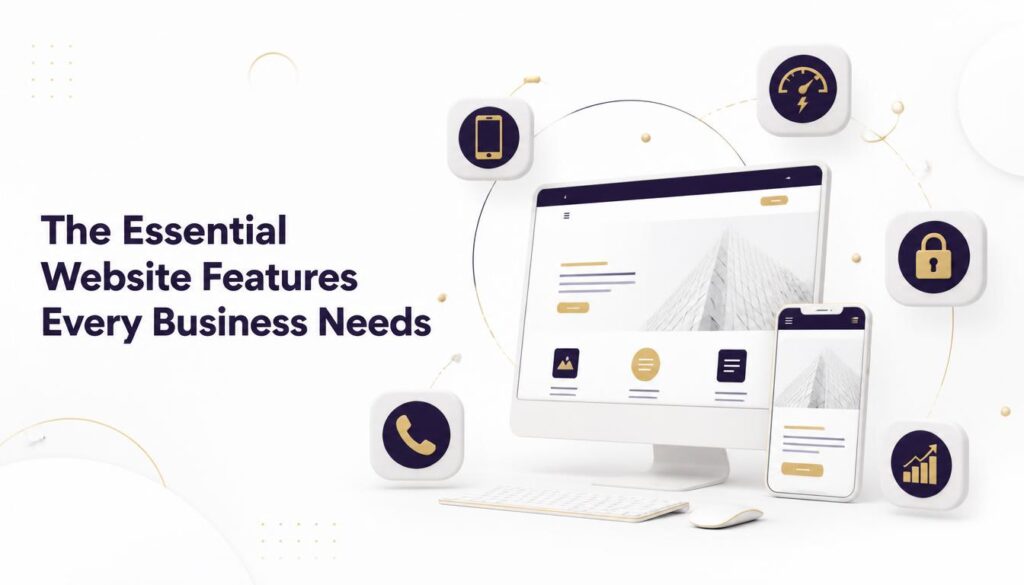
Before diving into industry-specific needs, every site, regardless of niche, should include these foundational elements:
- Mobile-responsive design that adapts cleanly to phones and tablets
- Fast load times, ideally under three seconds
- Clear calls-to-action guiding visitors toward booking, buying, or contacting you
- Secure HTTPS encryption to protect visitor data
- Simple, intuitive navigation with no more than 5–7 main menu items
- Accessible design that works with screen readers and keyboard navigation
These fundamentals form the backbone of any high-performing site. Once they’re in place, you can layer on features tailored to your specific audience. Skipping straight to the “exciting” industry-specific features without nailing these basics is one of the most common and costly mistakes business owners make when redesigning a site.
Must-Have Features for Doctors and Healthcare Providers
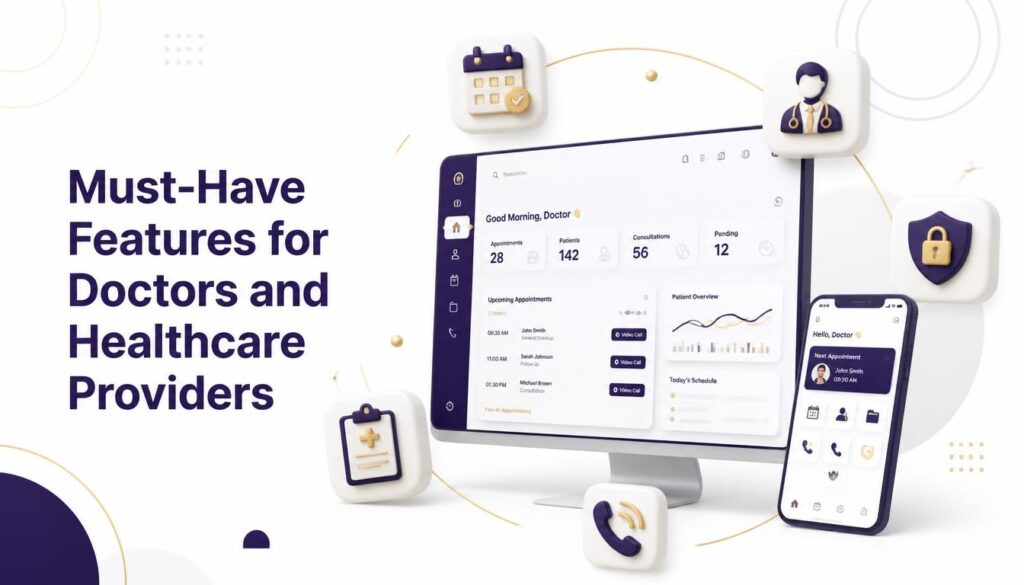
Healthcare websites carry extra responsibility. Patients need to trust the information they find, and the experience needs to feel calm and professional rather than transactional.
Online Appointment Booking
A visible, easy-to-use booking widget reduces phone tag and no-shows. Patients increasingly expect to schedule visits the same way they order food or book a haircut instantly, online.
HIPAA-Aware Contact Forms
Any form collecting patient information should be built with privacy compliance in mind. This isn’t optional; it’s a legal and ethical baseline.
Provider Bios and Credentials
Short, warm bios with credentials build immediate trust. Patients want to know who is treating them before they ever pick up the phone.
Insurance and FAQ Pages
A dedicated page that covers accepted insurance plans, payment options, and common patient questions reduces repetitive phone calls. It also reassures anxious patients before their first visit, which matters more in healthcare than almost any other industry.
Must-Have Features for Coaches and Consultants

Coaching businesses sell transformation, and their websites need to convey credibility and personality at the same time.
Client Testimonials and Case Studies
Social proof is one of the most persuasive tools available. According to the Content Marketing Institute, buyers consistently rank peer reviews and testimonials among the top factors influencing purchase decisions.
Discovery Call Scheduling
A simple calendar embed (like Calendly-style integrations) removes friction from the sales process and lets prospects self-select into a conversation.
A Clear Offer Page
Coaches often bury their pricing or packages in vague language. A dedicated, plainly written offer page outlining what’s included and for whom — converts far better than scattered blog mentions.
Free Resource or Lead Magnet
Offering a short guide, checklist, or mini-training in exchange for an email address helps coaches nurture prospects who aren’t ready to book a call yet. It also builds an audience you own, rather than one you’re renting from a social media platform.
Must-Have Features for Shops and E-Commerce
Retail and e-commerce sites live or die on friction. Every extra click between “interested” and “purchased” is a chance to lose the sale.
Streamlined Checkout
A multi-page, account-required checkout process is one of the fastest ways to lose a cart. One-page or guest checkout options noticeably improve conversion rates.
High-Quality Product Imagery
Shoppers can’t touch or try products online, so images (and ideally short videos) need to do that job instead. Multiple angles and zoom functionality help close the gap.
Live Inventory and Shipping Transparency
Customers want to know what’s in stock and when it will arrive before they commit to buying. Clear shipping timelines reduce cart abandonment and support tickets alike.
Customer Reviews on Product Pages
Star ratings and written reviews placed directly on product pages reduce hesitation at the exact moment a shopper is deciding whether to buy. Even a handful of honest reviews can meaningfully lift conversion rates.
Must-Have Features for Startups
Startups face a unique challenge: they often need to build trust and explain a new idea simultaneously, all while resources are tight.
A Sharp, Scannable Homepage
Visitors should understand what the company does within five seconds. That means a clear headline, a supporting sentence, and a single primary call-to-action above the fold.
Investor and Press Pages
Even pre-launch, having a simple “About” or “Press” page signals legitimacy to investors, journalists, and early adopters researching the company.
Waitlist or Early-Access Capture
Email capture tools let startups build an audience before the product is even fully ready, turning curiosity into a warm launch list.
Social Proof Without Customers Yet
Early-stage startups often lack traditional testimonials, but they can still borrow credibility; founder backgrounds, notable advisors, or press mentions all help fill that gap until customer reviews arrive.
For a deeper look at conversion-focused design principles, Nielsen Norman Group offers well-researched, practical guidance that applies across industries.
Quick Reference: Top Priority by Business Type
| Business Type | Top Priority Feature | Why It Matters Most |
| Doctors | Online appointment booking | Reduces no-shows and phone tag |
| Coaches | Discovery call scheduling | Removes friction from the sales process |
| Shops | Streamlined checkout | Every extra step risks losing the sale |
| Startups | Sharp, scannable homepage | Visitors must understand the offer in seconds |
Bringing It All Together
Across doctors, coaches, shops, and startups, the specifics change but the underlying goal is the same: reduce friction, build trust, and make the next step obvious. The businesses that grow fastest online are rarely the flashiest; they’re the ones that make it effortless for a visitor to say yes.
Frequently Asked Questions
How many essential website features does a small business actually need? There’s no fixed number, but most small businesses see the biggest impact from five to eight well-executed features rather than a long list of half-built ones. Start with the foundational elements, then add one or two industry-specific features at a time.
Do I need a developer to add these features, or can I use a website builder? Many of these features — booking widgets, review plugins, email capture forms are available as plug-and-play tools on platforms like WordPress, Squarespace, and Shopify. A developer becomes more valuable for custom functionality or complex integrations.
Which feature should I prioritise first if my budget is limited? Start with mobile responsiveness and page speed. Both directly affect search visibility and conversions, and neither requires ongoing costs once implemented correctly.
Conclusion
Whether you’re running a clinic, a coaching practice, a shop, or a startup, the right combination of essential website features turns casual visitors into paying clients. Start with the fundamentals — speed, mobile design, and clear calls-to-action — then layer on the industry-specific tools your audience actually needs.
If you’d rather not piece this together on your own, Elyspace specialises in building websites around exactly these priorities — from booking systems for doctors to streamlined checkout flows for shops. Ready to see how your current site measures up? Visit Elyspace today and get a personalised breakdown of what to fix first.