 Live Chat
 Contact
 Shopping Cart
 Mehran Majeed
Most business owners I talk to in Kashmir still think of a website as something you build once and leave alone. That mindset is already outdated, and it’s going to get more outdated fast. The future of websites isn’t a single dramatic shift it’s a stack of smaller changes in speed, security, and how people actually interact with a page, all landing around the same time.
If you run a hotel, a travel agency, or a local shop and you’re wondering whether your current site will still hold up in a few years, here’s an honest, non-hype look at what’s actually changing and what you should do about it now.
Where Websites Stand Today
Right now, most small business websites in India are still built the way they were five years ago: a homepage, a few service pages, a contact form, maybe a blog nobody updates. That’s not a criticism it’s just where the market is. But the gap between a site like that and a site built with 2026-era expectations is widening every year.
Three forces are driving that gap: artificial intelligence, stricter performance standards, and a shift in how people search for things in the first place. None of these are hypothetical. They’re already shaping which sites show up in search results and which ones lose visitors before the page even finishes loading.
AI Is Changing How Websites Get Built and Experienced
AI tools already help write code, generate layout variations, and personalize what a visitor sees based on their behavior. That trend isn’t slowing down. By the end of the decade, expect more websites to adjust their own content, offers, and even layout in real time depending on who’s visiting and what they’re looking for.
This matters for the future of web development specifically, not just design. Developers are increasingly working alongside AI coding assistants, which speeds up routine work but raises the bar on what “custom” actually means copying a template and calling it a business site will stand out even less than it does now.
One caution here: AI can suggest a color scheme or a layout, but it can’t tell you whether your offer is clear or whether a first-time visitor actually understands what you sell. That part is still on the business owner and the person building the site with them.
Site Speed Will Matter More, Not Less
Search engines have been rewarding fast, stable-loading pages for a while through a set of metrics called Core Web Vitals measures of loading speed, responsiveness, and visual stability and the pressure here keeps building rather than easing off. Data from HTTP Archive’s 2025 Web Almanac shows the share of mobile sites passing these benchmarks climbed from 36% in 2023 to 48% in 2025. That tells you two things: the bar is rising, and most sites still aren’t clearing it.
A ranking signal being real doesn’t mean it can make up for thin or unhelpful content, but a slow site can absolutely undo good content before a visitor reads a word of it. If your site takes more than a couple of seconds to load on a mid-range phone, that’s worth fixing this year, not in 2030.
Voice Search and Conversational Interfaces Are Becoming Normal
More people are typing full questions into search bars or asking a voice assistant instead of typing keywords. “Best travel agency near me” is being replaced by “which travel agency in Kashmir handles group bookings for families.” Websites that answer specific questions clearly, in plain language, tend to do better here than ones stuffed with generic marketing copy.
This is one of the more practical parts of the future of websites conversation, because it doesn’t require new technology it requires writing content the way your customers actually talk.
Security and Trust Will Be Baseline Expectations

A padlock icon in the browser bar means the connection between the visitor and your server is encrypted and the domain has been verified it does not mean the business behind the site is trustworthy or that the site itself is free of malware. Those are separate things, and conflating them is a common mistake.
That said, an unencrypted connection is one of the fastest ways to lose a visitor’s confidence, and browsers are only getting more aggressive about flagging sites that skip basic security. Over the next few years, expect stricter defaults around encrypted connections, more visible security warnings for outdated setups, and growing visitor awareness of what a “safe” site should look like.
Accessibility and Multi-Device Experiences Will Be Standard, Not Optional Extras
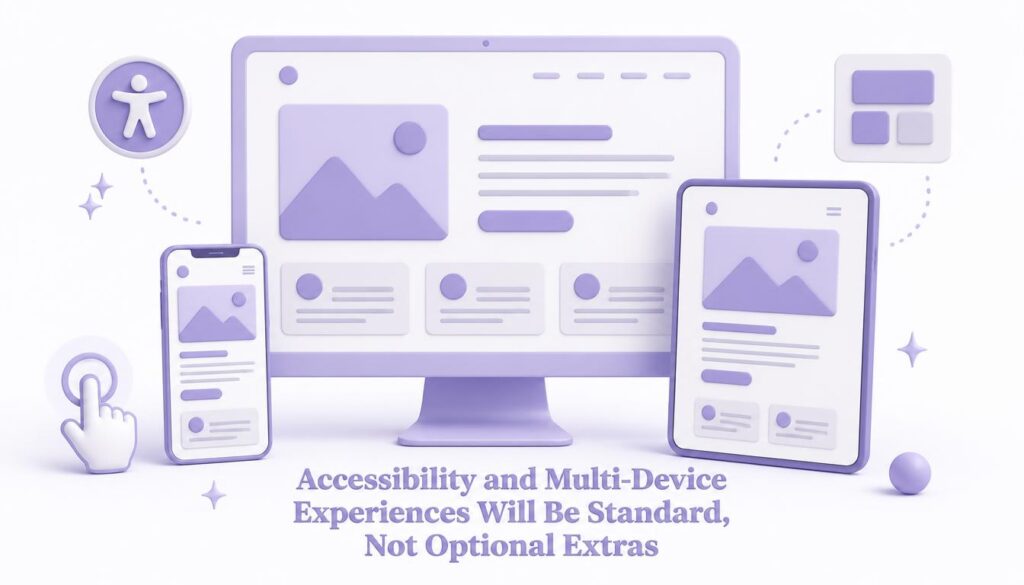
A few years ago, “mobile-friendly” mostly meant a site that didn’t break on a phone screen. That bar has moved. Visitors now bounce between phones, tablets, laptops, and even smart TVs or in-car browsers within the same day, and they expect a site to hold up cleanly across all of it readable text without pinching to zoom, buttons that are easy to tap, forms that don’t fight with autofill.
Accessibility is following a similar path. Features that used to be treated as a nice-to-have proper color contrast, alt text on images, keyboard-navigable menus, captions on video are increasingly baked into how browsers, search engines, and even some regulations evaluate a site. Beyond the compliance angle, these are also just good design choices: a site that’s easy to use for someone with low vision or a slow connection tends to be easier for everyone else too.
For smaller businesses, this doesn’t mean rebuilding your entire site from scratch. It usually means fixing a handful of specific things: image alt text, font sizes, tap-target spacing, and making sure your site doesn’t rely entirely on hover effects that don’t work on a touchscreen.
What This Means for Businesses in India
For a lot of small and mid-sized businesses across India, the future of web development isn’t about chasing every new framework it’s about getting the fundamentals genuinely right: fast hosting, mobile-first design, clear content, and basic security hygiene. I’ve sat with tourism operators here in Kashmir who assumed a slow, cluttered site was just “how websites are” until they saw a properly optimized one side by side. Even a small improvement in load time and clarity can make a real difference in how long visitors stick around, though the exact impact varies a lot by business and audience.
The businesses that adapt early even in small, unglamorous ways like compressing images or fixing mobile navigation tend to have an easier time than those trying to catch up all at once later. This is especially true for travel and hospitality businesses, where a slow-loading gallery or a broken booking form can cost a visitor’s trust in seconds, long before a phone call or email ever happens.
Local search behavior is shifting too. More people are searching with location and intent baked into the same query “family-friendly hotel with mountain view Gulmarg,” for instance, rather than just “hotels Gulmarg.” Sites that answer these more specific, conversational queries directly tend to hold up better than ones written purely for a short, generic keyword.
The Future of Web Development: Tools and Workflows Are Shifting Too
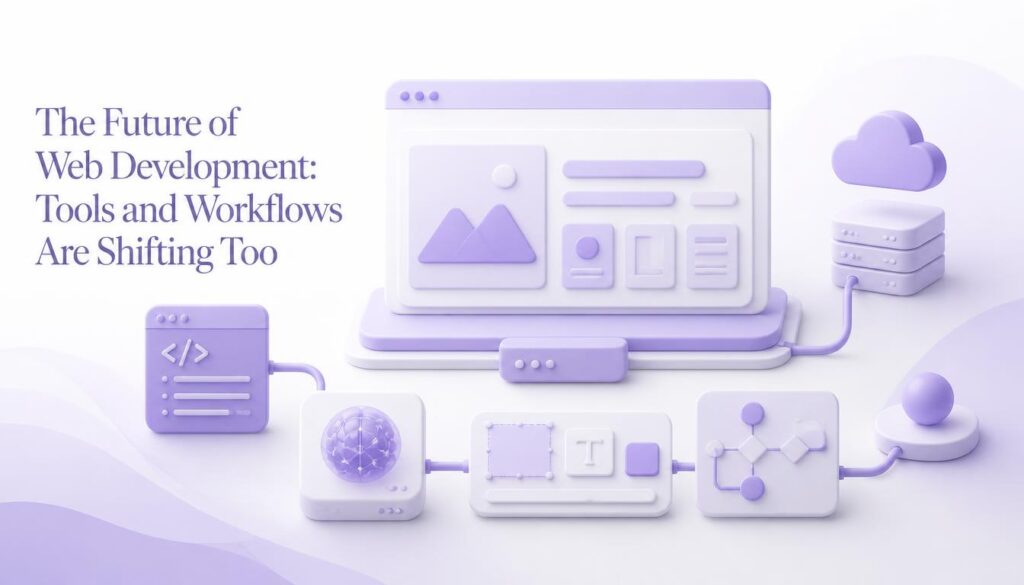
On the technical side, expect more sites built with component-based frameworks instead of one-off custom code, more reliance on managed hosting platforms instead of self-managed servers, and more automated testing catching problems before they reach visitors. None of this replaces good judgment from a developer — it just changes what a developer spends their time on. For businesses that don’t want to manage server updates and security patches themselves, working with a managed hosting provider is becoming the more practical default rather than the exception.
Content is shifting too. As AI tools change how people search and how content gets discovered, teams are rethinking what “good content” even means in an AI-first internet that shift is worth understanding on its own, separate from the design and infrastructure changes covered here.
FAQs (Frequently Asked Questions)
Will my current website become obsolete by 2030? Not automatically, but a site that hasn’t been touched in years will likely fall behind on speed, security, and mobile usability all of which affect both visitor experience and search visibility.
Do I need AI features on my website right now? No. AI-driven personalization is becoming more common, but a fast, clear, mobile-friendly site with accurate information still matters more than adding AI for its own sake.
Is HTTPS still necessary if my site doesn’t sell anything online? Yes. HTTPS affects how browsers display your site to visitors and is a baseline expectation now, regardless of whether you process payments directly on the site.
How often should a small business update its website? There’s no fixed number, but reviewing speed, content accuracy, and mobile performance every few months is a reasonable habit, with a deeper review whenever your services or offers change.
What’s the single most important thing to fix first? For most small business sites, it’s page speed and mobile experience they affect everything else, from search rankings to how long a visitor actually stays.
Conclusion
The future of websites isn’t about chasing every new trend the moment it appears. It’s about staying ahead of a slow, steady shift toward faster, more secure, more genuinely helpful sites and not waking up in a few years having fallen behind on all three at once. Start with what’s measurable today: how fast your site loads, how it reads on a phone, and whether a first-time visitor understands what you offer within a few seconds. Get those right, and you’ll be in a much better position to handle whatever comes next.
If you’re not sure where your website currently stands on any of this, it’s worth getting an honest, no-pressure look at it before deciding what (if anything) needs to change.