 Live Chat
 Contact
 Shopping Cart
 Eshan Riyaz
Here’s something nobody says out loud: most small business online presence advice is written for businesses that already have their fundamentals sorted.
Website. Check. Google listing. Check. Social media. Posting occasionally. And then the advice says: great, now run ads, start a podcast, build an email list, create a YouTube channel, optimise for voice search.
Meanwhile the website loads in seven seconds on mobile. The Google Business Profile hasn’t been updated since it was claimed two years ago. There are no reviews. The contact form doesn’t deliver messages to anyone.
The advice isn’t wrong exactly. The order is.
When small businesses in the USA build online presence the right way, they start with what drives 80% of results, and they don’t add complexity until the basics are genuinely solid. That’s what this guide covers. No trendy tactics, no 47-step framework. Just what actually moves the needle for a small business in 2026, prioritised correctly.
Why Most Small Business Online Presence Advice Fails
Because it doesn’t tell you what to do first.
A business with a slow website, no reviews, and a half-complete Google profile doesn’t need TikTok content or LinkedIn thought leadership. It needs the foundation fixed. But most articles treat everything as equally important and leave the reader with a list of 15 things to start doing simultaneously.
That’s how businesses end up scattered, posting on three social platforms inconsistently, running ads to a website that doesn’t convert, and wondering why nothing is working when they’re technically “doing everything.”
The truth about how small businesses in the USA build online presence successfully is less glamorous: it’s mostly about getting a small number of fundamentals right and keeping them right over time. Consistent beats are clever. Solid beats are sophisticated.
Start With the Foundation: Not the Extras
About 17% of small businesses still operate without a website, while 34% of those owners believe a website isn’t relevant to their industry. That’s a costly misunderstanding.
And even among the businesses that do have websites, many of them have sites that load slowly, don’t work on phones, have no SEO configuration, and haven’t been updated in years.
Before touching social media strategy or email funnels or paid advertising, these need to be right:
- A website that loads fast, works on mobile, and converts visitors
- A Google Business Profile that’s complete, active, and reviewed
- On-page SEO basics in place so Google can actually find and rank the site
Get these three things genuinely right and you’ll outperform most of your local competitors, not because you’re doing more, but because you’re doing the foundation properly when most people aren’t.
Step 1: A Website That Actually Does Its Job
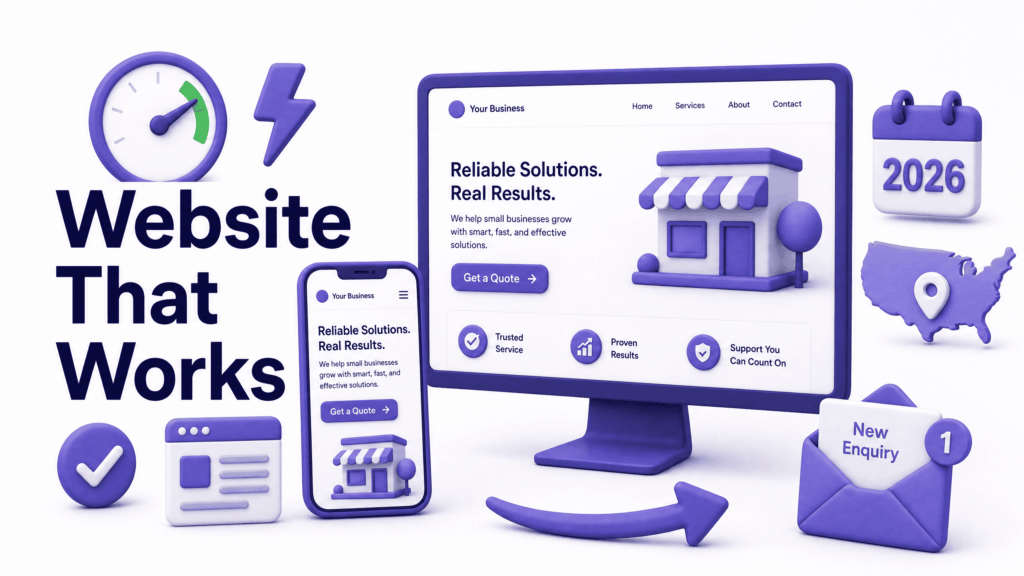
A website isn’t a digital business card. Or it shouldn’t be.
Done right, it’s the one part of your online presence that works 24 hours a day, builds trust before first contact, and converts a stranger’s curiosity into an actual inquiry. Done wrong, it just exists.
Mobile devices accounted for 52.27% of global website traffic in Q1 2026. More than half of every person who finds your website is on a phone. A load time increase from 1 to 3 seconds raises bounce rates by 32%. In 5 seconds, 53% of mobile users have already left.
So the minimum bar for a business website in 2026 is: loads fast on mobile, works properly on small screens, clearly explains what you do and who it’s for, has a visible way to contact you, and gives people a reason to trust you before they do.
That last part, trust, is where most small business websites fall short. They have the information but not the evidence. No testimonials. No real photos. No about page that feels like a real person wrote it. These aren’t optional extras. They’re the difference between a website that generates enquiries and one that gets visited and forgotten.
Speed, mobile experience, content clarity, and trust signals; get all four right. Then worry about everything else.
Step 2: Google Business Profile Done Properly
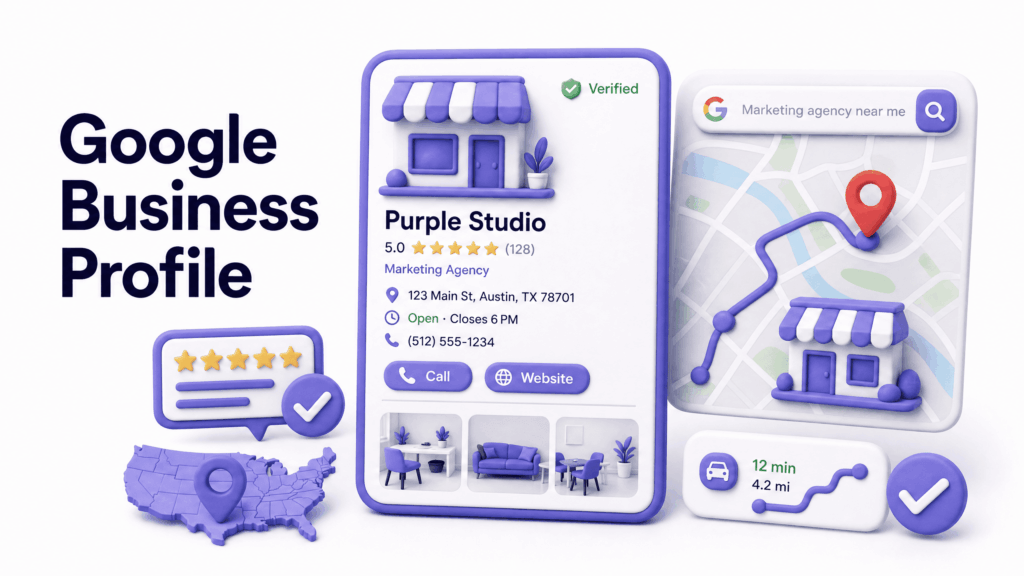
This is genuinely free. It’s often the fastest thing a small business can do to get more visible in local search. And yet the majority of profiles are either incomplete, inactive, or both.
When someone searches for a service near them, Google shows a map with three local business listings above all organic results. That’s prime visibility. Getting into those three spots depends on your profile being complete, active, and accumulating reviews.
Complete means: accurate name, address, phone number, hours, website link, business description with relevant keywords, primary and secondary categories chosen correctly, and photos. Real photos; of your space, your team, your work. Not stock images.
Active means: posting updates regularly, responding to every review (good and bad), answering questions, and keeping your hours current for holidays and seasonal changes.
Most businesses claim their profile and do nothing with it for months. That’s exactly the gap to exploit. An actively managed profile with 40 genuine reviews will consistently outrank a competitor with 5 old reviews and no updates, even if that competitor has been in business longer.
Step 3: SEO That Compounds Over Time
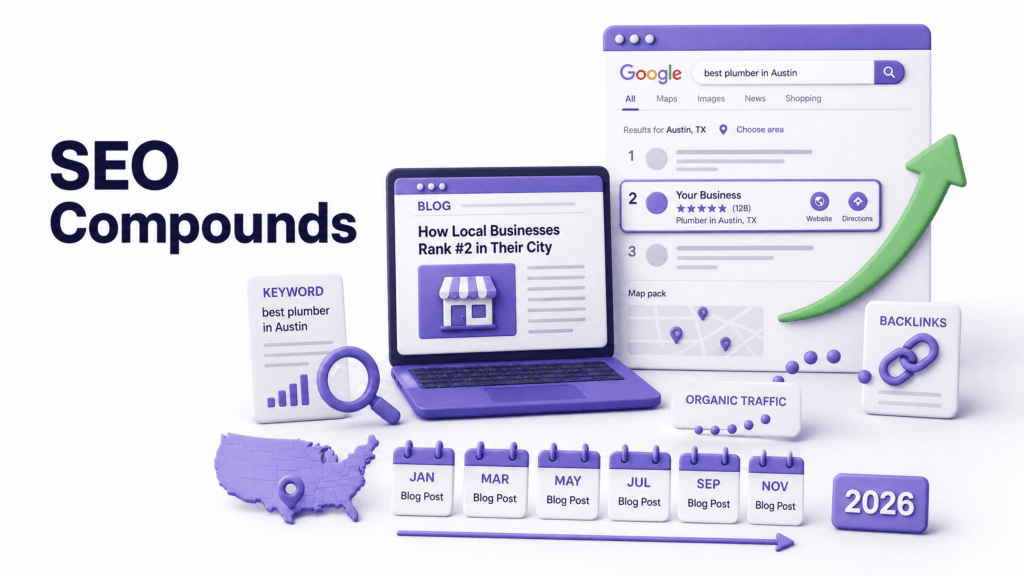
Paid ads stop delivering the moment you stop paying. SEO keeps working.
A blog post that ranks on Google in month four keeps bringing visitors in month fourteen, month twenty-four, and beyond. It’s one of the few marketing investments that genuinely compounds, each piece of content adds to the total, and the total accumulates value over time.
For small businesses in the USA, local SEO is often the fastest path to visible results. When someone searches for your service plus your city or neighbourhood, the competition is typically far lower than national keywords. A well-optimised local service page can rank in weeks, not months.
The basics that need to be in place: proper page titles and meta descriptions on every page, correct heading structure, image alt text, a Google Search Console account set up and verified, and a sitemap submitted.
Beyond that, content. Not random content. Content that answers the exact questions your potential customers are typing into Google. If five different clients have asked you the same question over email, that question belongs on your website. That’s how small businesses in the USA build online presence through SEO, answer what people are already searching for, clearly and specifically.
According to Google’s Search Essentials documentation, helpful, specific content that demonstrates genuine expertise is the foundation of everything that works in search, not tricks or shortcuts.
Step 4: Content That Earns Trust Before First Contact
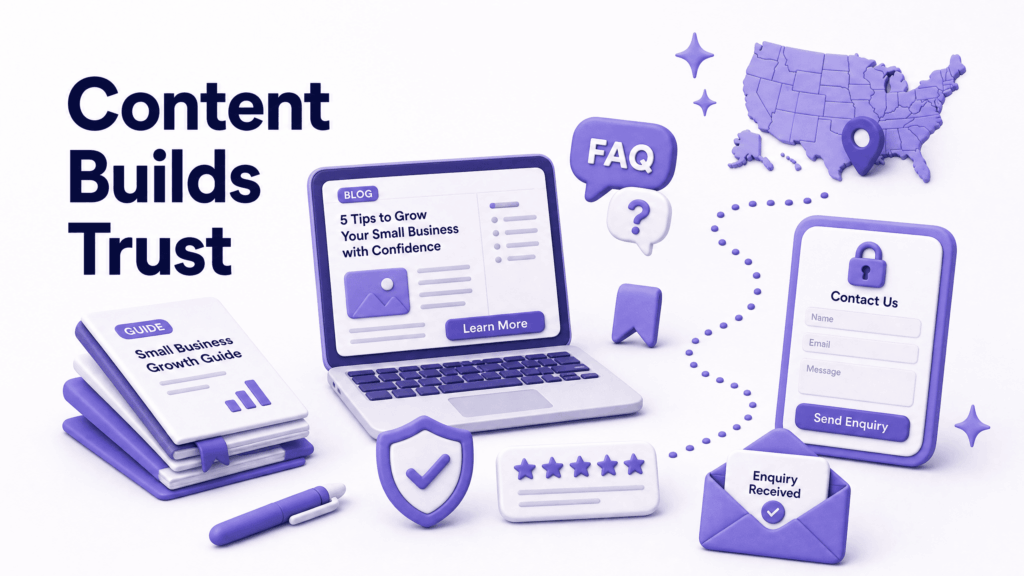
There’s a specific moment in every customer journey that most businesses don’t know exists.
Someone hears about your business; through a referral, a Google result, a social media post. Before they contact you, they look you up. They read your website. They check your reviews. They form an opinion about whether you’re the kind of business worth dealing with.
That opinion is formed before you’ve had a single conversation with them.
Content is what shapes that opinion. A blog post that genuinely helps them understand something. An FAQ that answers their real questions honestly. An about page that sounds like a human being wrote it about a real business.
You don’t need to publish every day. One well-written, genuinely useful piece per week or two builds a content library over time that does significant trust-building work automatically. And it feeds your SEO simultaneously; more indexed pages, more keywords, more chances to rank for the searches your potential customers are making.
The businesses that skip this step can still get customers. But they work harder for every single one, because there’s no accumulated trust working in their favour before the conversation even starts.
Step 5: Social Media Without Burning Out
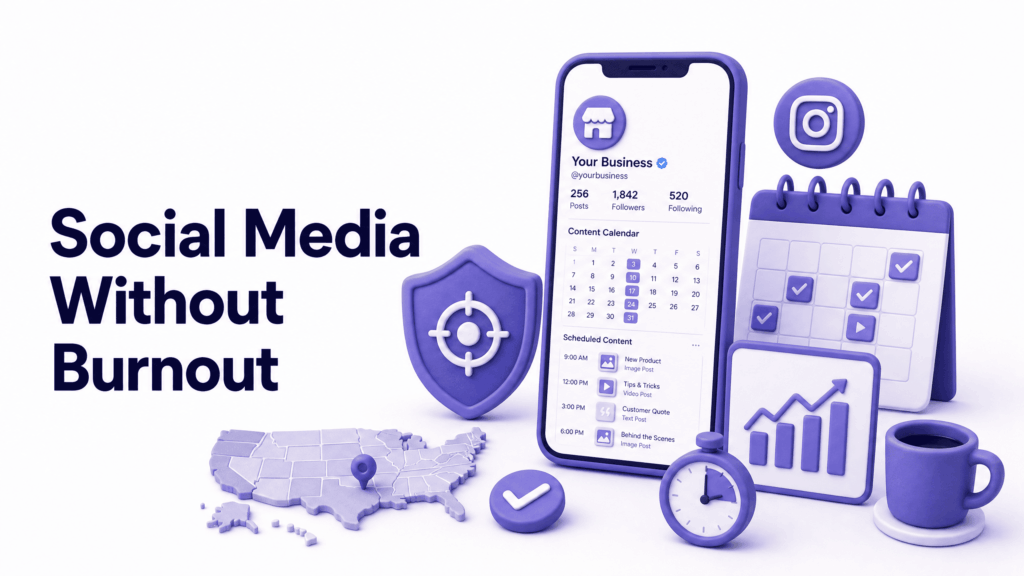
Here’s the honest take: social media is probably the most overemphasised part of small business online presence building and the least likely to generate direct leads on its own.
Not because it doesn’t work. It does. But it works differently than most businesses expect, less as a direct lead generator and more as a trust amplifier. Someone who finds your business through Google, then sees you’re consistently active on social media with real content about real work, is more likely to trust you and reach out. The social presence confirms the first impression.
That’s a supporting role. Not the star.
The practical implication: pick one or two platforms where your actual customers spend time. Post consistently but manageably, three times per week is better than seven times one week and zero the next. Focus on content that shows your work, your thinking, your perspective. Don’t chase trends or viral formats that have nothing to do with your business.
And don’t let social media eat time that should go toward the website, the reviews, or the content that actually drives search visibility.
Step 6 Reviews: The One Thing That Closes More Sales Than Anything
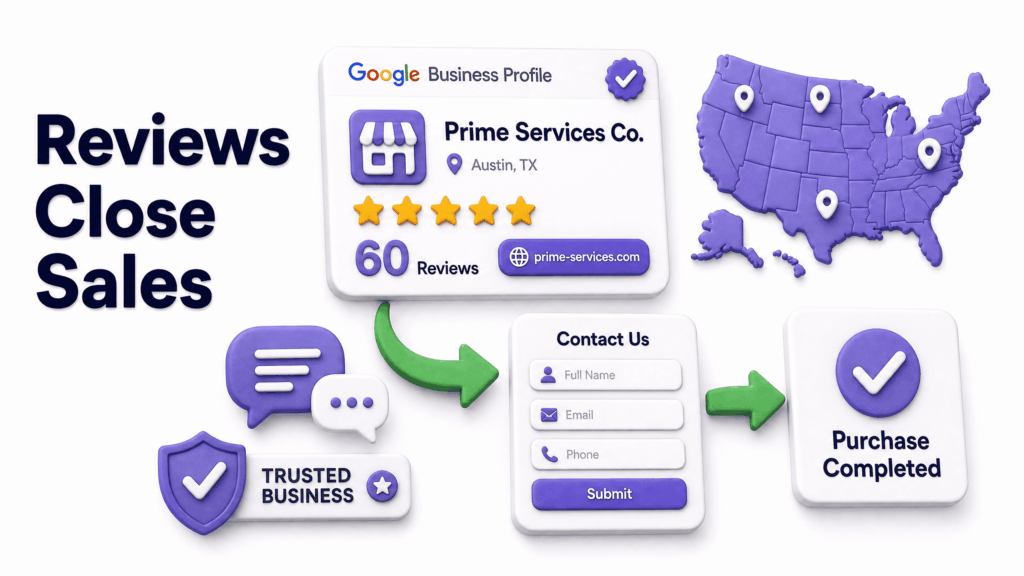
People trust reviews almost as much as personal recommendations. That’s not a statistic worth debating, it’s lived experience. When you’re choosing between two similar businesses and one has 60 reviews averaging 4.8 stars while the other has 8 reviews from two years ago, the decision is largely made before you’ve read either website.
The problem isn’t that satisfied customers won’t leave reviews. They will, when asked specifically and recently.
Most businesses don’t ask. They assume satisfied customers will leave reviews on their own. Some do. Most don’t, because it takes three minutes of deliberate effort and life is busy.
A simple, specific, personal ask; “We’d really appreciate it if you left us a Google review, here’s the link”, sent within a day or two of a positive experience converts at a much higher rate than a generic footer note on your website that nobody reads.
Get into the habit of asking. Respond to every review you receive, good and bad. Thank the positive ones briefly and genuinely. Address the negative ones calmly and professionally, because future customers read how you handle criticism as much as they read the criticism itself.
Step 7 Email: The Channel Everyone Ignores Until They Wish They Hadn’t
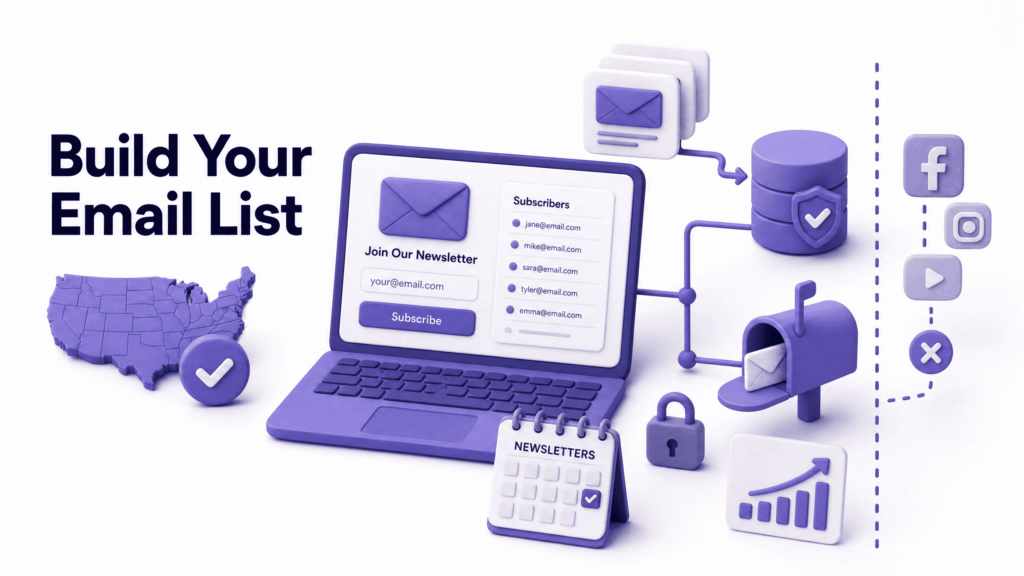
Social platforms change algorithms, reduce organic reach, and occasionally disappear. Your email list doesn’t.
An email list of even 500 engaged contacts is worth more than 10,000 social media followers who see 3% of what you post. You own the list. You can reach them whenever you want. And purchase rates from email consistently outperform every social platform.
Small businesses in the USA build online presence that lasts by owning their audience, and email is the most direct way to do that.
You don’t need a complex funnel to start. A simple monthly newsletter with one useful insight, one update about your business, and one clear call to action is enough. Add an email signup to your website. Mention the newsletter to clients. Give people a reason to join; a useful resource, early access to something, a discount.
Build it slowly and consistently. Six months from now you’ll wish you’d started six months ago.
Measuring What Actually Matters
Website traffic is a vanity metric on its own. What matters is what that traffic does.
Measure these instead:
Enquiries per month: are more people contacting you through your website than last month? Last quarter?
Where enquiries come from: Google search? Direct? Social? Referral? Knowing this tells you where to invest more effort.
Google Search Console data: which queries bring people to your site, how often your pages appear, and whether that’s trending up or down.
Review count and rating: is it growing? Are you asking consistently?
Google Business Profile actions: calls, direction requests, website clicks from your profile. These are real signals of real interest.
These don’t require expensive tools. Google Analytics and Google Search Console are free. Your Google Business Profile shows its own insight data. A simple spreadsheet reviewed monthly is enough to see the direction clearly.
Common Mistakes Small US Businesses Make Online
Starting with social media before the website works. Driving traffic to a slow, broken, or unconvincing website is wasting the traffic. Fix the destination first.
Treating all platforms as equally important. They’re not. One well-managed channel beats three neglected ones every time. Choose based on where your actual customers are, not where you feel most comfortable posting.
Publishing content with no keyword strategy. Writing blog posts about topics nobody searches for creates content that doesn’t rank and doesn’t bring visitors. Research what your customers actually type into Google. Write for that.
Ignoring reviews until something goes wrong. Reviews compound. 60 reviews didn’t happen overnight, they built up through consistent asking over time. Start now, not when the business feels more established.
Confusing activity with results. Posting daily, responding to every comment, being active everywhere, none of this matters if it’s not connected to actual business outcomes. Every hour spent on online presence building should be traceable to something that generates leads, builds trust, or improves search visibility.
What ElySpace Does for US Businesses
When small businesses in the USA build online presence with ElySpace, they start with the right foundation; a professionally built, fast-loading, SEO-ready website that’s designed to actually convert visitors into enquiries.
We build WordPress websites with on-page SEO configured from day one, mobile performance optimised, and Google Analytics and Search Console connected before launch. Post-launch, we offer SEO content, blog writing, and digital marketing, the ongoing work that builds search visibility and keeps the online presence growing over time.
We work remotely with US clients through a structured project process. Clear milestones, regular updates, full client ownership of all assets. No proprietary platforms. No lock-in.
If you’re building your online presence from scratch or rebuilding after a false start, reach out at elyspace.com and we’ll tell you honestly where to start and what it would cost.
What You Can Do This Week
- Open your website on your phone in a private browser window, does it load in under 3 seconds? Does it look clean and work properly?
- Search your business name on Google: what comes up? Is your Google Business Profile complete and active?
- Run your site through Google PageSpeed Insights and note your mobile score
- Count your Google reviews: when was the last one? Have you asked a recent satisfied customer?
- Pick one social platform you’re currently inconsistent on and commit to a realistic posting schedule for the next 30 days
None of these take a full day. But they tell you exactly where your online presence currently stands, and where the biggest gaps are.
FAQs (Frequently Asked Questions)
How do small businesses in the USA build online presence without a big budget?
Start with the free and low-cost fundamentals, a Google Business Profile costs nothing, Google Analytics and Search Console are free, and asking customers for reviews costs nothing but a moment of your time. A professional website is the one real investment required, and it pays for itself quickly when it’s built to generate leads.
What’s the most important part of online presence for a small US business?
A fast, mobile-friendly website and an active, well-reviewed Google Business Profile. These two together drive the majority of new customer acquisition for most local and regional businesses. Everything else builds on top of them.
How long does it take to build a strong online presence?
The foundation; website, Google profile, basic SEO, can be set up in weeks. Meaningful search visibility from content and SEO typically develops over three to six months of consistent effort. Reviews build over time through consistent asking. The businesses that start now have a compounding advantage over those that wait.
Does social media replace a website for small businesses?
No. Social media platforms are rented space, the algorithm controls your reach, and the platform’s rules can change at any time. A website you own is the anchor. Social media supports it, drives people to it, and amplifies trust. It doesn’t replace it.
How do I know if my online presence is actually working?
Track enquiries per month, Google Search Console traffic trends, Google Business Profile actions (calls, direction requests, website clicks), and review count growth. These are the metrics connected to actual business outcomes. Website traffic alone doesn’t tell you whether the presence is working.
Should a small US business try to rank nationally or focus on local SEO?
Local first, almost always. Local search has lower competition and higher intent, someone searching for your service in your city is far more likely to become a customer than a national searcher browsing broadly. Build local authority first, then expand scope as the presence strengthens.
Is it worth hiring someone to manage online presence or can I do it myself?
Some of it; content updates, social media, responding to reviews, can be managed in-house with reasonable time investment. The technical foundation (website build, SEO configuration, hosting setup) is worth doing with professional help to avoid common mistakes that take months to fix. The rule of thumb: DIY what you can manage consistently, outsource what requires expertise you don’t have.