 Live Chat
 Contact
 Shopping Cart
 Ely Space
Introduction
Hey everyone! Have you ever wondered how your photos, files and all that important stuff you save in the cloud stay safe? Well, it’s all thanks to something called cloud security. It’s like having a superhero who protects your digital things from bad guys and other dangers.
So, picture this: You’ve got your phone or computer, right? You want to keep your pictures and documents safe, but you also want to access them from anywhere. That’s where the cloud comes in. It’s like a magical storage space on the internet where you can keep all your stuff.
Now, imagine if someone sneaky tried to peek at your photos or steal your documents while they’re up there in the cloud. Not cool, right? That’s where cloud security steps in. It’s like a big shield that keeps your digital things safe from hackers, viruses, and all sorts of troublemakers.
But how does it work? That’s what we’re here to find out! We’ll break down cloud security into simple, easy-to-understand bits so that everyone, including our friends in India, can grasp it without any hassle. So, let’s dive in and discover the basics of cloud security together!
What is cloud security?
Cloud security is like a protective shield for businesses, keeping them safe from digital dangers. It’s important because, as businesses use more digital tools and services to grow, they face risks like hackers trying to break in or viruses causing trouble.
Think of it as having a team of superheroes watch over your digital stuff. They use special tricks and tools to stop bad guys and fix problems before they get out of hand.
In simple words, cloud security helps businesses in India and everywhere else keep their digital world safe and running smoothly.
What is cloud computing?
“Cloud” or “cloud computing” is like using the internet as a super-powerful tool. Instead of just storing files and running programs on your own computer, you can do it all online. This is really helpful for companies like ElySpace because it gives them more options for how they do their work.
Now, there are three main types of cloud services that companies use:
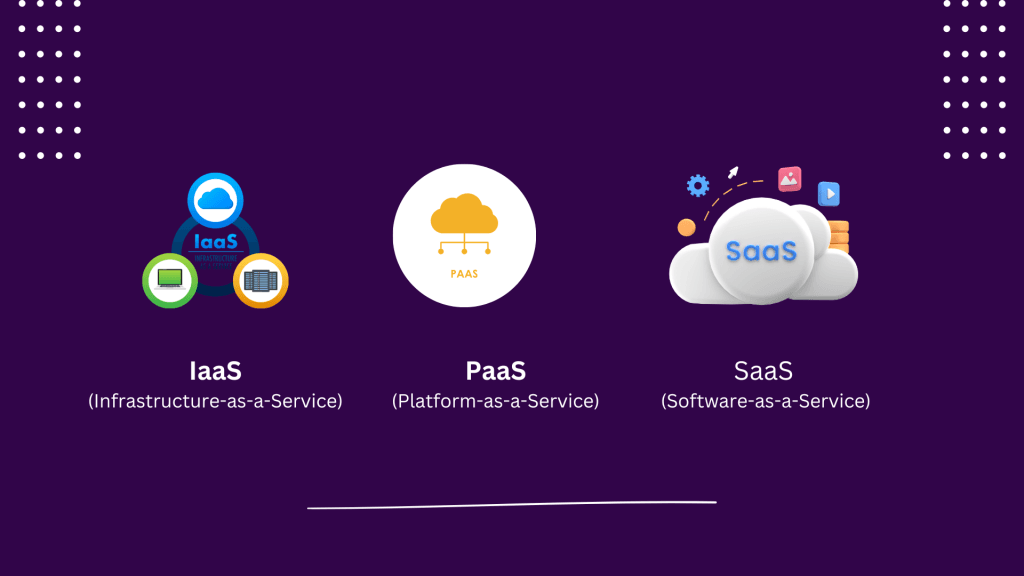
1. IaaS (Infrastructure as a Service): Imagine you have a big toolbox with lots of tools. With IaaS, you get to use some of your own tools from your toolbox, but you also get to borrow some really fancy tools from a friend (the cloud provider). You still have control over what you’re building, but your friend helps out with things like making sure everything works smoothly and safely.
2. PaaS (Platform-as-a-Service): Think of PaaS as getting a special workshop just for building things. You don’t have to worry about setting up the workshop or keeping it clean; the cloud provider takes care of all that. You just focus on building your project, and the workshop is all setup and ready for you.
3. SaaS (Software-as-a-Service): This one’s like having access to a library full of all kinds of software programs. Instead of buying each program and installing it on your computer, you can just borrow them whenever you need them. The cloud provider takes care of all the technical stuff, like making sure the programs work well and are kept up-to-date.
So, these cloud services give companies like ElySpace a lot of flexibility and options for how they do their work. It’s like having a big toolbox, a fancy workshop, and a library of software programs—all available whenever you need them, and all without the hassle of managing everything yourself.
Why is cloud security important?
In the business world, lots of companies, like ElySpace, are moving their work to the cloud. It’s like storing your files and running your programs online instead of on your own computer.
But as companies use the cloud, they need to make sure their stuff stays safe. Even though the companies that run the cloud servers try to keep them secure, it’s still important for each company, like ElySpace, to protect their own data and apps.
The problem is, that there are more and more smart hackers out there trying to break into the cloud. They know it’s a big target because lots of companies, including ElySpace, use it.
That’s why it’s really important for every company, big or small, including ElySpace, to think about cloud security. Whether they use a public, private, or a mix of both types of cloud, they need to have good security measures to stay safe from hackers.
By keeping their data safe, companies like ElySpace can keep their business running smoothly without any worries.
Exploring Cloud Security Threats
Exploring cloud security threats is crucial given the increasing reliance on cloud computing for storage, processing, and application hosting. Here are some common threats
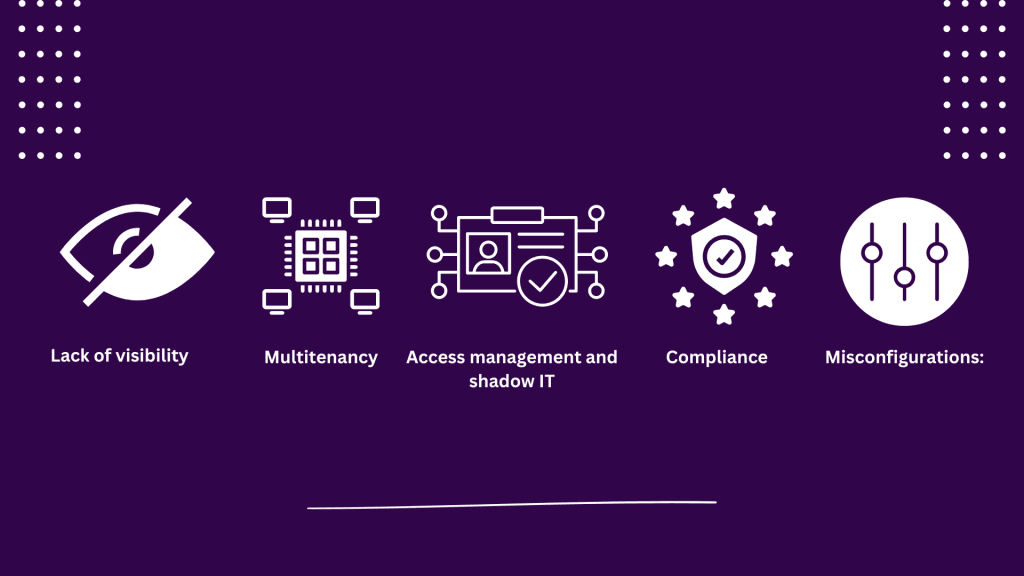
1. Lack of visibility: It’s like trying to keep track of who’s reading your diary when you’re not looking. With cloud services, your data is often accessed from outside your company’s usual network, and by different companies or people. This can make it hard to know who’s looking at what, which can be worrying.
2. Multitenancy: Think of public cloud services like apartments in a building. Many different companies share the same space. So, if one company has a problem, like a leaky pipe or a security breach, it can affect others too. It’s like living in an apartment building where if one apartment has a fire, it could spread to the others.
3. Access management and shadow IT: Imagine trying to control who gets to use which rooms in your house, but your family members keep inviting their friends over without telling you. In cloud systems, it can be tricky to control who gets access to what, especially if employees use their own phones or laptops to do work. This can be risky because, if access isn’t controlled properly, sensitive information could end up in the wrong hands.
4. Compliance: Following rules and regulations about keeping data safe is important, but it can be confusing. This is especially true for companies using public or hybrid clouds, where their data is stored on someone else’s servers. Even though another company might be helping with the technical stuff, the responsibility for keeping data safe still falls on the original company. Not following these rules could lead to big problems, like fines or lawsuits.
5. Misconfigurations: Picture trying to build a house but accidentally putting the front door in the back. Misconfigurations in cloud systems are like this – they happen when things are set up wrong. This could be something simple, like forgetting to change the default password, or more serious, like not setting up privacy settings correctly. These mistakes can leave your data vulnerable to hackers and other risks.
Top Cloud Security Solutions: Safeguard Your Data in the Cloud
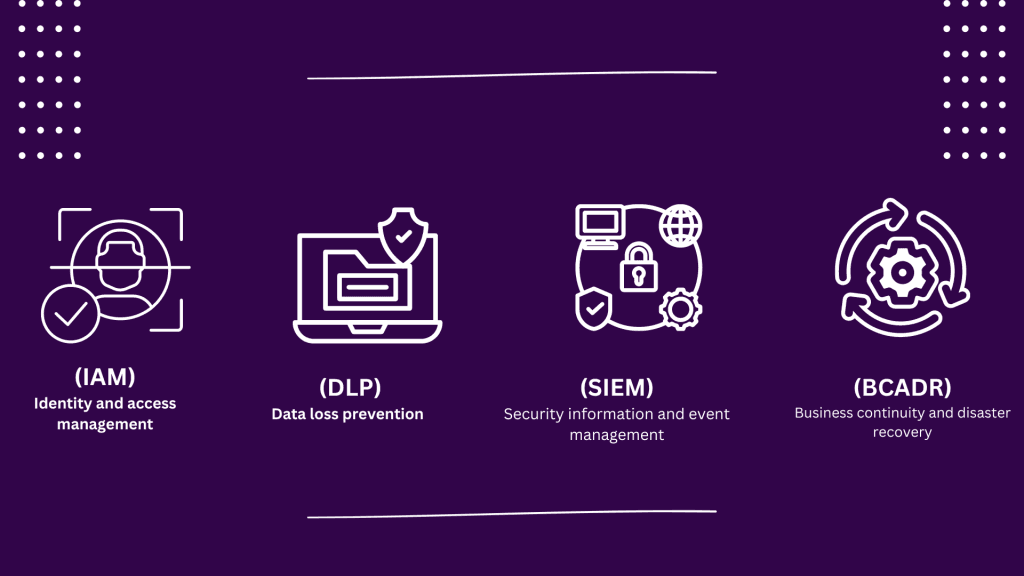
1. Identity and access management (IAM):
IAM tools and services help companies keep their data safe by controlling who gets to see it. They create digital IDs for users, like having a special key to unlock a door. This lets companies keep track of who’s using their data and stop anyone who shouldn’t be accessing it.
2. Data loss prevention (DLP):
DLP services are like a security guard for important data in the cloud. They use special tools to stop data from getting lost or stolen, whether it’s just sitting there or moving around. It’s like having someone watch over your stuff to make sure nothing bad happens to it.
3. Security information and event management (SIEM):
SIEM is like having a smart helper keep an eye on your cloud systems. It uses clever technology to look out for anything unusual or suspicious, like someone trying to break in. It helps IT teams spot problems quickly so they can fix them before they cause any harm.
4. Business continuity and disaster recovery:
Sometimes, things go wrong, like a big data breach or a system crash. Disaster recovery is like having a backup plan for when that happens. It helps companies get back on their feet quickly so they can keep running smoothly, like having a spare tire in case you get a flat.
Securing Your Cloud Infrastructure: Expert Advice
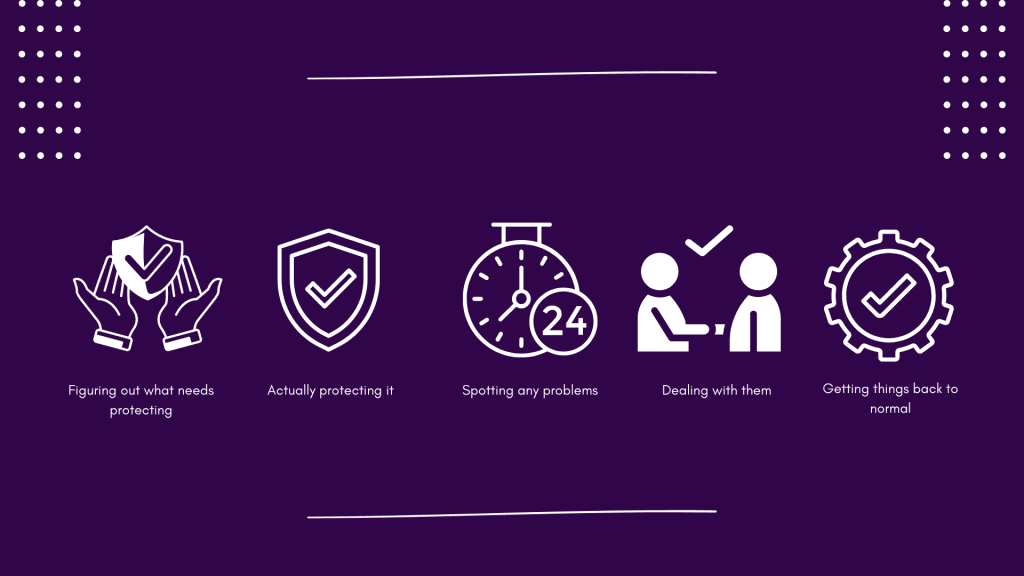
Every organization, including ElySpace, has its own way of handling cloud security. But some helpful tips from the National Institute of Standards and Technology (NIST) can make sure your cloud system is safe.
NIST has a checklist of steps that every organization can use to see if their cloud system is secure and fix any problems. These steps are based on five main ideas: figuring out what needs protecting, actually protecting it, spotting any problems, dealing with them, and getting things back to normal.
1. Figuring out what needs protecting: This is like making a list of all the important things in your house that you need to keep safe. For cloud systems, it means understanding what data and systems are most important to your organization, like customer information or financial records.
2. Actually protecting it: Once you know what’s important, you need to put measures in place to keep it safe. This could include things like setting up firewalls, using strong passwords, and encrypting sensitive data.
3. Spotting any problems: Just like you might check for leaks or broken windows in your house, you need to keep an eye out for any problems in your cloud system. This could be unusual activity on your network or signs that someone is trying to break in.
4. Dealing with them: If you do spot a problem, you need to act quickly to fix it. This could mean blocking an unauthorized user or patching a security hole in your system.
5. Getting things back to normal: Once the problem is fixed, you need to make sure everything is back to normal. This might involve restoring data from backups or updating security policies to prevent similar issues in the future.
There’s also a new tool called cloud security posture management (CSPM) that helps with following NIST’s guidelines. CSPM is like a special helper that makes sure your cloud system is set up correctly. It focuses on fixing a common problem in cloud systems: mistakes in how they’re set up.
Sometimes, cloud systems can have mistakes in how they’re set up, which makes them vulnerable to attacks. CSPM helps by making sure everything in your cloud system is organized and working properly. It looks at things like who has access to your data, making sure you’re following the rules, keeping an eye on your network for any strange activity, and dealing with any problems that pop up.
So, by following NIST’s guidelines and using tools like CSPM, organizations like ElySpace can make sure their cloud systems are safe and secure.
Summary
Cloud security is your digital bodyguard, protecting your online world from bad guys. It’s crucial because, without it, hackers could sneak into your data when you use cloud services. But with special tools and tricks, like strong passwords and keeping everything up-to-date, you can keep your information safe. So, while enjoying all the cool things the cloud offers, make sure your bodyguard is on duty to keep everything secu