 Live Chat
 Contact
 Shopping Cart
 Eshan Riyaz
Somewhere in your city right now, a competitor is setting up a website.
They might be newer than you. Less experienced. Offering something similar at a similar price. But they’ve made one decision you haven’t, they’re going online. And when a potential customer searches for what you both offer, only one of you is going to show up.
It won’t be you.
This is why every local business should be online, not eventually, not when things slow down, not when the website feels perfect; but now. Before the window closes. Because online visibility isn’t a switch you can flip at any time. It’s a position you build over time, and whoever builds it first has an advantage that compounds with every passing month.
What “Being Online” Actually Means for a Local Business
There’s a version of this conversation that makes going online sound complicated. It isn’t, not at the level that matters for a local business starting out.
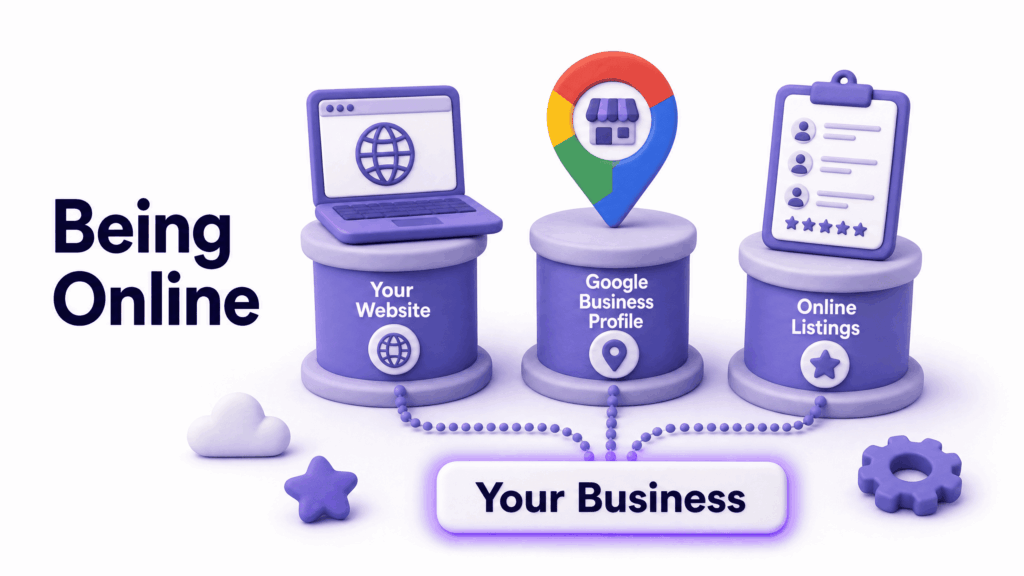
Being online, at minimum, means:
- A professional website that loads fast, works on mobile, and clearly explains what you do
- A Google Business Profile so your business appears in Maps and local search results
- A consistent phone number, address, and business name across every listing
That’s the foundation. Everything else; social media, blogging, paid ads, SEO, builds on top of it. But the foundation is what makes you findable, and findable is what makes you competitive.
Today’s consumers expect to find, research, and interact with businesses online before ever making a purchase or booking a service. A solid online presence helps drive website traffic, generate qualified leads, and build trust with both current and potential customers.
Without this foundation, you exist to the people who already know you. You’re invisible to everyone else.
Why Local Businesses Are the Last to Move And Pay the Price
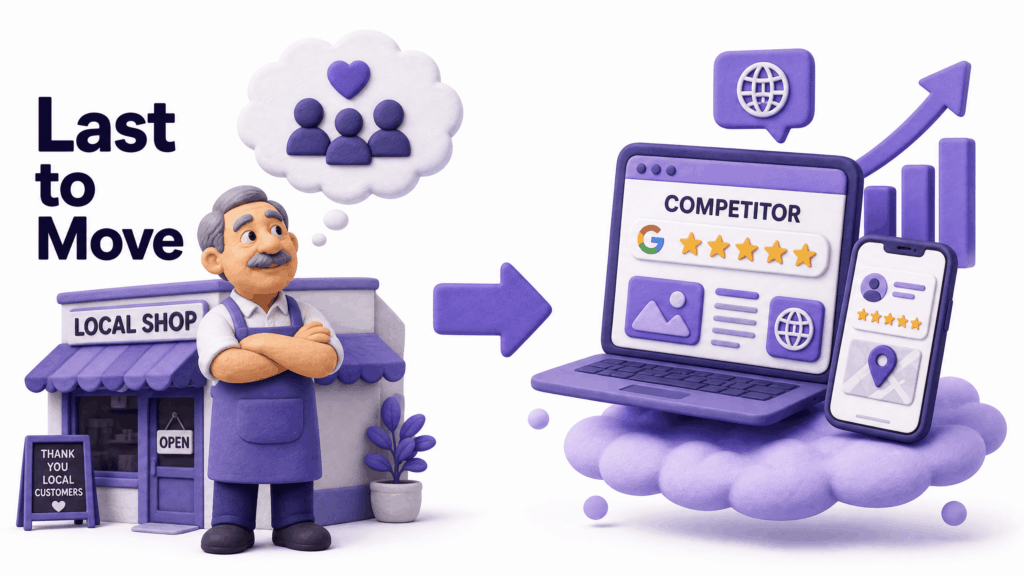
The businesses that resist going online longest tend to be the ones with the strongest local reputations. They’ve been operating for years. They have loyal customers. They get referrals. Business feels steady.
And then something shifts.
A new competitor opens. A younger business launches with a clean website and 60 Google reviews in the first six months. Customers who would naturally have come to you, new residents, visitors, people whose referral source has moved away, now go where Google takes them instead.
Even before the pandemic, research showed that 70–80% of consumers researched a small business online before visiting or making a purchase. A 2025 study found that 40% of small businesses still don’t have a website, and many struggle to maintain an active digital presence.
The loyal customers stay. New customer acquisition quietly slows. The business stops growing without understanding why.
The years of reputation you’ve built are real and valuable, but they’re largely invisible to someone who doesn’t already know you. Being online is how that reputation becomes visible to strangers.
What Happens When Your Competitor Gets Online First
First-mover advantage is real in local SEO. When a competitor claims the top spot in Google search results for your category and city before you do, they get the clicks, the calls, and the bookings that would otherwise have been distributed between you.
When customers search for products or services you offer, your business needs to appear in those results. Google processes over 8.5 billion searches daily; each search represents someone actively looking for a solution. A robust digital presence ensures you’re discoverable at these critical decision moments.
Ranking well takes time. A competitor who builds their online presence six months before you do will have six months of accumulated content, reviews, and domain authority that you then have to compete against. That gap doesn’t close overnight, it takes sustained effort to close it at all.
Every month you’re not online is another month a competitor is building an advantage that gets harder to overcome.
8 Reasons Every Local Business Should Be Online Now
1. Most Purchase Decisions Start on Google
Online searches influence over 85% of purchasing decisions. That statistic covers every category; restaurants, tour operators, salons, clinics, contractors, clothing shops. Before someone visits, calls, or buys, they search.
If your business doesn’t appear in those searches, you’re not part of the decision at all. You don’t lose, you never even enter the conversation.
2. Your Potential Customers Are Already There
87% of consumers used Google to evaluate local businesses, and that number keeps growing. This isn’t a segment of your market. It’s the overwhelming majority of people making decisions in your category.
Being online isn’t about reaching a different kind of customer. It’s about reaching the customers you already serve; the same people, the same needs, through the channel where they’re now looking.
3. Google Maps Is the New High Street
For local businesses, appearing in Google Maps is the equivalent of having the best location on the main road, except it’s free and available to every business that sets it up properly.
When someone searches “tour operator near me” or “salon in Srinagar,” Google shows a map with three local business listings above all organic results. That’s prime visibility available at no cost, through a properly set up and maintained Google Business Profile.
A solid bank of positive Google reviews enhances trust, improves local SEO, and influences decisions, customers are more likely to choose a business with a higher star rating.
Every local business should be online just for this reason alone. The Google Maps position is freely available. Not taking it means leaving it for a competitor.
4. Your Website Works When You’re Closed
Your shop closes. Your phone goes unanswered after 8pm. But a potential customer sitting at home at 10pm, deciding which tour company to book for next month, can still visit your website, read about your packages, look at your photos, check your reviews, and fill in an enquiry form.
Your storefront may close at 5pm. Your website doesn’t. It’s like having a digital salesperson working round the clock.
That enquiry is waiting for you in the morning. Without a website, the same customer goes to someone who has one, and makes a decision before you’ve had the chance to speak to them.
5. It Levels the Playing Field Against Larger Competitors
A small local business with strong SEO, a well-reviewed Google Business Profile, and helpful blog content can outrank a larger, more established competitor in local search results.
The most successful small businesses use data-driven strategies to personalize experiences, engage their audience, and adapt quickly to changing digital trends.
Online, your competitive advantage is strategy and consistency, not budget. A business with ₹10,000 invested in a solid website and well-maintained Google profile can outperform a competitor who spent ₹5 lakhs on a poorly optimised one. The internet rewards relevance and trust, things every local business can build regardless of size.
6. Reviews Online Travel Further Than Word of Mouth
Word of mouth has always driven local businesses. But word of mouth used to be limited by social networks, it reached people who knew your customers. Online reviews reach everyone.
A five-star Google review from a customer in your city is read by a potential customer from another city planning a visit. A detailed testimonial on your website is seen by someone who found you through a search and has never been referred to you by anyone they know personally.
People trust reviews almost as much as personal recommendations. Going online doesn’t replace word of mouth, it amplifies it to an audience you could never reach through referrals alone.
7. You Control Your Reputation Only If You’re There
When you’re not online, you’re not absent from the internet, you’re just absent from the conversation about yourself. People may still review you on Google, mention you on social media, or discuss you in community forums. Without an online presence, you have no way to respond, no way to present your side, and no way to shape how you appear to strangers.
Being online gives you control. You respond to reviews. You tell your story. You show your work. You set the tone for how new customers encounter your business before they contact you.
8. It’s Never Been More Affordable or Straightforward
The barrier to going online has dropped significantly. A professional, fast-loading website that ranks in local search, connects to your Google Business Profile, and generates genuine enquiries is well within reach for any local business, regardless of how small or how early-stage.
According to Google’s own guidance on getting businesses found online, setting up a Google Business Profile costs nothing and takes under an hour, and it’s often the single highest-return action a local business can take to increase visibility immediately.
The cost of not going online, in customers who found a competitor instead, in reviews you never received, in enquiries that went to someone else, grows every month you wait.
The Businesses That Waited Too Long: A Pattern Worth Knowing
There’s a recognisable pattern in businesses that lose market share to online-first competitors.
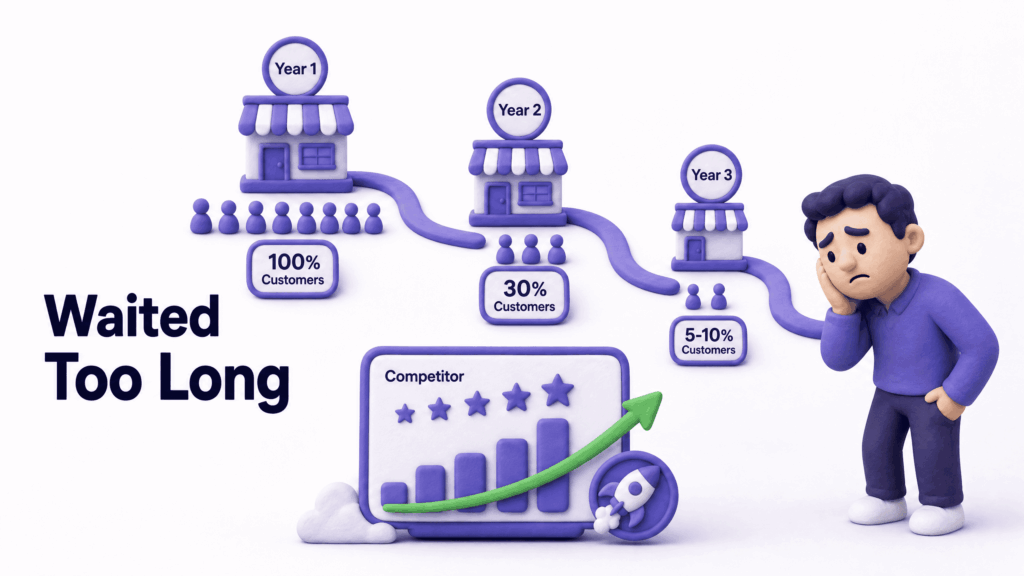
Year one: business feels stable. Loyal customers keep coming. Referrals continue. Going online feels unnecessary.
Year two: a new competitor launches with a website and strong Google presence. Some new customers go there by default because they searched and found them first.
Year three: the loyal customer base has aged or moved. New customers in the area don’t know the business exists because they found competitors on Google first. Reviews are accumulating on the competitor’s profile. The business starts feeling the pressure.
By the time it feels urgent, the competitor has 12 to 24 months of online presence, reviews, and SEO authority that takes real time and effort to compete against.
The businesses that act now; while the position in local search is still open, while the reviews gap is still closeable, while the domain authority gap doesn’t yet exist, are the ones who win the long game.
You Don’t Need a Big Budget to Start
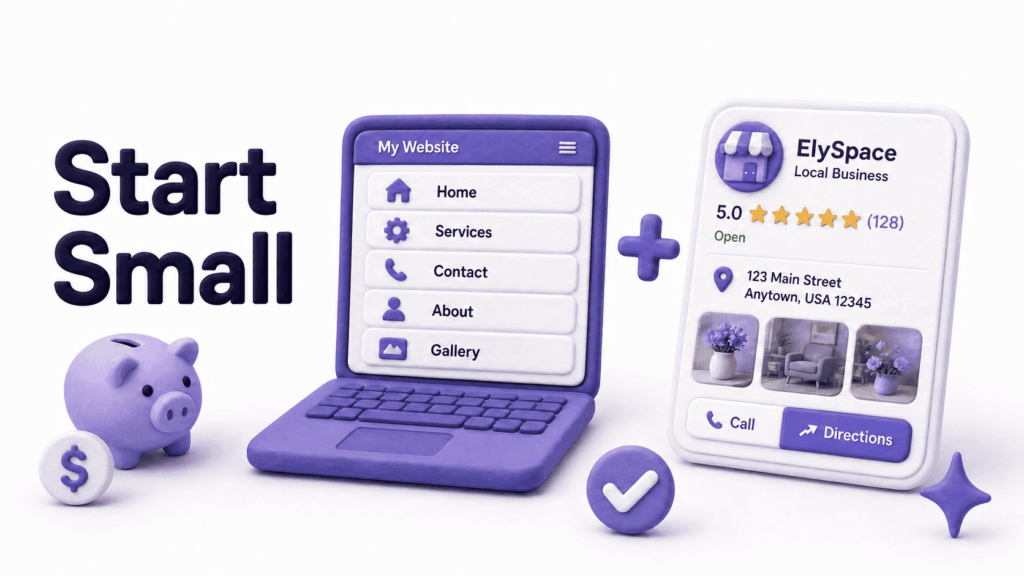
The most common reason local business owners delay going online is that they imagine it requires a large upfront investment. It doesn’t.
The minimum viable online presence for a local business:
- A professional five-page website with your services, story, contact information, and a simple enquiry form
- A fully completed Google Business Profile with photos and your correct information
- An email address at your own domain rather than a free service
That’s enough to be findable, look credible, and start receiving online enquiries. Everything else; blogging, social media, paid ads, advanced SEO, adds to this foundation over time.
The monthly cost of a proper website on quality hosting is less than most businesses spend on printed materials that nobody looks at twice. The return, measured in enquiries from people who found you on Google, consistently outperforms almost every other local marketing investment.
At ElySpace, we build websites for local businesses that are fast, mobile-friendly, SEO-ready, and designed to generate actual enquiries; not just sit online looking pretty. If you’ve been waiting for the right time to go online, the right time is now, before your competitors make the decision for you by taking the positions you haven’t claimed yet.
Common Mistakes Local Businesses Make Going Online
Building a website and never touching it again. A website that isn’t updated, doesn’t have fresh reviews, and hasn’t published any content since launch slowly loses ground to sites that stay active.
Setting up a Google Business Profile and ignoring it. An unclaimed or incomplete profile misses significant local search visibility. Regular posts, updated photos, and responded reviews all improve how Google ranks you in local results.
Treating social media as the whole strategy. Social media is a rented space. You don’t own your audience there; the platform does. A website you own is the anchor. Social media supports it, not the other way around.
Going online without a mobile-first approach. More than half of all web traffic comes from mobile devices. A website that doesn’t work properly on phones is worse than no website in some respects, it creates a negative impression that can be harder to undo than starting fresh.
Waiting for a perfect website before launching. A good website live now is worth far more than a perfect website six months from now. Launch with the essentials and improve from there.
What You Can Do This Week
- Search for your own business on Google: what shows up? Is a competitor showing up where you should be?
- Claim your Google Business Profile at google.com/business if you haven’t, it’s free and immediately improves local visibility
- Write down five questions your customers regularly ask, these are your first five website pages or blog posts
- Check whether a competitor in your category has a website, if they do and you don’t, that gap is costing you right now
- Contact a web design partner and ask what a starter website for your type of business would cost and how quickly it could be live
The businesses that build their online presence now will have a meaningful advantage over those who wait. That window stays open, but it gets narrower every month a competitor invests in the space you haven’t claimed yet.
FAQs (Frequently Asked Questions)
Why should a local business be online if most customers are local anyway? Because even local customers now search online before visiting or calling. 87% of consumers use Google to evaluate local businesses before making contact. Word of mouth still drives discovery, but online search is now how people verify and decide. A local business that isn’t online loses the customers who heard about them but searched to confirm before committing.
What’s the first thing a local business should do to go online? Claim and complete your Google Business Profile. It’s free, takes under an hour, and immediately puts your business on Google Maps and local search results. This single step delivers more immediate local visibility than almost anything else at the same cost.
Does a local business really need a website if it already has a Facebook page? A Facebook page is a start, but it’s not enough on its own. You don’t own your Facebook page. The platform controls your reach, can change its algorithm, and can suspend your account. A website you own is the foundation. It appears in Google search results independently, gives you full control over your presentation, and isn’t subject to a social media platform’s rules or reach limitations.
How long does it take for a local business website to start bringing in customers? A well-set-up Google Business Profile can generate enquiries within days of being completed. A new website typically starts showing in local search results within weeks and builds meaningful organic traffic over three to six months of consistent effort. The earlier you start, the earlier that timeline completes.
What if my business area is small, is online presence still worth it? More so in smaller areas. Local search in smaller cities and towns has less competition, a well-optimised local business can rank at the top of Google results with relatively modest effort. Customers in smaller areas are searching online just as much as those in large cities, but fewer businesses are competing for those search positions.
Can going online replace the word-of-mouth marketing I rely on now? It doesn’t replace word of mouth, it extends it. When someone is referred to your business, the first thing they do is look you up online. A strong online presence confirms and reinforces the referral. A missing or poor online presence can undermine it, even when the referral was enthusiastic.
How much does it cost to get a local business online properly? The foundation, a Google Business Profile; is free. A professional website with hosting typically costs between ₹15,000 and ₹40,000 to build, with ongoing hosting costs of ₹300 to ₹1,000 per month depending on quality. For most local businesses, this investment pays for itself within the first few months of receiving online enquiries.